Putin's party rhetoric is not a peace signal — it is an autarky pitch
A single morning's worth of remarks to United Russia politicians reads less like outreach and more like a mobilisation brief. The free-world framing is the tell.
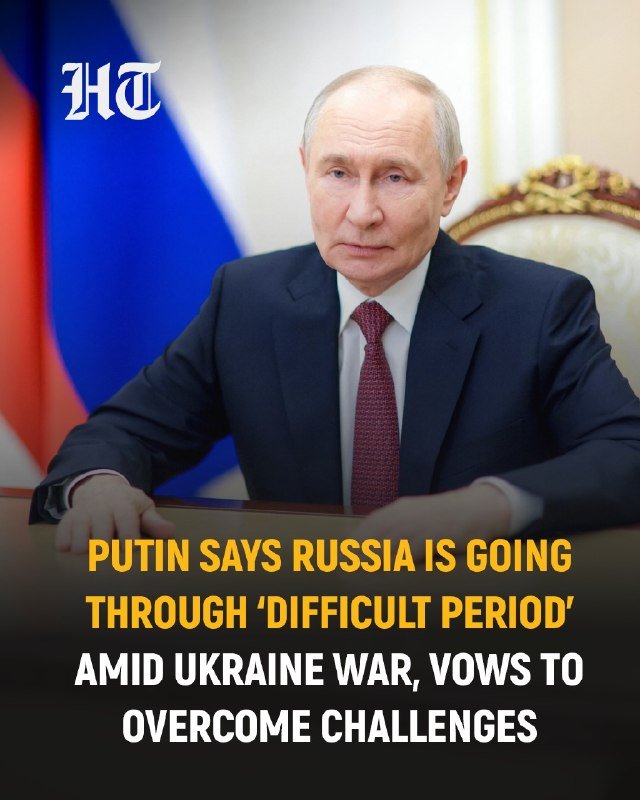
On the morning of 28 June 2026, Russian President Vladimir Putin delivered a set-piece address to politicians of his own party, United Russia, and the line he returned to — across at least five separate statements circulated by the ClashReport Telegram channel between 09:09 UTC and 13:26 UTC — was not war, not sanctions, not the front line in Ukraine. It was autonomy. The framing was delivered with rhetorical flourish: politicians must "spend less time in offices and more time in the field"; a society is free only when built on "the free expression of tradition and culture"; Russia is "a global power that stands against evil" whose rivals "have always failed" and "will fail always."
The address was not a peace overture. Read together, the five statements amount to a domestic mobilisation pitch dressed in the language of moral independence. The strategic claim is that Russia can endure external pressure because its political base is internally coherent — anchored in tradition, insulated from foreign values, and immune to the institutional model the West still tries to export.
What the five points actually say
Stripped of oratory, the address set out four operational instructions. First, party officials are to leave headquarters and meet voters in person — a directive that reads as a warning against a sclerotic regional apparatus that has grown too distant from a strained public. Second, Russia is positioned as a civilisational counterweight, not a revisionist state: the West "tries to remove us," but the effort has failed and will fail again. Third, democracy and free competition in elections are reaffirmed as a "guarantee for the strength of our nation" — an appeal to procedural legitimacy at a moment when Russia's electoral field is closed to meaningful opposition. Fourth, internal challenges — described as "terrorist attacks against our infrastructure," demographic pressure, and the defence of "traditional values" — are bundled into a single resilience frame.
The packaging is uniform. Every threat is internal-and-external at once; every remedy is national self-sufficiency. That symmetry is the message.
Why the language matters
The reference to "terrorist attacks against our infrastructure" is the only direct acknowledgment in the set of the sabotage campaign that has hit Russian energy, rail, and military-industrial sites over the past year — a campaign Kyiv-aligned and Ukrainian-denied actors have claimed credit for and which Moscow has used to justify tighter domestic-security legislation. By subsuming that threat under the same heading as "demographics" and "traditional values," Putin reframes a kinetic problem as a cultural one: the enemy is not just the saboteur, it is the social model that produces one.
The "stands against evil" formulation is doing similar work on the international side. It relocates the contest from territory and sanctions — where Russia is on the back foot — to a metaphysical plane on which moral standing, not GDP, is the unit of account. That is a useful frame for a leadership trying to keep an electorate focused on endurance rather than cost.
The counter-read
Western analysts will, fairly, note that this is the rhetoric of an elite under pressure rather than one in command. The injunction to party officials to leave their offices is a tell: the governing class is being told to re-establish contact with a population whose tolerance for wartime privation is finite and whose patience with closed politics has its own ceiling. The repeated reassurance that Russian elections will feature "open and free competition" is similarly defensive — it is the kind of thing officials say when they have heard the criticism and want to inoculate against it.
There is a second, less charitable read: that the address is calibrated for export. The frames — civilisation, tradition, self-determination — are precisely the vocabulary that travels in parts of the Global South where Western-led pressure on Russia is viewed as hypocritical. Whether or not Russian voters are persuaded, the speech is built to be re-broadcast in places where the framing resonates.
What remains uncertain
The source material is five discrete statements circulated by a single Telegram channel in a four-hour window. They are not a transcript; the order is editorial, and the channel has previously aggregated rather than recorded Putin's longer remarks. The full speech, in order and uncut, may shift emphasis in ways these excerpts do not capture. The most consequential claim in the set — that Russian elections will feature "open and free competition" — is also the one most contested by independent observers, including those working inside Russia, who have documented the systematic exclusion of anti-war and opposition candidates from ballots since 2022. Until the full address is published and the operational instructions to regional governors are made public, the gap between rhetoric and enforcement remains the open variable.
What is not in doubt is the direction. The address tells United Russia — and, by extension, every regional administration, state enterprise, and security service downstream of it — that the next phase is one of internal consolidation behind a values-led banner. The free-world framing is not an invitation to dialogue. It is a declaration of strategic distance.
— Monexus desk note: Western wires have largely framed the address as routine wartime messaging; this publication reads it as a domestic-mobilisation pitch aimed at lengthening the runway for sanctions-era autarky. The two readings are not mutually exclusive — but only the second accounts for why a wartime leader spends a full morning instructing his own party how to talk to voters.
Wire provenance
This editorial synthesis draws on the following public wire/social posts:
- https://t.me/ClashReport
- https://t.me/ClashReport
- https://t.me/ClashReport
- https://t.me/ClashReport
- https://t.me/ClashReport