Putin reframes war aims as Russia pushes deeper into Sumy region
On 28 June 2026 Putin publicly redefined Russia's war aims as the "final liberation" of Donbas and Novorossiya, while admitting Ukrainian strikes are straining the country's energy system.
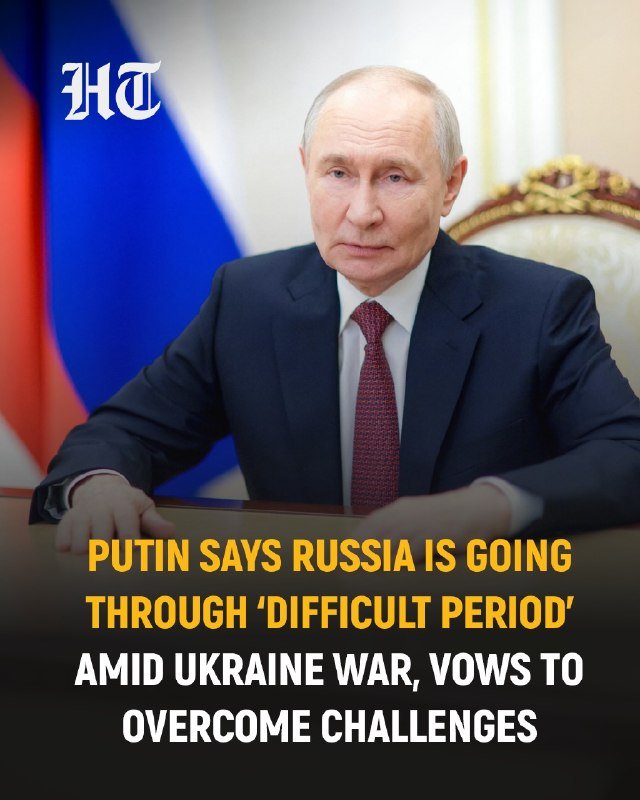
On the evening of 28 June 2026, Vladimir Putin used a televised address to restate, in the most explicit terms in months, what Russia is fighting for in Ukraine. According to Telegram channels that transcribed the remarks in real time, the Russian leader said the "main task of the Russian Armed Forces is to completely liberate Donbass and Novorussia," and signalled that operations in Sumy Oblast — a region that borders Russia proper — would continue in order to "create a security zone." The phrasing matters because it folds together two distinct territorial claims into a single rhetorical package, and it does so at a moment when the battlefield geometry is shifting rather than consolidating.
The speech is less a strategic revelation than a strategic naming: it binds Moscow's maximalist vocabulary to its current axis of advance. Whether the underlying military reality matches the rhetoric is a separate question, but the framing tells readers what the Kremlin wants the war to be about by the end of summer.
What Putin actually said, and where the front sits
The two-pronged formulation is worth parsing. "Donbass" — short for the Donetsk and Luhansk oblasts — has been the explicit casus belli of the full-scale invasion since 2022, and Russia formally annexed the two regions in September of that year, though it does not control them in their entirety. "Novorossiya" is a different, older claim. It refers to a swathe of southern and eastern Ukraine stretching from Kherson through Zaporizhzhia, Mykolaiv, Odesa and Dnipropetrovsk, with historical roots in imperial Russian administration of the Black Sea littoral. It was never the publicly stated legal basis for the 2022 invasion; folding it back into Putin's vocabulary now is a quiet expansion of declared war aims.
The Sumy component is the operational hook. As one of the pro-Russian Telegram channels monitoring the front put it on 28 June, "there are still 10.5 km left to Sumy from the Russian Federation's border." That figure, reported by the Intelslava channel at 19:17 UTC, describes the gap between Russian positions and the regional capital — not a confirmed advance. But the existence of a measurable gap, expressed in tens of kilometres rather than hundreds, is itself a statement about how the map has moved since the Kursk incursion of 2024.
The energy concession
The address contained a second, less triumphal note. According to Clash Report's transcription at 19:06 UTC, Putin acknowledged that "strikes on Russia's energy infrastructure are causing problems" and described an ongoing "shortage resulting from Ukrainian Armed Forces strikes on Russia's energy infrastructure." Coming from a leader whose own forces have spent four years trying to dismantle Ukraine's grid, the admission is unusually blunt. It does not name specific facilities, fuel balances, or the depth of the shortfall, and the framing is plainly one of managed hardship rather than crisis. But for a Ukrainian reader tracking the long campaign against Russian refineries, pumping stations and depots, the line is the most explicit Russian acknowledgement of cumulative impact since the campaign accelerated in 2024.
What this reframing does — and does not — change
At one level, the speech changes little. The same troops are pressing along the same axes; the same logistical constraints apply. Analysts in Kyiv and at Western think tanks have long argued that Russian operations in northern Kharkiv and now in Sumy are less about seizing provincial capitals than about establishing a layered buffer zone that pushes Ukrainian tube artillery, drones and rocket systems further from Russian territory. Putin's own reference to a "security zone" aligns with that read.
At another level, the rhetorical move matters. By re-anchoring the war to "Novorossiya" — a term that encompasses territory Russia has never, in the post-Soviet period, claimed as its own — Putin is asking his own political base and the diplomatic world to accustom themselves to a wider war. The Sumy push, if read against that framing, is not an opportunistic cross-border raid but the opening of a new front consistent with the announced end-state. The implication for Kyiv, and for European capitals underwriting Ukraine's defence, is that Russian objectives are widening precisely as Western public attention drifts toward other theatres.
Stakes and the open questions
What remains contested is the operational ground truth. Telegram-channel reporting — which is often fast but uneven — describes a 10.5-kilometre gap to Sumy city, but does not specify whose assessments underpin that figure, whether it reflects the closest Russian forward position or a claimed line of contact, and how it relates to the heavier fighting reported in the border raion of Khotin and around Yunakivka earlier in the summer. Independent Ukrainian sources, including General Staff morning summaries and reporting by outlets such as Kyiv Independent and Ukrainska Pravda, will be the more reliable ledger in the days that follow. The Monexus read is that the political signal — wider war aims, an energy concession, a Sumy security zone — is now on the record; the tactical picture will only firm up with confirmation from Kyiv.
For Western policymakers the speech compresses a familiar dilemma. If Russia is publicly committed to "completely" seizing both the Donbas and the much larger Novorossiya footprint, the negotiation floor has dropped further. If, alternatively, the rhetoric is partly for domestic consumption — a way of explaining why the war is now being fought on a fifth regional axis — then the gap between declared and attainable aims is itself the working assumption. Either reading points the same direction for Ukraine's partners: the case for sustained military and financial support is not weakening as the war expands, and the calendar on which Kyiv must prepare for a harder winter is being set in Moscow, not Brussels.
Desk note: Monexus leads with the verbatim Russian framing as transmitted by independent Telegram transcribers and contextualises it against the verifiable operational axis in Sumy, rather than treating the address as a strategic novelty. Where wire-level confirmation of specific claims is absent — the 10.5 km figure, the depth of the energy shortfall — the piece flags the gap explicitly rather than reproducing channel assertions as established fact.
Wire provenance
This editorial synthesis draws on the following public wire/social posts:
- https://t.me/wartranslated/
- https://t.me/Tsaplienko/
- https://t.me/intelslava/
- https://t.me/intelslava/
- https://t.me/ClashReport/
- https://t.me/ClashReport/
Follow the event.
These dated source records provide context. They do not retrospectively verify this archive article.
A dated voting record is evidence of one decision. Use the original UN record before turning it into an alignment label.
Visual explainer · historical vote of 2022-03-02 →