Putin resets the frame: Donetsk, Kherson and the offer Kyiv did not make
A Kremlin speech on 28 June 2026 reframed Ukraine's territorial surrender as Kyiv's own proposal, recasting the war's narrative without moving its front lines.
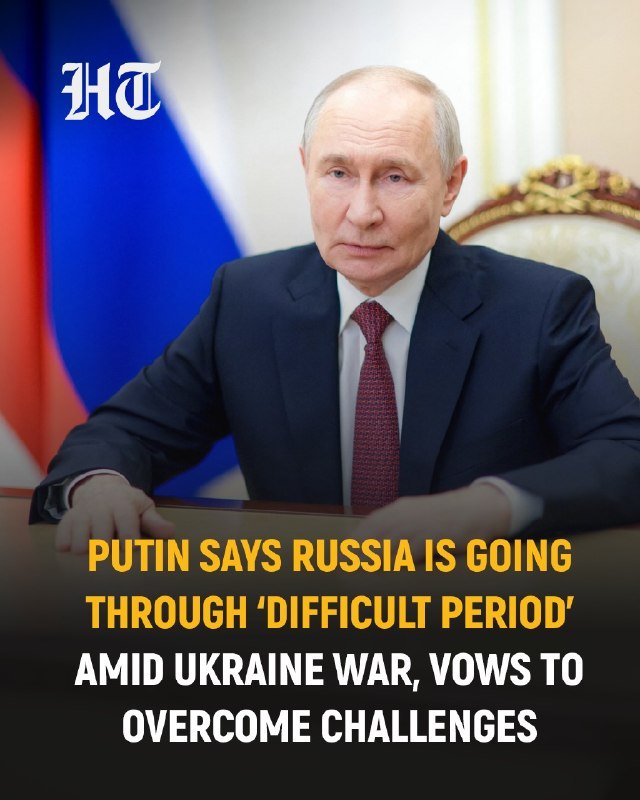
The camera stayed on the Kremlin's long table. Vladimir Putin, speaking to senior officials in the early evening of 28 June 2026, set out Russia's official position on the war in Ukraine with the methodical clarity of a man settling a ledger rather than opening one. His three messages, carried within minutes by Telegram channels including Intelslava and Euronews, were deceptively simple: the armed forces' main task is the "complete liberation" of Donbass and Novorossiya; Moscow will not let Kyiv dictate the terms of any negotiation; and Russia has already received, the president claimed, "proposals from Kyiv" to limit military operations to four occupied oblasts — Donetsk, Luhansk, Zaporizhzhia and Kherson — allowing Ukraine to redeploy forces elsewhere.
That last claim is the news. It is also a deliberate inversion. By presenting territorial abandonment as Ukraine's idea, the Kremlin converts a Russian maximalist demand into the appearance of a Ukrainian concession — a rhetorical move with consequences well beyond the battlefield.
What Putin actually said
The remarks were reported in near-real time by Intelslava at 19:15–19:17 UTC and corroborated by Euronews at 19:13 and 19:10 UTC. Putin framed three propositions. First, that the Russian Armed Forces' "main task" is the complete liberation of Donbass and Novorossiya — the umbrella term Moscow uses for occupied Ukrainian territory and the regions it claims to have annexed. Second, that Russia "will not give the Ukrainian Armed Forces a chance to impose their conditions for negotiations." Third, that "there are proposals from Kyiv to limit military actions to just four territories" — the four oblasts Russia formally annexed in September 2022 but has never fully controlled.
The wording matters. Putin did not claim Russia was offering Kyiv a deal. He claimed Kyiv was offering one. The distinction inverts the burden of authorship.
The counter-narrative from Kyiv and the wire
Kyiv has not publicly advanced a proposal to confine the war to the four annexed oblasts. The framing corresponds to long-standing Russian negotiating demands, not to anything the office of President Volodymyr Zelenskyy has put on the record in 2026. Independent reporting on any such offer is absent from the cited wires. Euronews and Intelslava, the only two channels sourcing the remarks directly in this thread, are presenting Putin's own words; neither attributes the four-oblast formulation to a Ukrainian interlocutor. The most charitable reading is that Putin is describing exploratory contacts whose existence Kyiv has neither confirmed nor described in those terms. The uncharitable, and more plausible, reading is that this is pre-negotiation positioning — a line Moscow wants on the public record before any serious talks resume.
There is also a frontline dimension. Putin's same statement, as relayed by Euronews, claimed Russian forces were "about 2 km" from completing the encirclement of Ukrainian defenders near Stary Oskol — a city in Russia's Belgorod Oblast. If accurate, the claim points to a continued Russian offensive inside Russian territory aimed at clearing a Ukrainian salient, not a frozen line in the Donbas. That operational reality is in tension with the political offer of a four-oblast ceasefire.
The structural frame: who gets to define the negotiating space
Wars end when one side's definition of victory becomes incompatible with the other's definition of cost. Long before any ceasefire is signed, both sides fight to define what the ceasefire would actually consist of. Putin's 28 June intervention is not a negotiation; it is an attempt to set the menu before Kyiv is offered a chair.
By attributing the four-oblast formula to Kyiv, Russia does three things at once. It normalises the annexation lines drawn in 2022 as the obvious starting point — suggesting that any future settlement is a retreat from a position Ukraine has supposedly already accepted. It creates a paper trail that Western governments, sceptical of prolonged support, can later cite as evidence that Kyiv itself was prepared to trade land for peace. And it tests the diplomatic bandwidth of the Trump administration and European capitals, all of whom are under domestic pressure to show movement toward an end to the fighting.
The risk for Ukraine is not that the proposal is real. It is that the proposal becomes real by repetition — that, six months from now, the four-oblast framework is discussed in European foreign ministries as the "Kyiv offer" because no one bothered to challenge the original attribution.
Stakes, and what remains contested
If the trajectory in Putin's remarks holds, the war's political end-state moves further toward the line on the map that Russia drew four years ago. Ukraine loses the diplomatic leverage of insisting on full territorial restoration as the precondition for talks. European capitals gain a pretext to wind down military aid on the theory that Kyiv has chosen to compromise. Russia keeps the annexed regions, formalises control over whatever additional territory its forces currently occupy, and converts a grinding war of attrition into a frozen conflict on its own terms.
Two things remain genuinely contested. The first is the military picture around Stary Oskol, where Putin's "2 km" claim has not been independently verified by Ukrainian general-staff briefings in the cited material. The second is the very existence of a Ukrainian proposal in the terms Putin described. Until Kyiv confirms the offer in language resembling the Kremlin's framing, the four-oblast formula should be read as a Russian negotiating position publicly mislabelled as a Ukrainian one — a small but consequential piece of narrative engineering on the eve of whatever talks come next.
This piece tracked the Putin remarks as carried by Intelslava and Euronews on 28 June 2026 and read them against the absence of any matching Ukrainian confirmation in the cited wires. Where the wire offered only the Russian side of the framing, that limitation is named rather than smoothed over.
Wire provenance
This editorial synthesis draws on the following public wire/social posts:
- https://t.me/intelslava
- https://t.me/intelslava
- https://t.me/intelslava
- https://t.me/euronews
- https://t.me/euronews