Putin's 'strategic defeat' claim and the rhetorical geometry of a war he is still trying to end on his terms
On 28 June 2026 Vladimir Putin told domestic audiences the West failed to inflict a 'strategic defeat' on Russia. The line is less triumph than template — and worth reading on its own terms.
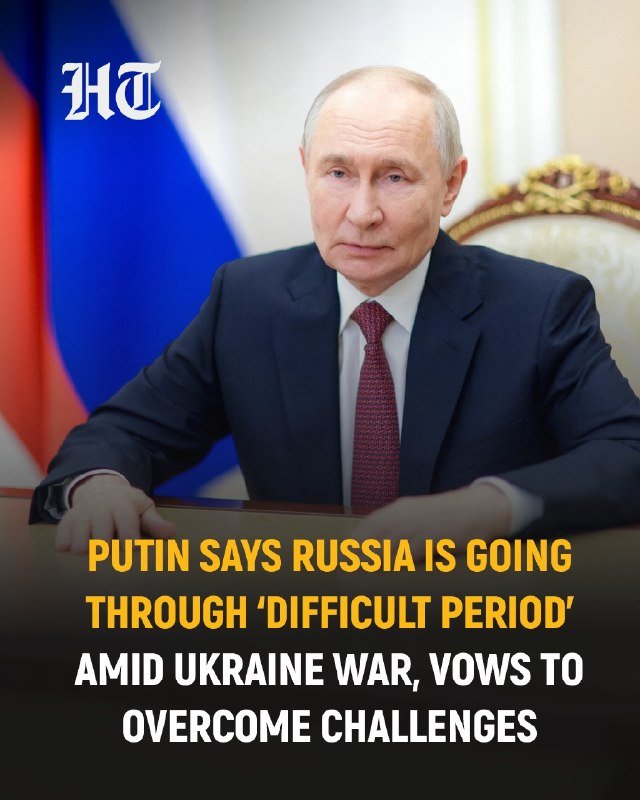
On 28 June 2026, in remarks circulated by Telegram channels tracking Russian official media, Vladimir Putin told a domestic audience that the West had failed to inflict a "strategic defeat" on Russia and that Kyiv was pursuing "openly terrorist actions" while retreating from occupied positions. The lines, picked up by open-source-intelligence monitors shortly after 14:00 UTC, are best read not as a battlefield bulletin but as a carefully composed piece of political theatre. They tell a Russian public what the war is for. They tell a Western audience what they will not get. And they tell Kyiv, once more, that Moscow is not negotiating under duress.
The phrasing matters more than the news cycle it sits inside. Four years into the full-scale invasion of Ukraine, the leader who ordered it is still framing the conflict as an existential stand-off rather than a colonial war of attrition, and is still reaching for the language of civilisational refusal — "they have always failed… they will fail forever" — that has defined his wartime discourse since 2022.
What Putin actually said
Two channels distributed near-identical transcripts within half an hour of each other on 28 June. The first, timestamped 14:20 UTC, carried the line that Western powers "try to remove us as a global power that stands against evil" and that they "have always failed" and "will fail forever." The second, timestamped 14:51 UTC, added the explicit "strategic defeat" framing — "the West has failed to inflict strategic defeat on Russia and win on the battlefield" — and accused Ukraine of "openly terrorist actions" while "withdrawing" from positions. A third dispatch, at 14:58 UTC, condensed both into a single line. The shape is consistent across all three: a claim of Western failure, an accusation against Ukraine, and a civilisational framing of Russia's place in the world.
Why the line travels
The "strategic defeat" formulation is a load-bearing piece of Russian wartime rhetoric. It was the framing used by US and European officials from spring 2022 to argue that the war was the venue in which Russia's status as a great power would be settled — and it is the framing Putin now seeks to invert. By adopting the phrase and negating it, Moscow performs two moves at once. It concedes, implicitly, that "strategic defeat" was ever the relevant category of analysis, which concedes that the contest is about Russia's standing in the international order rather than about Ukrainian territory. And it asserts, for domestic consumption, that the contest has been won. Whether the battlefield supports that assertion is a separate question; the rhetorical geometry does not require it to.
The companion line about "global power that stands against evil" performs the second move. It repositions the war from a bilateral invasion of a neighbour into a metaphysical contest with a hostile West, in which Russia is the principled holdout. That framing has been consistent across Putin's wartime speeches and is not original to this appearance, but its repetition on 28 June — in a context in which Kyiv is being accused of "terrorist actions" — is doing particular work. It tells a Russian audience that the war is righteous, that the adversary is both Ukraine and the West, and that the long arc bends in Moscow's direction.
The line Ukraine is being asked to absorb
Kyiv will read the 28 June remarks for the word "withdrawing" as much as for "terrorist." The implicit claim that Ukrainian forces are retreating, even as they are being accused of atrocities, is the framing in which any future negotiation would be conducted: a Russia that did not lose, a Ukraine that withdrew, and a West that failed. That is not the framing in which Kyiv's partners have so far been willing to settle. It is, however, the framing in which Moscow will arrive at any table, and the framing that the "strategic defeat" formulation is designed to make plausible to audiences that have not seen the map.
The "terrorist actions" line is the harder one. It arrives in a context in which Russian state media has for months sought to recast Ukrainian strikes on Russian territory and on occupied positions as terrorism rather than as defensive action by an invaded country. The phrase does not depend for its effect on the international community's acceptance of the framing. It depends on Russian public acceptance, and on the delegitimisation of Ukrainian military action inside Russia as a category. That delegitimisation is, in turn, the precondition for treating any future Ukrainian strikes on Russian logistics or command sites as out-of-bounds — and for portraying any Western-supplied long-range systems used in such strikes as escalation.
What the sources do not tell us
The Telegram dispatches circulating on 28 June are not transcripts of a single speech. They are fragments, reproduced with slight variations in wording across channels that track Russian official media, and they do not specify the venue, the audience, or whether the remarks were delivered live or pre-recorded. The line about "withdrawing" is presented as a paraphrase — "while withdrawing" — rather than as a direct quotation, which means it is most safely treated as a characterisation of Ukrainian operations rather than as a specific claim about a particular operation. The same caveat applies to "openly terrorist actions": the phrasing reads as a summary rather than as a verbatim quote, and the underlying video or transcript has not, on the evidence available to Monexus at the time of writing, been independently verified against the official Kremlin pool feed.
That matters less than it might. The 28 June remarks are not a news event in the conventional sense; they are a recurring genre of Russian wartime discourse, and the specific words matter less than the consistency of the framing across them. What is verifiable is that Putin continues to use the "strategic defeat" formulation, continues to cast the war as a civilisational contest with the West, and continues to characterise Ukrainian military action in language designed to strip it of legitimacy. What remains genuinely uncertain is whether the framing reflects the Kremlin's actual negotiating posture or only its domestic posture — and that is the question that the next round of diplomatic movement, not the next round of rhetoric, will answer.
— Monexus Staff Writer, with reporting from open-source-intelligence channels monitoring Russian official media on 28 June 2026.
Wire provenance
This editorial synthesis draws on the following public wire/social posts:
- https://t.me/bricsnews
- https://t.me/osintlive
- https://t.me/osintlive