Putin's reading-list diplomacy: what a shift in Trump's Ukraine posture actually signals
Moscow's reaction to a softening in the White House line on Ukraine landed on 28 June 2026. The substance matters less than the choreography.
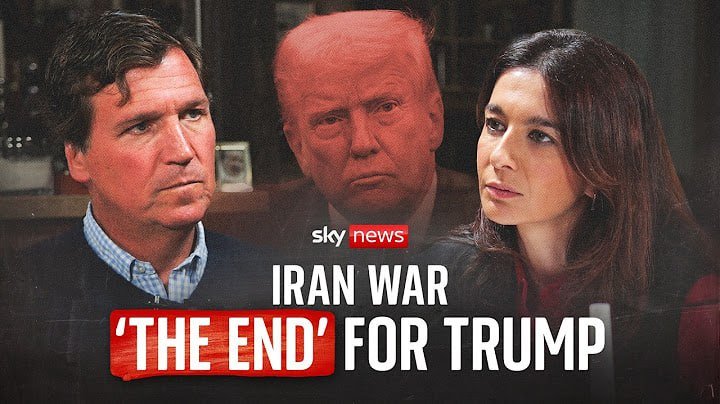
On 28 June 2026 at 20:14 UTC, Russian state-aligned outlets carried Vladimir Putin's response to what the Kremlin framed as a change in Donald Trump's position on Ukraine. The item surfaced on the TSN_ua wire and was built around a single claim: that the White House's Ukraine posture has shifted, and that Moscow has noticed. That second clause is the news.
Strip the choreography away and the question is narrow. Did the Trump administration move on arms deliveries, sanctions architecture, territorial framing, or something more diffuse — a tonal concession that has no policy form yet? The available wire item does not say. What it confirms is that the Kremlin is treating the moment as material enough to put a presidential reaction on the record. That is itself a piece of information, because Moscow has spent the war's middle years rationing its public commentary on Washington.
What "a change in position" usually means in this White House
The administration's Ukraine line has been a moving target since January. Sanctions packages have been signed and waived; tariff threats on buyers of Russian crude have been floated and walked back; public commentary from the president has alternated between personal chemistry with Zelenskyy and open scepticism of further military aid. The pattern is familiar from other dossiers: maximalist threats issued on a weekday, partial retreats announced on the weekend, followed by a period of ambiguity during which the policy community reads tea leaves.
That ambiguity is not accidental. It creates an opening for negotiation-by-headline, where the asset is the perception of a shift, not the policy itself. Putin's reaction, whatever its precise content, is calibrated to lock in the perception of movement before any American negotiation team has publicly anchored what the movement actually consists of.
Why the Kremlin is reacting now, not later
Two pressures converge on Moscow in late June 2026. The first is the slow grind of the battlefield economy: defence spending continues to consume a rising share of the federal budget, and the political cost of mobilisation has not gone away. The second is the absence of a credible off-ramp. A Trump-led reset, even a chaotic one, gives the Kremlin something it has not had since the full-scale invasion began in February 2022 — the prospect of negotiating with an American president who publicly questions the strategic case for further support to Kyiv.
Putin's habit in such moments is to praise the shift before it has fully arrived. The framing rewards flexibility in Washington and stiffens the spines of Western European capitals who fear they will be left holding the bill for an abandonment. It also tests whether the shift will survive the next news cycle.
The Polymarket frame and the political weather around it
On the same day, at 20:20 UTC, Polymarket listed a contract on the directional move in Trump's approval rating for the week ending 26 June 2026. The market itself is not the news; the existence of a liquid, real-money instrument pricing weekly approval drift is the structural fact. It tells you that the political weather around the administration is being priced continuously, by participants who have direct financial exposure to getting it right.
The same hour brought a Reuters wire item — 19:15 UTC on 28 June 2026 — noting that Trump described the new White House reflecting pool as "in full use" and announced that construction of a public golf course would begin. Read alongside the Ukraine reaction, the day is a study in the administration's gravitational centre: a foreign-policy pivot handled on the same afternoon as domestic aesthetic announcements, both delivered with the same declarative certainty.
Counterpoint: the shift may be less than it looks
The plausible alternative reading is straightforward. Trump's posture on Ukraine has oscillated for eighteen months without producing a durable policy break. The institutional resistance inside the Pentagon and the State Department, and the bipartisan floor in Congress on supporting Kyiv, has held against earlier wobbles. Putin's public reaction may therefore be read as an attempt to convert a tactical wobble into a strategic concession by sheer force of presidential commentary — a familiar manoeuvre, and one that has failed before.
What remains genuinely uncertain is whether the shift is rhetorical or operational. The wire items do not specify whether new arms packages have been paused, whether sanctions have been narrowed, or whether the administration has privately communicated new terms to Kyiv. The sources disagree only by silence: they confirm the reaction without confirming the substance.
Stakes
If the shift is operational, Kyiv loses its most important backstop at the worst possible moment in the war's third summer. European capitals — Warsaw, Berlin, Paris, the Nordic trio — face the prospect of substituting for American matériel on a timeline that does not exist. Moscow gains negotiating leverage it has not held since 2022, and uses it. If the shift is rhetorical, the cost is paid in trust: Kyiv discounts American assurances more steeply, European planners hedge harder, and the long-term credibility of the NATO umbrella erodes by another notch. Either reading ends with the United States smaller in European calculations than it was on 1 June.
Desk note
The wires covered the Putin reaction and the Polymarket signal as separate items; Monexus read them as a single weather report. The Trump White House's domestic and foreign signalling increasingly arrives on the same afternoon, and the connective tissue between them is the political weather the administration reads off real-money prediction markets in real time.
Wire provenance
This editorial synthesis draws on the following public wire/social posts:
- https://t.me/TSN_ua
- http://reut.rs/4v29koC