Putin's two-Russia ultimatum and the rhetoric of a war without end
Vladimir Putin returned to a familiar formulation — strong Russia or no Russia — even as he accused Ukraine of "terrorism" inside Russian territory. The speech is theatre, but the theatre tells you where the war is heading.
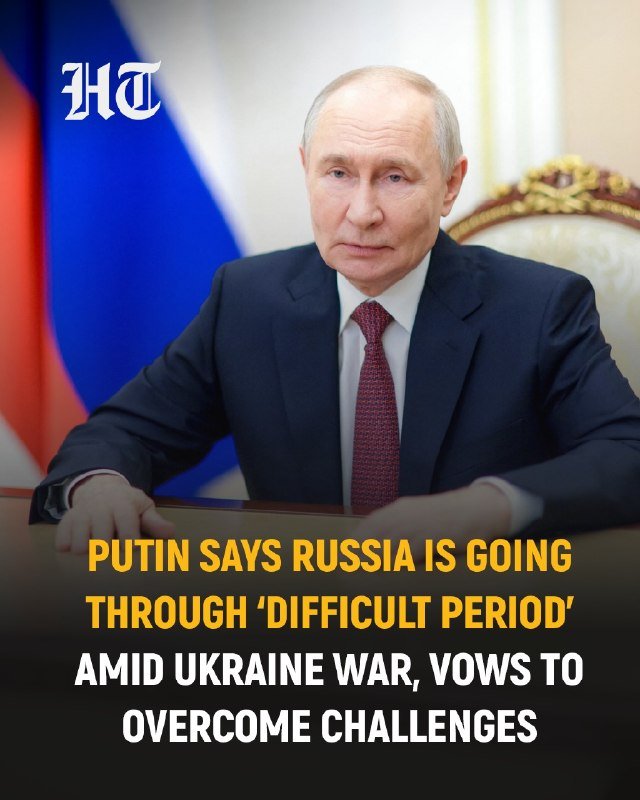
On 28 June 2026, Vladimir Putin stood before a United Russia party forum and pronounced that there are only two paths for his country: a strong and independent Russia, or no Russia at all. The remark, carried by Euronews and amplified by the Telegram channel Clash Report within minutes, was not new in substance — Putin has reached for the existential framing repeatedly since the full-scale invasion of Ukraine in February 2022. What was new was the company it kept. In the same set of remarks, Putin told the United Russia faithful that they had "never been populists" and "did not chase ratings through empty promises," and, separately, accused Ukrainian forces of "losing their positions on the frontline" and resorting to "terrorism within Russia" as a consequence. The package is worth reading together. It is a blueprint for the next phase of a war the Kremlin has no intention of ending on terms Kyiv or its Western backers can accept.
The point of these statements is not to inform; it is to consolidate. Putin's "strong or no Russia" line performs two functions at once. It tells a domestic audience, weary of sanctions and wartime casualties, that compromise is synonymous with national death. And it tells foreign listeners — European capitals, Washington, Beijing — that Moscow interprets any pressure for negotiations as an existential threat to be resisted rather than a dispute to be managed. The formula is rhetorically cheap and politically durable, because it forecloses the very category of negotiated peace.
The "two paths" formula as governance
Putin's bifurcation is a piece of political theatre dressed up as philosophy. There is no third option on the table — not federalisation, not neutralisation, not the kind of security architecture Kyiv has floated, not a return to the Minsk framework in any form. By collapsing the choice to survival or disappearance, Putin denies the legitimacy of any peace that does not ratify the post-2022 facts on the ground: occupied territory, annexed oblasts, a subordinated Ukrainian state.
This is why the United Russia comment matters more than it looks. A ruling party that "never chased ratings through empty promises" is a party that cannot be evaluated by performance. It is, by definition, beyond criticism because it is beyond accountability. Read alongside the "two paths" line, the message is a closed loop: the country cannot survive without strong leadership, strong leadership is United Russia, and United Russia is not to be judged by ordinary political standards. It is the rhetorical architecture of a war economy presented as a permanent condition.
"Terrorism within Russia" — and what the framing does
Putin's separate claim that "Ukrainian forces are losing their positions on the frontline" and therefore "resort to terrorism within Russia" does two things simultaneously. It recasts Ukrainian strikes on Russian soil — drone attacks on military-industrial sites, sabotage operations, long-range strikes against energy infrastructure — as desperate acts of a losing army rather than as legitimate operations against an aggressor's rear. And it transfers the moral weight of civilian harm inside Russia from the invasion that caused the war to the country defending itself against it.
The framing matters because it sets up the legal and informational scaffolding for escalated Russian response: tighter domestic security legislation, expanded definitions of terrorism, longer sentences, broader surveillance. It also gives Moscow a ready-made justification for any operation it chooses to label a counter-terror action — including strikes far from the frontline. None of this requires the underlying battlefield claim to be accurate. The claim is doing political work, not descriptive work.
What the rhetoric concedes
Strip away the theatre and the speech concedes more than it intends. A leader who has to keep telling his audience that Russia is strong is signalling that strength is contested. A party that must insist it has never been populist is acknowledging that voters have populist choices on the table — and that the Kremlin is aware of them. The "terrorism" line, meanwhile, only needs to be deployed if attacks inside Russian territory are happening at a rate worth denying. The very existence of the speech is a confession that the war is not proceeding on the timetable Moscow once implied.
That is the structural reality the formula is built to obscure. A war that was supposed to last three days is in its fifth year. A sanctions regime that was supposed to collapse the Russian economy has, instead, been metabolised into a wartime industrial posture. A frontline that was supposed to freeze along the annexed lines has, by Putin's own framing, become a place where Ukrainian forces are still capable of striking deep into Russian territory. None of this is a Russian defeat — the operational picture is far more complicated than the rhetoric allows. But it is also not the picture of a campaign that is being won, and the gap between the rhetoric and the picture is where the next phase of the war will be fought.
Stakes
For Kyiv, the speech is a reminder that Moscow is not bargaining in anything resembling good faith — and that any Western push for "negotiations" on the current contact line is, functionally, a push to ratify the invasion. For European capitals still debating how to sustain military aid into 2027, the formula is a warning that the war economy on the Russian side is being deliberately welded to an existential narrative, one that will not crack under ordinary political pressure. For the Global South, watching a major power invoke civilisational survival to justify a grinding land war, the precedent is uncomfortable regardless of which side one finds sympathetic. And for the United Russia party faithful in the hall, the message was simple: do not get comfortable, do not ask when it ends, and do not mistake the absence of peace for the absence of a plan. The plan is to keep going.
The sources do not specify the precise forum, the duration of Putin's remarks, or the text of any United Russia policy document released alongside the speech, and this publication has not independently verified the battlefield claims embedded in his "terrorism" framing. What is verifiable is the rhetorical pattern: strong or no Russia, no populism, no retreat, no negotiation. It is a vocabulary designed not to describe the war but to make the war's continuation the only politically conceivable outcome.
Desk note: The Western wires carried the United Russia forum as a domestic political story. Monexus is reading it as a war-rhetoric story — because in Russia, since February 2022, the two have been the same story.
Wire provenance
This editorial synthesis draws on the following public wire/social posts:
- https://t.me/euronews/
- https://t.me/euronews/
- https://t.me/ClashReport
- https://t.me/ClashReport