Putin's gas lines expose a war economy running on fumes
Queues at Russian petrol stations are not a logistical curiosity. They are the visible surface of a state that has been running its war effort on imported fuel and discounted exports, and is now reaching the limits of that arrangement.
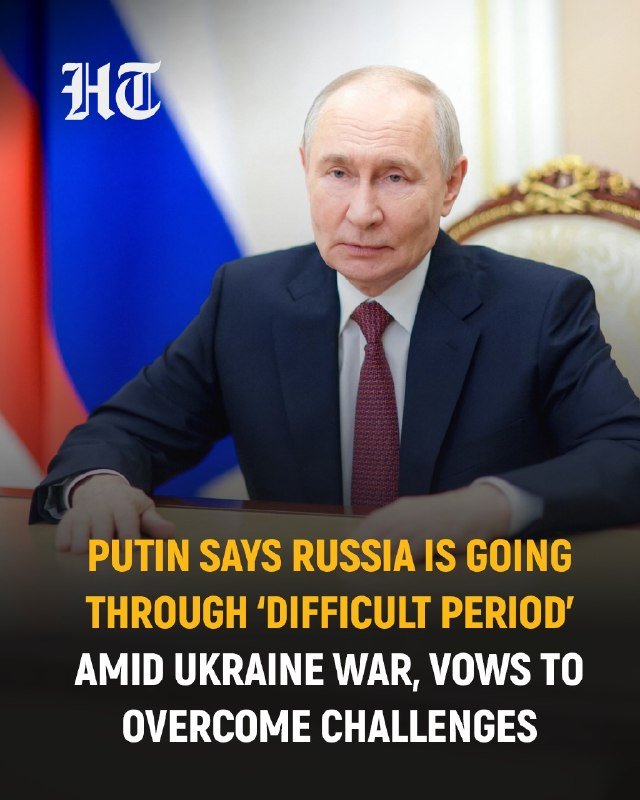
On the afternoon of 28 June 2026, Telegram channels carried footage of motorists lining up at petrol stations across Moscow. Drivers scuffled over pump access. Some forecourts were dark. Others dispensed only diesel. Vladimir Putin, speaking the same day, acknowledged the squeeze in his usual deadpan register: queues at filling stations, the wrong grades of gasoline on offer, and problems for motorists and businesses that "still remain". The Russian government, he added, is now discussing the possibility of a complete ban on diesel exports.
The framing matters less than the admission. Russia is the world's second-largest exporter of refined fuels. It has, for the better part of three years, run a war economy that subsidised domestic petrol through export curbs, redirected refinery throughput to military and front-line logistics, and absorbed the cost differential through the budget. Moscow is now openly telling its own population that the arithmetic is breaking.
What is actually happening on forecourts
The footage and the rhetoric line up. Putin's own remarks, transmitted via the wire monitored by outlets including Euronews, concede that queues persist and that the required grades are not always available. A ban on diesel exports is now under active consideration in the Kremlin — a measure Russia has used before, in 2023, when domestic prices spiked after Western sanctions tightened and the shadow fleet came under pressure. The fact that the option is back on the table tells you the previous round of export controls did not produce a durable fix.
Independent Russian-language channels, including Butusov Plus, are blunt about the picture: collapse at the forecourts, a patchwork of working and shuttered pumps, and a reliance on diesel where petrol is unavailable. That is the texture of an emergency being managed by rationing, not by supply.
The structural pressure behind the queues
Three forces are colliding. First, sanctions and the price cap have made it harder for Russia to sell refined product at the margins it once did, narrowing the budget subsidy that keeps domestic petrol cheap. Second, Ukrainian strikes on Russian refining infrastructure — sustained through 2024 and 2025 — have removed primary distillation capacity from the system, and the replacement cycle for a refinery is measured in years, not months. Third, the war itself consumes fuel at a rate peacetime logistics never planned for: military convoys, drone operations, generator duty, and the long logistics tail running from Russian territory to the front.
Each of those pressures is, on its own, manageable. Stacked, they produce a domestic market in which the state must choose between cheap petrol for voters and diesel exports that earn hard currency. Putin's answer, so far, has been to keep voters on side and to throttle exports. That is a political choice with a fiscal cost, and the cost is rising.
Counterpoint: how serious is this, really?
It is fair to ask whether queues in Moscow are evidence of a system failing or a system being managed. Russia has weathered fuel shocks before. The 2023 export ban was lifted within months. Domestic refining has been partially restored. The Kremlin has tools: it can draw on the National Welfare Fund, it can redirect military-grade product to civilian use, and it can impose administrative rationing if it chooses. None of that is free, but none of it is fatal.
What makes this episode different is the conjunction. The export-ban conversation is happening in the same week as fresh reports of refinery damage and in the same quarter as mounting budget pressure from the war. The state is reaching for a tool it has used before because the previous tool no longer works well enough. That is the story: not collapse, but the visible narrowing of room to manoeuvre.
The stakes, in plain terms
A fuel squeeze inside Russia is, in the first instance, a domestic political story. The social contract that the Kremlin has sold to Russian motorists — cheap petrol, abundant supply, the implicit promise that the war will not touch civilian life — is a load-bearing wall. Cracks in that wall do not need to bring the structure down to matter. They tell a population that has been told everything is fine that not everything is.
Outside Russia, the consequences are more concrete. A Russian diesel export ban tightens supply in the regions that have come to rely on Russian product — Central Asia, the Caucasus, parts of Africa, and a long tail of buyers who paid in shadow-fleet freight. It also raises the price of the sanctioned fuel that still finds its way to market, because the buyer pool shrinks and the risk premium grows. Moscow does not need to stop exporting entirely to move the global market; it only needs to be visibly willing to stop.
The wider signal is the one Putin would prefer the world not to read. A war economy cannot be run indefinitely on the assumption that the home front is insulated from the front line. Moscow is discovering the limit of that assumption in real time, at the petrol station, in a queue.
This publication noted the gap between the wire framing of the story — presented chiefly as a logistical inconvenience — and the structural read, in which domestic fuel stress is a leading indicator of an overstretched war economy. The footage and the Kremlin's own language do the work of corroboration.
Wire provenance
This editorial synthesis draws on the following public wire/social posts:
- https://t.me/euronews/
- https://t.me/ClashReport/
- https://t.me/ClashReport/
- https://t.me/ButusovPlus/