Petrol queues in Moscow expose the contradictions of an economy at war
Vladimir Putin has publicly acknowledged fuel shortages across Russia — queues at petrol stations and a possible ban on diesel exports. The admission lays bare the limits of a wartime economy built on sanctions evasion and state subsidies.
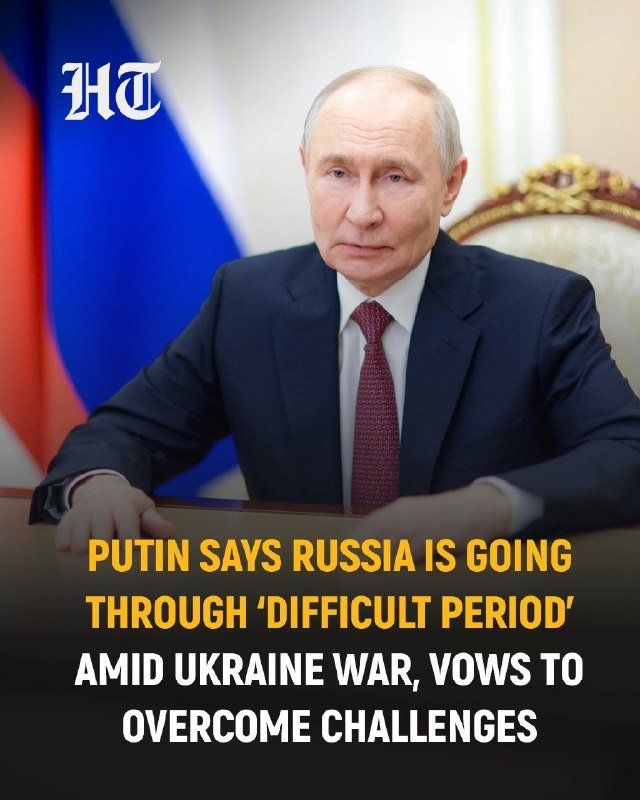
On 28 June 2026, drivers in Moscow were filmed arguing over spots in line at filling stations, with some pumps selling only diesel and others shuttered entirely. By late afternoon the same day, Russian-aligned Telegram channel Butusov Plus had framed the footage as the "results of Putin's 'special operation'" — a bitter joke aimed at a wartime economy whose foundering logistics are now visible to the country's own residents. Hours later, in a televised discussion, Vladimir Putin acknowledged the squeeze plainly: there are queues at gas stations, he said, and the necessary types of gasoline are not always available. The Russian president added that a complete ban on diesel exports was under active consideration.
These are not the words of a government in command of its energy markets. They are the words of a government improvising in public. Russia remains one of the world's largest hydrocarbon exporters, yet motorists in its capital cannot reliably fill a tank. The contradiction is the story, and it sits at the heart of how this publication reads the moment: an economy structured for export, warped by wartime fiscal pressure, sanctions friction, and refinery strain, is now visibly failing the basics of domestic supply.
The admission itself
Putin's remarks, relayed by Telegram channel Clash Report at 16:41 UTC on 28 June 2026, are striking mainly because they came from him. Russian official rhetoric over the past four years has insisted that sanctions have failed to bite, that the domestic economy is robust, and that "special military operation" continues on schedule. To hear the head of state describe fuel queues on national television is a small but meaningful departure from that script. The accompanying discussion of a diesel-export ban, also reported by Clash Report at 16:40 UTC, points to a stopgap rather than a solution: keep fuel inside Russia by law, since the market will no longer do so by price.
This is the classic playbook of an export-oriented petrostate encountering a domestic shortfall — restrict outflows, subsidise domestic consumption, and hope refinery throughput recovers before the political cost mounts. Saudi Arabia, Nigeria, and Indonesia have all run versions of this drill. What makes Russia's case unusual is that the squeeze is happening while the country is fighting an expensive ground war and absorbing the secondary effects of an unprecedented sanctions regime.
Why now
The proximate causes are familiar to anyone tracking Russian refining. Western sanctions and price caps have constrained access to specialised equipment, catalysts, and shipping services that the downstream sector depends on. Ukrainian long-range drone strikes have periodically taken individual refineries offline, tightening domestic supply by reducing the throughput of the very plants meant to feed both home and export markets. Refinery maintenance, deferred during the early war years when budget priorities tilted to the front, has accumulated.
The macro story compounds the operational one. Wartime spending has pushed the federal budget toward deficit, and the rouble has come under episodic pressure. Subsidised fuel prices for domestic consumers, a quiet political contract with the Russian public since the early days of the invasion, mean that refiners cannot easily pass higher input costs through to the pump. The result is the worst of both worlds: thin margins for refiners, capped prices for drivers, and queues for everyone.
The wartime economy's exposed seam
Coverage of the Russian economy over the past four years has tended toward one of two poles. The bullish case holds that sanctions have been circumvented via shadow fleets, third-country intermediaries, and disciplined capital controls, leaving the war machine essentially intact. The bearish case argues that the underlying productive base is eroding and that the headline GDP numbers disguise structural decline. The petrol queues in Moscow lend weight to the bearish case — but only modestly, and only at the margins.
What the queues do is expose a specific seam: the consumer-facing, visible, politically sensitive part of the economy. Russian consumers have been remarkably patient with the war's costs so far, in part because the state has been careful to insulate everyday life from the worst of the squeeze. When that insulation fails at the petrol pump — a place no commuter can avoid — the political temperature changes. A government that cannot guarantee a Moscow driver a tank of fuel is a government that has, at least in this domain, run out of slack.
Stakes
If the diesel-export ban is implemented, the immediate effect will be tighter global supply at a moment when European refining margins are already under pressure from other factors. The political effect inside Russia will be more pointed: an export ban is an admission that domestic supply is rationed, and rationing is a word with uncomfortable historical resonance in Russian public memory. The fiscal effect — foregone export revenue on top of wartime expenditure — will be felt by a treasury already running wider deficits.
The structural reading is straightforward. A petrostate at war cannot indefinitely subsidise domestic fuel, under-tax hydrocarbon exports, sustain a multi-year ground campaign, and absorb sanctions friction all at once. Something has to give. In Moscow this week, what gave was the queue at the pump. The next thing to give could be more consequential.
The reports from Butusov Plus and Clash Report are unverified on independent channels; both are openly hostile to the Putin government, and footage of queues can be cherry-picked to dramatise. That said, Putin's own televised acknowledgement on 28 June corroborates the broad picture: queues exist, supply is patchy, and a diesel-export ban is on the table. The facts the Kremlin has chosen to confirm match the facts its critics have chosen to publish. On the rare occasions that those two readings converge, the news is usually bad.
This publication frames the fuel queues in Moscow as a logistics and political story first, an energy-markets story second. Western wires have so far underplayed the domestic squeeze relative to the export-side narrative; the more interesting question is what happens when the war economy meets the daily commute.
Wire provenance
This editorial synthesis draws on the following public wire/social posts:
- https://t.me/ClashReport/198641
- https://t.me/ClashReport/198640
- https://t.me/ButusovPlus/159557