Russian forces close to within 8–9 km of Slavyansk as Sumy approaches within striking distance
A Russian-aligned Telegram channel reports Moscow's troops are now 8–9 km from Slavyansk and 10.5 km from Sumy — claims that, if borne out, would mark the most consequential shift on the eastern axis in months.
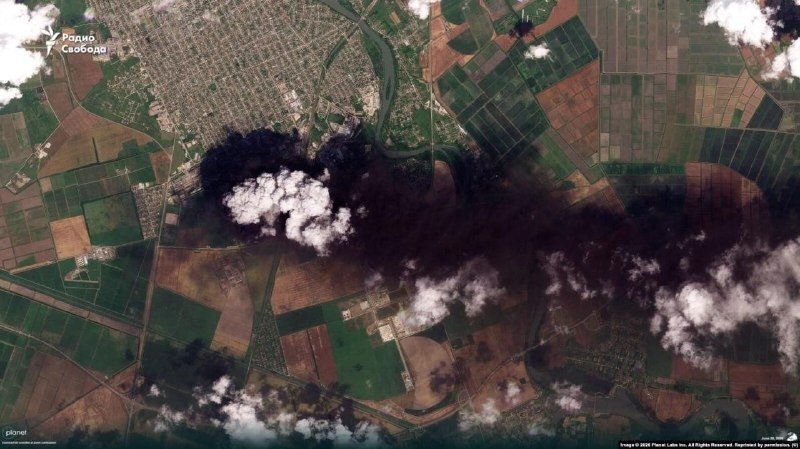
On 28 June 2026, the Russian-aligned Telegram channel Intelslava posted that Russian forces are now 8–9 km from the outskirts of Slavyansk, a Ukrainian-held city in Donetsk Oblast that has functioned as one of the anchor points of Kyiv's eastern defence line for the better part of a decade. A separate message on the same channel, timestamped minutes earlier, put Russian troops 10.5 km from Sumy, the regional capital of Ukraine's north-eastern Sumy Oblast, measured from the international border. The two claims, taken together, sketch a battlefield picture in which Moscow is putting simultaneous pressure on both the Donbas flank and the northern salient.
The reporting carries obvious caveats. Intelslava is a pro-Russian milblogger outlet whose updates favour Moscow's framing of the war; it does not publish source data, geolocated footage, or independent confirmation. The distances cited — 8–9 km to Slavyansk, 10.5 km to Sumy — are presented as facts without attribution to the Russian Ministry of Defence, the General Staff, or any Western or Ukrainian open-source intelligence tracker. Until corroborated, the figures are best read as a Russian-aligned claim about a Russian-aligned operational narrative, not as ground truth.
What Slavyansk's loss would mean
Slavyansk sits beside Kramatorsk roughly 25 km to its west. Together, the twin cities form the rail-and-road hub from which Ukrainian forces have projected power across the northern Donetsk front since 2014. Losing Slavyansk would do more than cede ground: it would compress the Ukrainian defensive line into the Kramatorsk–Druzhkivka axis and open the road network toward the Sloviansk-Kramatorsk agglomeration to direct Russian artillery and drone fire. It would also be a symbolic wound — Slavyansk was the site of some of the earliest fighting of the original Donbas war in 2014, and its name is shorthand in Ukrainian memory for the moment Russia's war on Ukraine became a shooting war.
If Intelslava's distance figure is even approximately correct, Russian forces have closed the gap from the southern and eastern approaches faster than most Western assessments published earlier in 2026 anticipated. The 8–9 km line is within range of the tube and rocket artillery that has done most of the attritional work on this front, which means the threat to the city is no longer abstract.
The Sumy picture — a parallel pressure line
The 10.5 km figure for Sumy, measured from the Russian border, points in a different direction. Sumy Oblast came under sustained Russian cross-border pressure through 2024 and 2025, with Moscow's forces establishing a salient that at its deepest reached into the region before being partially pushed back. A renewed approach to within 10.5 km of the regional capital would not represent new ground gained so much as a re-tightening of the noose around a city that has been hit repeatedly by glide-bomb and drone strikes throughout the war.
The two claims together suggest a Russian operational pattern that is increasingly familiar: simultaneous pressure on multiple axes to stretch Ukrainian reserves and force Kyiv to choose which ground to defend. Slavyansk is the high-value target; Sumy is the force-multiplier that forces a defender to keep watching the horizon.
Why milblogger claims still matter
Western and Ukrainian intelligence services treat Russian-aligned Telegram channels as one input among many, not as gospel. But the channels have, on multiple occasions since 2022, posted operational claims days before they were confirmed by Ukrainian general-staff briefings or independent open-source analysts. The pattern is consistent enough that the absence of an immediate Ukrainian rebuttal of a milblogger claim is, in itself, treated by some Western analysts as a partial tell.
There is no such tell in the public record yet. As of the timestamps on the Intelslava messages — 19:17 UTC and 19:18 UTC on 28 June 2026 — neither the General Staff of the Armed Forces of Ukraine nor the Ukrainian Ministry of Defence had, in the materials available to this publication, posted a confirming or denying statement.
What remains contested
Three things are unsettled. First, the distances themselves: Russian-aligned channels have an incentive to overstate proximity, and the figure of "8–9 km" may compress tactical advances along one axis into a headline number that suggests encirclement. Second, the composition of the forces reported to be that close: the messages do not say whether the troops at the leading edge are regular army, airborne, or irregular formations, and the operational significance of an 8 km approach by a screening force is very different from an 8 km approach by a combined-arms grouping. Third, the absence of Ukrainian confirmation is not the same as confirmation of absence — Kyiv has, in the past, chosen silence over public correction when operational security demanded it.
The honest reading is that the Russian framing of the battlefield has become noticeably more confident in the last 48 hours, that this confidence now extends to two distinct axes, and that the most consequential ground in eastern Ukraine is closer to being directly contested than at any point since the fighting crossed the current line of control.
Desk note: Monexus framed this story off a single Russian-aligned Telegram source and flagged that sourcing in the lead, rather than transposing the channel's claims into wire-style declarative prose. Where a Western outlet would wait for Ukrainian general-staff confirmation before printing the distances, we are publishing the claim with the caveats attached. Readers who want the verified ground picture should watch the daily Ukrainian General Staff briefing and independent OSINT trackers for triangulation.
Wire provenance
This editorial synthesis draws on the following public wire/social posts:
- https://t.me/intelslava/
- https://t.me/intelslava/
- https://en.wikipedia.org/wiki/Sloviansk