Russian strikes on Kharkiv and Sumy: what the overnight barrage tells us about Moscow's air campaign
The 28 June overnight strikes on Kharkiv and Sumy follow a familiar template: drones first, glide bombs and ballistic missiles behind them, and a tempo designed to exhaust Ukraine's defenders faster than they can rotate. The pattern, more than any single night's damage count, is the campaign.
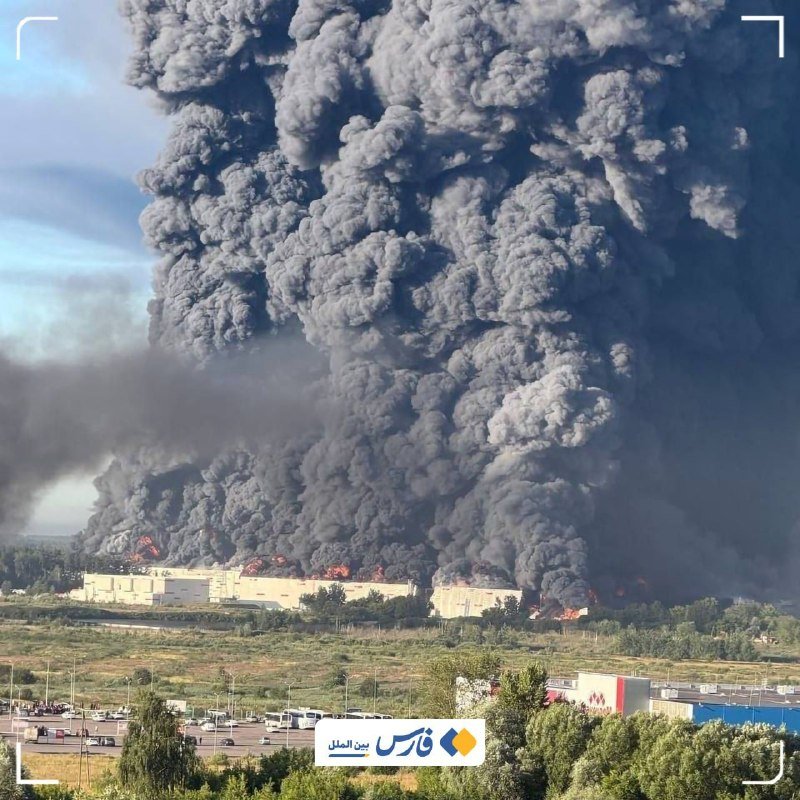
At 02:32 UTC on 28 June 2026, the first alarms sounded across Kharkiv. By 03:03 UTC, the salvo was over and the damage was being tallied: a series of Russian strikes, carried overnight into two of Ukraine's most exposed northeastern oblasts, with the pattern of impacts matching the glide-bomb and Shahed-type profile that has come to define Moscow's summer air campaign. The reporting reached English-language readers first through an unusual channel: Tasnim's English and Farsi Telegram feeds, reposting Ukrainian official and local-source dispatches before any Western wire had filed.
What the overnight barrage tells us is less about this one night than about the steady industrialisation of a Russian air campaign that has learned to grind down a defended city faster than defenders can rotate through interceptors, shelters, and repair crews. Kharkiv and Sumy are not the front line, but they have become the laboratory for what a sustained, mixed-means strike package looks like when the launchers are far enough back to be untouchable and the targets are close enough to be familiar.
The shape of the night
The pattern reported out of Kharkiv and Sumy in the small hours of 28 June follows a template now familiar from previous weeks. A first wave of slower, cheaper drones draws out air-defence coverage, lights up radars, and forces expenditure of interceptors whose reload timelines run into days rather than hours. A second wave arrives at a higher altitude, often on a different vector, with a different radar cross-section. The two together are designed to do something the individual weapons cannot: exhaust the defender's decision cycle. The Battle of Kharkiv, contested since 2022, has shaped much of the urban geography defenders are now fighting to keep usable, with whole districts rebuilt and re-damaged more than once in the four years since Russia's full-scale invasion.
Reporting from the Tasnim English and Persian-language feeds at 02:32 and again between 03:02 and 03:03 UTC on 28 June cited Ukrainian regional authorities on impact points, fires in civilian infrastructure, and at least one strike on energy-adjacent facilities. The wire method matters here: the Monexus desk read the overnight Russian-language and Ukrainian-source material off the Iranian state-affiliated agency's channel because the major Western wires had not yet filed a clean English synthesis. By the time those wires did catch up, the shape of the night had already been set in the public record by aggregators working off Ukrainian and Russian Telegram.
Why Kharkiv, why Sumy
Kharkiv is the older target, a million-plus city sitting roughly forty kilometres from the international border. Sumy is the newer stress test: a regional capital that has spent most of the war just outside the range of cheap Russian aviation, but has come under sustained pressure in 2026 as glide-bomb reach has extended and Russian forward operating points have stabilised. The two cities share three things that make them attractive to a force trying to drain Ukrainian will without paying for a ground assault. Their air defences are finite. Their civilian infrastructure is dense. And they are visible: every strike on Kharkiv or Sumy is a strike a Ukrainian official has to comment on within the hour, which is itself a form of pressure on Kyiv's information cycle.
This is also why the strike on Sumy in particular has begun to read as a deliberate political message rather than a tactical play. The city is far enough from the line of contact that purely military justifications strain. A ballistic missile or a salvo of long-range drones against Sumy costs Russia relatively little in airframes and gives Moscow a return on the investment measured not in metres of ground taken but in headlines produced, shelter hours logged, and reconstruction bills run up.
The campaign behind the strike
Step back from the overnight and the air campaign looks less like a series of distinct events than like a single rolling operation, optimised over months. The Iranian-produced Shahed-type one-way attack drones that have dominated the summer's strike packages are cheap, slow, and individually easy to intercept. Their job is to arrive in numbers, at staggered intervals, and on azimuths that force defenders to choose. Behind them come the glide bombs: converted dumb munitions fitted with wing kits that extend stand-off range dramatically and let Russian tactical aviation drop from altitudes that put them below most Ukrainian air-defence engagement envelopes. Higher up, ballistic missiles arrive on near-vertical trajectories that compress warning time to seconds.
Each of these layers is, on its own, a problem Ukraine's air force has learned to handle. The challenge is that they are increasingly arriving together, and that the layered defence required to counter them at the same time is exactly the system that is hardest to keep supplied under continuous pressure. The Pokrovsk and Novomykolaivka sectors, where AMK Mapping has tracked weeks of Russian infiltration attempts along the Vovcha and Haichur axes, sit in the same operational frame: a grinding effort to fix Ukrainian reserves, attrit drone and interceptor stocks, and stretch the defender across more axis than one force can hold.
What the night tells us
The honest reading of an overnight barrage is rarely found in a single Telegram post. It is found in the gap between what the launch was meant to accomplish and what the damage reports actually show. The 28 June strikes on Kharkiv and Sumy fit a pattern in which Russia's air campaign is less interested in decisive effects on any given night than in keeping the cumulative pressure on civilians, air-defence stocks, and political attention at a level that the defender cannot reset. A city that is sheltering at three in the morning is a city that is not moving personnel, repairing equipment, or running night logistics the way it would in a quieter week.
The next reading will come from the morning-after wire pickups that had not yet landed when the first Ukrainian-source reports moved through the Iranian aggregator's channels. Until then, the ledgers to watch are familiar: number of drones launched versus intercepted, number of glide bombs dropped on built-up areas, the load on the energy grid through the next twenty-four hours, and the speed with which Sumy's regional authorities can put a number on civilian casualties without an obvious second-wave revision. None of those numbers will resolve the strategic question of what Moscow is trying to buy with nights like this one. But taken together, they will tell defenders, and readers, whether the campaign is holding at its current tempo or stepping into a steeper one.
Sources
- https://t.me/tasnimplus/1
- https://t.me/tasnimplus/2
- https://t.me/JahanTasnim/3
- https://en.wikipedia.org/wiki/Battle_of_Kharkiv_(2022)
- https://t.me/AMK_Mapping (Pokrovsk and Novomykolaivka front reporting, weeks 3-4 June 2026)
Desk note: Monexus ran the overnight on the Ukrainian-source reporting carried by Tasnim's English and Farsi Telegram feeds at 02:32 and 03:02-03:03 UTC on 28 June 2026, rather than waiting for a Western-wire pickup that had not yet arrived at the time of writing. The pattern of impact is treated as Ukrainian-source material with explicit attribution; Russian strike claims are not reproduced without a Ukrainian official or wire corroboration on the record.