Kyiv's long arm reaches Krasnodar: what the Slavyansk-on-Kuban strike actually tells us
A refinery more than 300 kilometres inside Russia is burning. The strike is real. The harder question is what Kyiv's growing reach changes about the war's economics — and its diplomacy.
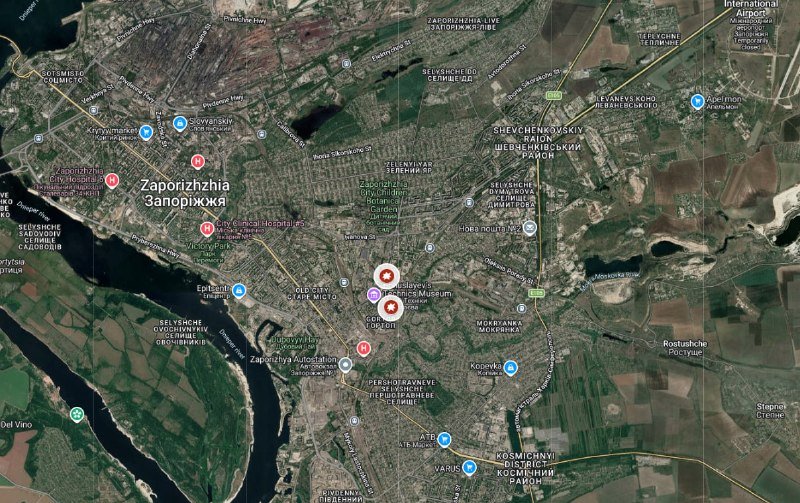
A refinery in Slavyansk-on-Kuban — more than 300 kilometres from the Ukrainian border, deep inside Russia's Krasnodar Krai — was still burning on 2026-06-28 after an overnight drone strike that Kyiv's security services have now publicly claimed. According to a Telegram post from the noel_reports channel at 12:40 UTC, the fire remains active in the tank farm of one of southern Russia's largest downstream facilities. A follow-up post at 13:18 UTC cited satellite imagery confirming ongoing combustion, and at 13:29 UTC the channel reported that Ukraine's SBU had confirmed a joint operation involving Alpha operators, the Unmanned Systems Forces, HUR (military intelligence), and other elements of the Defence Forces. The claim is unusually explicit: not a hint, not a milblogger rumour, but a coordinated attribution from the agency that runs Ukraine's domestic-intelligence strike arm.
What is actually new
The geography is the story. Krasnodar Krai sits across the Sea of Azov from occupied Ukrainian territory, but the Slavyansk refinery is roughly 300-plus kilometres from any plausible launch point inside Ukraine — a distance that, until recently, sat at or beyond the operational ceiling of Kyiv's one-way attack drones. A successful overnight strike, with imagery showing an active tank-farm fire on the morning of 2026-06-28, implies either a maturing long-range drone programme, the use of upgraded airframes, or coordination between services that until 2024 rarely operated jointly on this kind of target. The SBU's decision to publicly claim the operation, alongside the Unmanned Systems Forces and HUR, signals a deliberate information strategy: Kyiv wants the Russian energy system, and the Russian public, to know who did this.
The counter-narrative, taken seriously
Two readings compete. The first, dominant in Russian state-aligned channels, frames such strikes as terrorism against civilian infrastructure — a line Moscow has used consistently since the Kerch Bridge attack in 2022. The second, articulated by Kyiv and broadly by Western-allied observers, treats refineries processing fuel for Russian combat operations in Ukraine as legitimate military targets under the law of armed conflict; a refinery feeding tanks and glide bombs is a dual-use object, not a protected civilian site. Both readings are factually coherent; they diverge on whether the targeting threshold has been crossed. The honest answer is that under existing international humanitarian law, the second framing has the stronger doctrinal footing — but that the cumulative political effect of repeated strikes on Russian soil is its own strategic variable, regardless of legal classification.
The structural frame, in plain language
What this episode illustrates is a slow re-pricing of distance inside the war. For the first eighteen months of the full-scale invasion, the operative assumption — held by analysts in Moscow, in Western capitals, and uncomfortably in Kyiv itself — was that Ukrainian strikes deep into Russia would remain rare, opportunistic, and largely deniable. That assumption is now obsolete. Each successful long-range strike collapses the implicit safe-zone Russia has enjoyed since 2022: the comfortable distance between the front and the refineries, airbases, and command nodes that sustain the front. The pattern is familiar from other campaigns — the Iraqi air force's strikes on Israeli infrastructure in 1991, NATO's gradual extension of strike zones over the Balkans in 1995, the Houthi campaign against Saudi oil infrastructure from 2019 onwards. In each case, the strategic shift was less about any single strike than about the slow disappearance of a sanctuary.
Stakes, and what remains uncertain
For Kyiv, the operational upside is concrete: refinery output reductions translate, over months, into fuel shortages for Russian armour and aviation. For Moscow, the political cost is the slow erosion of the message that the war is contained — that Russian civilians in the heartland are bystanders. The strike also raises diplomatic pressure ahead of any future negotiation track: a Ukrainian capability that Russia cannot suppress is a Ukrainian capability that lands on the table at talks, whether or not those talks happen this year.
What remains genuinely uncertain is whether the 2026-06-28 strike represents a step-change in reach or the high-water mark of a still-limited programme. The available reporting confirms the strike, the fire, and the SBU claim; it does not specify the drone type used, the number of airframes involved, or the percentage of the refinery's capacity affected. Russian official sources have not, as of the timestamps above, published a corroborated damage assessment. The sources also do not address whether the Slavyansk facility is one of several recent hits or a singular escalation — a distinction that matters for any honest read of where the war's strategic geometry now sits.
Monexus framed this strike as a structural shift in the war's operating geometry rather than a discrete incident, and treated the SBU's explicit claim as the news rather than the satellite imagery alone — the wire led with the fire, not the institutional attribution.
Wire provenance
This editorial synthesis draws on the following public wire/social posts:
- https://t.me/noel_reports
- https://t.me/noel_reports
- https://t.me/noel_reports