Smotrich's settlement arithmetic: when Israeli ministers stop pretending
Israel's finance minister told an audience this week that he is burying the idea of a Palestinian state by deepening the settlement project — and that Washington has signed off. The admission is the story.
There is a kind of candour that functions as cover. On 28 June 2026, Israel's Finance Minister Bezalel Smotrich — a settler leader turned cabinet heavyweight with authority over planning in the occupied West Bank — stood before an audience and delivered what amounts to an official admission dressed up as a boast. He is burying the idea of a Palestinian state, he said, by deepening the settlement project. With the approval of the Americans, the prime minister, and cabinet. He framed it as the practical alternative to a diplomatic fiction.
What makes the remark matter is not that the settlement enterprise is new. Successive Israeli governments have funded housing, roads, and infrastructure across the West Bank for decades, and the underlying policy of territorial consolidation has been documented by Israeli civil society and international monitors for years. What is new is the ministerial plainness. Smotrich is no longer reaching for euphemism. The two-state language is being retired inside the cabinet room while still being pronounced in English-language communiqués to foreign capitals.
The arithmetic he is doing
Settlement expansion is not a slogan; it is a ledger. Each new housing unit, each paving of bypass roads, each zoning reclassification in Area C — the roughly 60 percent of the West Bank under full Israeli civil and security control — narrows the geographic possibility of a contiguous Palestinian polity. The math is brutal in its simplicity: a Palestinian state requires territorial contiguity; territorial contiguity is incompatible with a continuously thickening Israeli footprint across the hills east of Jerusalem, the Jordan Valley, and the blocks surrounding the major Palestinian cities.
Smotrich's portfolio gives him unusual leverage over that arithmetic. As finance minister, he controls the budgets that flow to settlement municipalities. As a minister inside the Defence Ministry with authority over the Civil Administration — the Israeli body that issues building permits and demolitions in Area C — he controls the planning pipeline itself. To describe what he is doing as "putting an end to the idea of a Palestinian state by strengthening our presence" is not metaphor. It is the description of an administrative programme being run by an elected official under formal state authority.
The American fig leaf, fraying
The second part of his statement is the part that should draw the most attention. He said Washington is in the room. That is consistent with a Trump-era posture that has already abandoned the prior U.S. vocabulary of "two states for two peoples" as the declared endpoint of negotiations. The shift did not happen in a single speech; it accumulated through embassy relocations, recognition of settlements as not per se inconsistent with international law, and a normalisation architecture that has sidelined Palestinian representation. Smotrich is now describing that accumulation in plain builder's language: the Americans are on board, the prime minister is on board, cabinet has decided.
None of this means the Trump White House formally endorses annexation in the maximalist sense. It does mean the United States has stopped attaching costs to the settlement enterprise at the level it once did. That distinction matters. A fig leaf that is no longer in the way does not function as a fig leaf; it functions as a permit.
Why the hostages don't break the arithmetic
Smotrich made the hostages a deliberate part of his pitch — "contrary to the way some try to portray me as some kind of heartless person who doesn't care about the hostages." It is worth taking the rhetorical structure seriously. He is pre-empting the critique that his settlement project competes with the prime minister's hostage diplomacy, and he is doing it by claiming the two agendas are aligned: pressure on the Palestinian Authority and on the territory available to a future Palestinian state, in his telling, is part of the leverage that brings captives home.
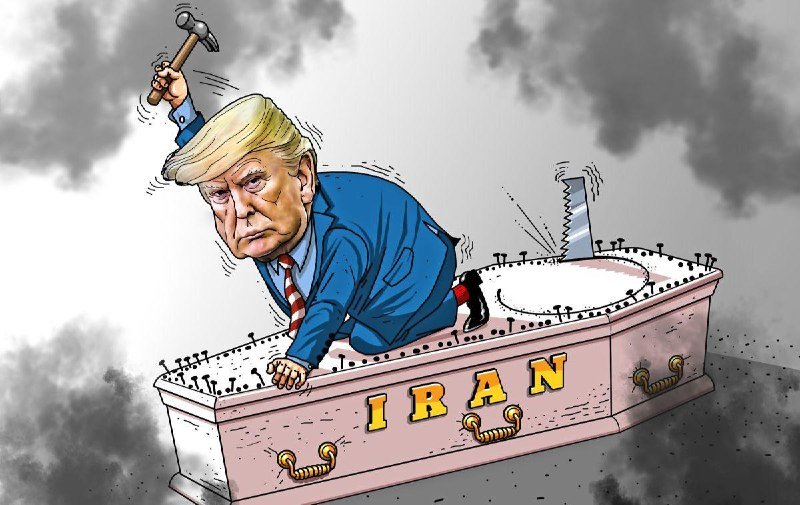
That is a contestable claim, and one that hostage families have organised against. But the structural point is that the two tracks — hostage negotiations and settlement expansion — are no longer presented as in tension inside the governing coalition. They are presented as parts of the same strategy. The American backing for the war in Iran, in Smotrich's framing, is part of the same alignment: a U.S. president willing to expend political capital on Israel's regional posture is, by extension, a U.S. president willing to tolerate what Israel does at home in the West Bank.
What this means for the framing debate
For years the international debate has been organised around a presumption: that Israel and the United States manage the language of two states because the alternative is too costly to admit. That presumption is now visibly exhausted. Smotrich is saying what he is doing. The question for Western governments is whether the reply is still the same language, or whether the reply is now also being revised.
The honest reading of the structural pattern is straightforward. Where a state builds facts on the ground continuously for decades, and where its governing figures now describe that build-out as terminating the political horizon those facts were always meant to foreclose, the diplomatic vocabulary has to catch up — or be replaced. The settlement project and the Palestinian state were never going to coexist indefinitely. The choice has been made, in deeds, for years. Smotrich has simply stopped pretending the deeds require a different vocabulary.
The stakes are not abstract. A Palestinian population under military administration without political horizon is not a stable equilibrium; it is a slow-moving crisis that exports risk. The Israeli public, the Palestinian public, and the Jordanian and Egyptian neighbours all live inside that arithmetic. Pretending otherwise — from Washington, from European capitals, from the United Nations — has become, at this point, an active policy choice rather than a diplomatic reflex.
Desk note: Monexus treats Smotrich's settlement politics as a structural fact of Israeli governance, not as a fringe position. The wire services have tended to flag his remarks as provocative; we read them as descriptive of an administered policy. This article sits on the opinion desk because the assessment of the cabinet's direction is editorial — the underlying statements are sourced from the Telegram feed.
Wire provenance
This editorial synthesis draws on the following public wire/social posts:
- https://t.me/ClashReport
- https://t.me/ClashReport
- https://t.me/ClashReport
- https://t.me/ClashReport