Starmer, NATO, and the long goodbye: why a 2028 succession rumour is already reshaping British politics
A single Observer report has turned a vacancy two years away into a Westminster preoccupation. The foreign-policy subtext matters more than the speculation.
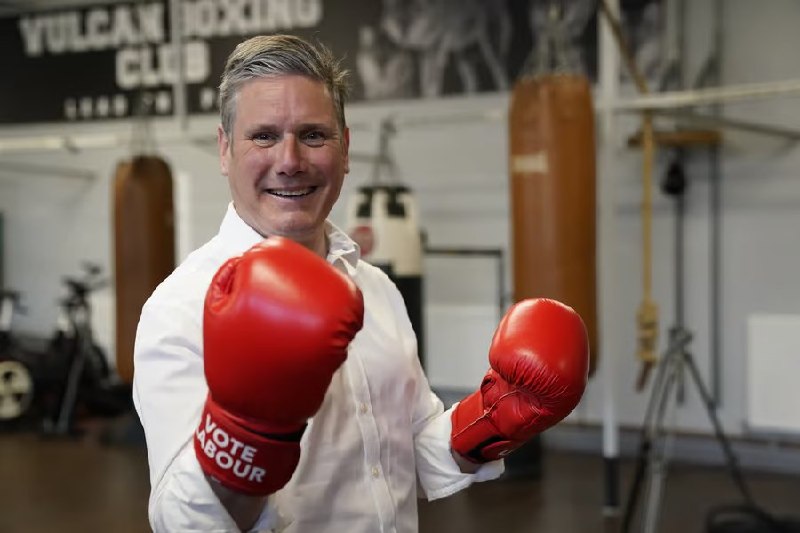
A weekend report in The Observer has dragged a vacancy that does not formally open until 2028 into the centre of British political conversation. The reading, attributed by the paper to people close to Keir Starmer, is that the Prime Minister is weighing a future bid for the post of NATO Secretary General once he leaves Downing Street — provided he can carry the British government with him when the moment comes.
That the rumour has circulated at all tells you more about the state of the alliance than it does about one politician's CV. A leadership race two years out, with no declared candidate and no declared loser, is already moving money,调动ing diplomats, and forcing allies to position themselves. The pattern is familiar from previous succession cycles: the earlier the speculation, the more it begins to dictate behaviour in the present.
The substance behind the rumour
The Secretary General post becomes vacant in 2028, when the incumbent's term ends. The Observer's framing — relayed via the Telegram channel @MyLordBebo on 28 June 2026 at 15:15 UTC — is that Starmer is treating the post as a plausible post-premiership role rather than a current ambition. The headline construction ("considering … after leaving") is deliberately deniable: it neither confirms an active campaign nor forecloses one.
What the framing concedes, whether the paper intended it or not, is that the British premiership is no longer being treated by Downing Street insiders as a terminal political station. It is being positioned, internally, as a way-station into the transatlantic security establishment. That is a meaningful tonal shift from a generation ago, when the Foreign Office and the intelligence services were the conventional pipelines out of Number 10.
The same channel's earlier post on 28 June 2026 at 16:15 UTC — headlined in the boosterish register Telegram channels favour — frames the prospect as Starmer "becoming the best in NATO." The wording is the kind that travels through encrypted group chats faster than any press release. The substance is thinner: there is no policy platform, no declared coalition, no formal endorsement from a NATO capital.
Why the speculation is doing real work now
Diplomatic succession rumours are rarely idle. They shape four things well before any ballot is cast.
First, they discipline the rumoured candidate. A serving Prime Minister who is openly positioning for a NATO leadership role is a Prime Minister whose foreign-policy room for manoeuvre narrows. He cannot afford a domestic row with Washington; he cannot afford an embarrassing rift with Paris; he cannot afford a foreign-policy crisis of his own making. The rumour, in other words, makes him a more careful ally.
Second, they mobilise competing candidacies. If Starmer is in the frame, the question becomes: who is in his camp, and who is not? A field of plausible candidates — from the Nordic countries, from the Baltic states, from France and Germany, possibly from the southern flank — would each test the British claim. The earlier the field assembles, the harder it is for any one name to consolidate.
Third, they harden the role's identity. The Secretary General post has historically been a convening function: the person who manages the consensus machine in Brussels, who absorbs the transatlantic differences and turns them into communiqués. If 2028 is being framed as a contest between serving heads of government with their own political brands, the role itself changes. It becomes more political, more visible, more exposed to the cycles that drive national elections.
Fourth, they leak resources into lobbying. A succession two years out is, in alliance terms, a short horizon. By 2027, the cables will be moving. The earlier the speculation, the earlier the unofficial delegations, the earlier the courting of smaller NATO members whose votes are decisive in a contested field.
The structural read
What we are watching is a re-balancing inside the alliance's centre of gravity. The British claim on a NATO leadership role is, on its face, a claim of continuity: London has held the post before, the UK is a nuclear power, a permanent UN Security Council member, a leading European defence spender. The case does not need to be argued; it is, in a sense, the default.
What makes the moment different is that the default is no longer being left to assert itself. It is being pushed. Two pressures are visible in the reporting, even if the sources are thin. One is the desire of a post-Brexit British government to anchor itself in a security architecture it is no longer central to inside the EU. The other is the more uncomfortable fact that the alliance itself is being asked to do more — on Ukraine, on the Indo-Pacific, on the southern flank — with leadership that is more contested than at any point since the Cold War.
In a contest between great powers with no supranational arbiter, the rational move for a middle-sized ally is to maximise its institutional weight. A Secretary General who sits in the chair, who chairs the meetings, who phones the heads of state, is a structural advantage no annual budget line can buy. The rumour is, read this way, a rational hedging strategy dressed up as personal ambition.
Stakes and uncertainties
The concrete stakes are not the 2028 vote. They are the 2026 and 2027 votes inside the alliance's working machinery: the budget cycle, the defence-planning posture, the support packages for Ukraine, the relationship with the next US administration. A British Prime Minister who is widely read as a future Secretary General will be courted rather than consulted. He will be asked to mediate rather than lobbied to align. That is a different posture, and it changes the texture of negotiations long before the chair changes hands.
What remains genuinely uncertain is whether Starmer himself is driving the story or whether it is being driven around him. The Observer's sourcing is consistent with a paper that has been told something rather than a paper that has been briefed a campaign. The Telegram relay on 28 June at 15:15 UTC adds heat but not light: the channel is a distribution node, not an investigative source. No NATO capital has, on the public record, endorsed or rejected the framing. No rival candidacy has yet been floated in the same register.
The honest reading is that the story is in its first stage: a single outlet's reporting, a politically convenient framing for the rumoured candidate, a Telegram-amplified echo, and a Westminster commentariat that is now obliged to take the possibility seriously because the cost of dismissing it, if it later proves accurate, is reputational. That is how alliances read the runes now. The 2028 succession has, in effect, already begun.
Desk note: Wire coverage of NATO succession tends to wait for an official campaign to begin. This publication is treating the Observer report as a directional signal about how a serving Prime Minister is being positioned inside his own circle, and as an early indicator of the alliance's leadership contest — not as confirmation that a candidacy exists.
Wire provenance
This editorial synthesis draws on the following public wire/social posts:
- https://t.me/myLordBebo
- https://t.me/myLordBebo