Tehran's Hormuz Play and the Diplomacy That Wasn't
A week of cancelled talks, an absolute-sounding declaration, and a partial operationalisation through the southern Gulf have left the Strait of Hormuz governed more by rumour than by treaty, and the price paid in the freight market rather than on the front page.
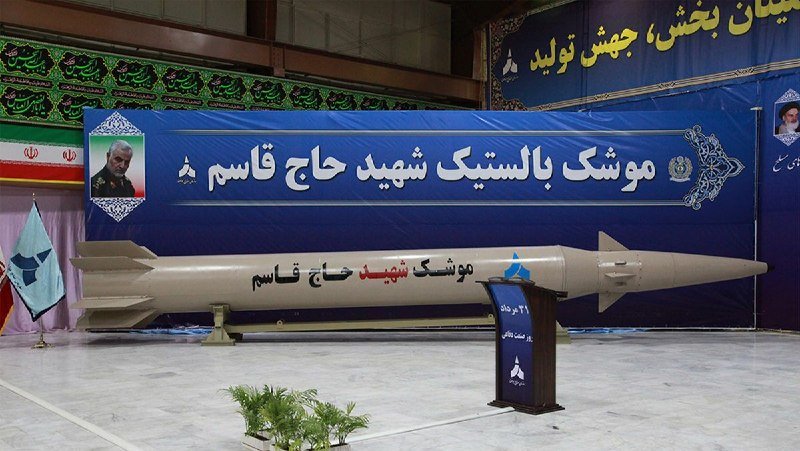
The diplomatic script for the Strait of Hormuz was supposed to be a measured one. By 28 June 2026, what had begun as a discreet round of Gulf-brokered de-escalation talks has been unwound in a sequence of cancellations, declarations and partial evacuations that have left the waterway, through which roughly a fifth of global oil passes, governed more by rumour than by treaty. The episode is small in the number of meetings it consumed, and large in what it suggests about the limits of shuttle diplomacy when one of the parties has decided that the talking has already cost too much.
The thread that runs through the past week is a familiar one for the Gulf, even if the choreography is unusually ragged. A track of contact between Tehran and its neighbours, designed in part to insulate the strait from the wider Iran–Israel confrontation, opened, paused, and was publicly declared dead in the space of days. What replaces it is not yet visible, and that, more than any single communique, is the source of the price action and the shipping reroutings that traders are now pricing in.
The cancellation that set the tone
The week began with a meeting that did not happen. A round of lower-level contacts, understood to involve Iranian and Emirati intermediaries with Omani and Qatari back-channels, was pulled at short notice on the Iranian side, according to regional Telegram channels tracking the Iran and Gulf brief. The ostensible pretext varied by account: scheduling friction, a domestic political event in Tehran, a hardening line from a particular faction. The functional pretext, judging by the way the rest of the week has played out, was that Tehran no longer believed the talks were buying it the room to manoeuvre that earlier rounds had purchased.
The pattern is worth naming. In the Gulf, talks rarely fail on the substantive point they were convened to discuss. They fail on the question of whether the talking itself is still useful. A foreign ministry that cancels a session the morning of is, almost always, signalling that the cost of being seen to negotiate has risen above the cost of being seen not to. What the Iranian signalling apparatus appears to have concluded, in this instance, is that the diplomatic option had begun to look like an admission of strain at a moment when the domestic messaging required defiance.
The declaration, and what it actually said
The cancellation was followed by a public declaration, distributed through Iranian state-linked channels and then amplified across regional Arabic-language networks, that framed the diplomatic track as definitively closed. The language was carefully absolute in the way that Iranian declarations tend to be: not a pause, not a recalibration, but a verdict on the entire process.
Read literally, the declaration is a statement of position. Read in context, it is also a piece of theatre aimed at a domestic audience and at a regional one, designed to make any future re-engagement look like a concession rather than a continuation. The diplomatic cost of declaring a track dead is the price of being able to reopen it later on harder terms. Tehran has, on past occasions, been willing to pay that price, and the assumption among Gulf-based analysts is that some version of this calculation is again in play.
Evacuation, disruption, and the signal in the routing
The third beat of the week has been the most concrete. Flight and staffing disruptions around the southern Gulf, partial and uneven by all accounts, have fed directly into a market read that the diplomatic breakdown is being operationalised in real time. Insurance premiums for transiting the strait, already elevated, moved higher. Charter inquiries for alternative routing through the Bab el-Mandeb and around the Cape rose alongside them. None of this is a blockade, and none of it is a closure. It is, in the language of shipping, a pricing event, and pricing events in the strait have a habit of becoming self-fulfilling if they last long enough to reroute insurance permanently.
The UAE contact, such as it is, has been a quieter strand running underneath the cancellations. Emirati diplomacy in this part of the world has long specialised in keeping lines open to Tehran precisely so that days like this one do not become irreversible. The fact that the channel has not produced a meeting is itself a reading: the intermediaries are working, but the principals are not yet ready to be seen using them.
What the framework actually says
Strip the week's events of their theatre and the underlying argument is straightforward. Iran and its Gulf neighbours have, for two decades, managed a tacit equilibrium around the strait: the waterway stays open, in practice and in pricing, and the parties to that equilibrium refrain from actions that would force the international community to choose between unimpeded passage and a principled stand on the underlying dispute. The diplomatic tracks that come and go in the Gulf are, in this reading, the visible repair work on an unwritten contract.
The Hormuz play, as it is sometimes called, is the ability of one party to remind the others of the cost of that contract breaking. It is not a threat of closure in the literal sense. It is a reminder that the equilibrium is not free, that it is maintained by restraint, and that restraint can be withdrawn. Tehran has, in different registers, made that point several times in the past decade. The question this week is whether the latest iteration is a routine reminder or the opening move of a sequence in which the price of the contract goes up rather than resets.
Stakes and the week ahead
The near-term stakes are not military. They are commercial and financial, and they run through the price of crude, the price of insurance, and the willingness of underwriters to keep the strait on standard terms. A week of declared diplomatic rupture, even one in which the underlying military exchanges remain constrained, is enough to push the system into a higher-cost regime from which it is difficult to step back down quickly. The longer the declared rupture persists, the more the reroutings harden, and the more a future de-escalation looks like a victory for the side that refused to de-escalate first.
The dates to watch are the routine ones. A resumption of flight operations into the southern Gulf on their normal schedule would suggest that the operationalisation of the diplomatic breakdown is partial and reversible. A second round of cancellations, or a public statement from a Gulf capital that the contact track is being formally suspended, would suggest the opposite. Until one of those signals arrives, the strait is being governed by the absence of a meeting that was supposed to happen, and the price of that absence is being paid, as it usually is, in the freight derivatives market rather than on the front page.
Desk note: Where the wire carried the Iran and Gulf brief in fragments, Monexus has held back from narrating the underlying military exchanges, on which the sources are thin and the claims contradictory, and has kept the framing on the diplomatic sequence itself: cancellation, declaration, evacuation disruption, and the UAE contact track that has so far failed to produce a meeting.