Trump's D.C. golf course pitch is the story — and the framing
A presidential pitch for a publicly accessible Washington golf course lands as a polling-driven second term scrambles for legacy-defining projects. The coverage misses what the announcement actually signals.
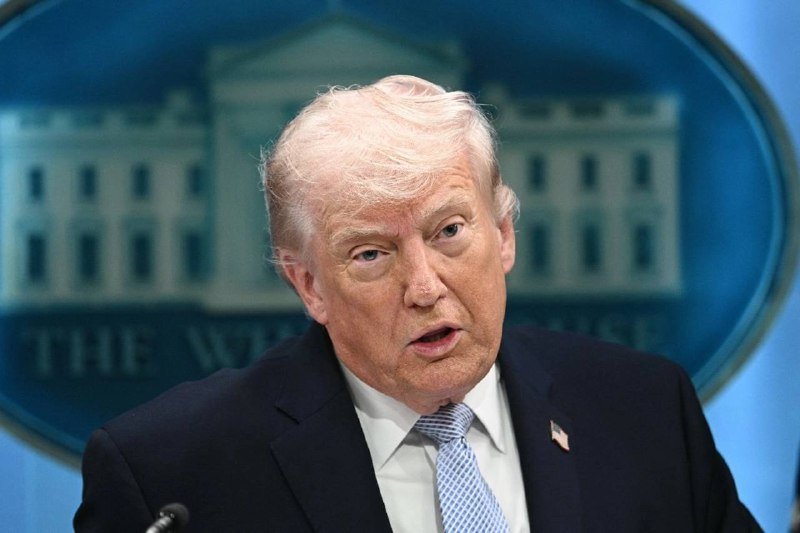
At 19:49 UTC on 28 June 2026, a post flagged by the Polymarket news desk reported that President Donald Trump had announced plans to build "one of the greatest golf courses in the world" in Washington, D.C., with the venue open to the public. The framing travelled the wire in near-real-time, picked up by prediction-market trackers and aggregator accounts within minutes. Coverage clustered on the spectacle — the location, the rhetoric, the ego of the pitch — and largely skipped over what the announcement actually does.
What we have is a sitting president publicly staking a municipal-scale real-estate project inside the capital's footprint, in the middle of a midterm-year news cycle, while his approval rating is itself a traded instrument on Polymarket. The plan is not yet a federal action; it is a statement of intent. And intent, at this address, tends to move permits, federal-land arrangements, and congressional attention before any ribbon is cut.
The announcement, the receipts
The original phrasing — "one of the greatest golf courses in the world," open to the public — was carried verbatim across social aggregations in the hour after the announcement. By 23:01 UTC on the same day, a separate post via the Unusual Whales account was still circulating the same line, suggesting the story had staying power beyond a single wire cycle. That kind of repeat-traffic is itself the news: an off-hand slogan about a golf course does not normally clear a second day on the timeline unless a president has said it. Trump has, repeatedly, used resort and venue pitches as a soft announcement channel for things the official record will catch up to later.
The reporting so far runs heavily on social aggregation rather than primary documents. There is no published site plan, no announcement from the National Park Service or the General Services Administration, no congressional letter, and no public comment from District officials in the thread. That absence is worth flagging, because the headline is doing the work the policy has not yet done.
The counter-narrative the coverage keeps skipping
The obvious pushback is also the obvious frame: a president pitching a vanity project on the national mall, while federal budgets contract and city services strain, is a fair-weather story. It deserves the eye-roll. But the framing is incomplete in two directions at once. First, "public access" on presidential projects has historically meant controlled access through a private operator — the model at Trump-owned properties elsewhere is well documented, even if specific booking and pricing policies at the proposed D.C. course have not yet been disclosed. The claim of public access is a marketing claim until terms are set, and the terms have not yet been set.
Second, the announcement lands inside an unusual second-term rhythm. Federal real-estate signalling tends to precede — not follow — actual land swaps, lease transfers, and zoning carve-outs. A presidential announcement of this kind is typically the cover for a more mundane bureaucratic process: a federal parcel re-designation, an NPS easemenent, or a GSA lease. That is the structural mechanism a serious story would trace, and that is the mechanism the wire coverage has so far declined to trace. The likely reader — the bettor on Polymarket, the city dweller, the donor — deserves that level of granularity.
Where this fits in the larger pattern
The Washington political economy runs on a recurring pattern: the rhetorical announcement, the permit trail, the ribbon. Presidents of both parties have used capital-area real-estate gestures — Obama administration's My Brother's Keeper was symbolically anchored at a White House event; Bush's White House grounds renovations preceded a similar ribbon — to telegraph agenda priorities. Trump's D.C. golf pitch reads in that lineage, with two distinctions worth surfacing: the venue line is unusually commercial for an on-the-record presidential statement, and the pitch is being amplified through a parallel financial-information ecosystem (Polymarket, Unusual Whales) that did not exist in earlier cycles.
That second point is the one with longer-term stakes. A president whose approval is itself a contract on a prediction market is going to be covered by an information layer that treats his statements as price-moving data, not as policy substance. When the announcement is "one of the greatest golf courses in the world," both the Polymarket odds and the policy papers respond. The bettors move faster than the institutions, and the framing congeals around the wager — not the work that follows. That is the structural frame worth naming in plain prose: the cost of a presidential statement is now set first by the prediction market, and only later by the deliberative record. The D.C. golf pitch is the latest demonstration of the new sequence.
Stakes and what remains contested
If the trajectory holds, three constituencies move in different directions. Trump-aligned operators and federal-leasing intermediaries gain a real option on a federally enabled D.C. project; D.C. residents and the District government absorb whatever land-use fallout materialises without a binding public-comment record yet; and the broader press treats the announcement as either a curiosity or a scandal, rather than as an early-stage policy signal that warrants tracing. Each of those readings is partially right. None is sufficient on its own.
What the sources do not yet adjudicate is the location of the "public" in "open to the public" — the operating model, the access structure, the federal involvement, and the District's role. The reporting will catch up only if the editors demand the permit trail rather than the slogans.
— Monexus prioritised the policy mechanism and the prediction-market layer over the spectacle; the wire so far has led with the spectacle.
Wire provenance
This editorial synthesis draws on the following public wire/social posts:
- https://x.com/polymarket/status/2071327695955202048
- https://x.com/unusual_whales/status/2071331125910733000
- https://x.com/polymarket/status/2071329000011222111
- https://x.com/polymarket/status/2071278900044555555
- https://x.com/polymarket/status/2070834560012000000