Ukraine's refinery campaign is choking Russia's war economy, quietly
Two FP-5 Flamingo cruise missiles hit a Volgograd military-industrial plant on 30 June, the latest in a grinding Ukrainian campaign to deny Russia the fuel and ammunition base that sustains its invasion.
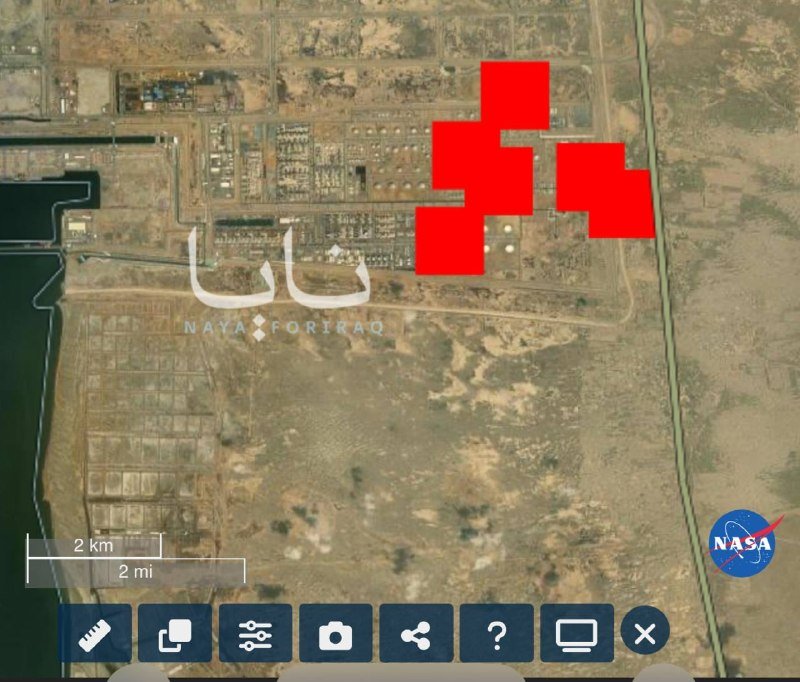
Ukrainian long-range cruise missiles hit a Volgograd plant inside Russia this week, the second deep strike in days against one of Moscow's war-supply factories, and the cumulative numbers on the Russian downstream are beginning to harden. Open-source channels WarTranslated and Drone Bomber posted satellite-style imagery on 30 June showing two FP-5 Flamingo missile impacts on the "Titan-Barricades" facility, part of Russia's military-industrial complex in the Volgograd region. The same evening, according to OSINTlive, attack drones and unmanned underwater vehicles were dispatched toward Russian targets, signalling a campaign calibrated less for single dramatic hits than for persistent pressure across multiple domains.
This is the throughline of 2026's Ukrainian deep-strike effort: a quiet strangulation of the refining and industrial infrastructure that keeps Russian armaments, fuel and lubricants moving toward the front. Russian S-300/400 air-defence crews attempted to intercept unidentified projectiles over Moscow on the same day, according to AMK_Mapping, an indication that Kyiv's reach is now forcing even the capital's defences into high-alert scrambles. Igor Girkin, a former Russian officer turned persistent Kremlin critic tried and imprisoned for his views on the war, has separately warned that the strategic picture for Moscow is deteriorating, an unusual concession from a hardline nationalist whose warnings tend to outlast official silence.
Refineries, drones and the math of attrition
For more than two years the pattern has been legible. Ukraine's general staff and Western-aligned open-source trackers publish a steady drumbeat of confirmed strikes on Russian oil refineries, pumping stations and downstream storage. The Kremlin rarely confirms damage in real time and frequently claims interceptions of drones and missiles; Russian state-aligned channels routinely describe Ukrainian strikes as Western-provoked provocations and inflate the percentage of incoming weapons they shoot down. Independent satellite imagery, geolocated strike footage and local Russian reporting have, over the months, made clear that the cumulative effect is real: Russian domestic fuel prices have risen, several refineries have run for weeks at reduced capacity, and Moscow has resorted to drawing on strategic reserves and, increasingly, on imports from countries that do not advertise the trade.
What is different now is the tempo. On the evening of 30 June, simultaneous reports described Flamingo cruise missiles hitting an industrial site, attack drones inbound toward Russian territory, and what WarTranslated cited as unmanned underwater vehicles heading toward Russia, a layered strike package that suggests Ukrainian planners are no longer rationing any single system. Even allowing for the standard Russian claim of successful interceptions, the operational logic is straightforward: if the Kremlin must defend Moscow, Volgograd, the Black Sea coast and any number of pipeline nodes at once, the cost-per-defended-target rises faster than Russian industry can rebuild.
Russian counter-claims, calmly recorded
The Russian counter-narrative is consistent and worth restating without endorsement. Russian milbloggers and state outlets frame the strikes as NATO-enabled terrorism, point to Western-supplied weapons as evidence of direct US and British involvement, and argue that intercepted drones and missiles prove Russian air defence remains effective. Some claim that Ukrainian damage assessments are inflated by up to an order of magnitude and that the targeted plants recover within days. Each of these claims may be partially true on any given night; none has reversed the steady upward drift in Russian refined-product costs or the visible slow-down at export terminals monitored by Western tracker ships. The most useful posture for a reader is to track the rate of confirmed damage, not any single night's claimed interception.
Why the front, not the pipeline, still decides this war
Industrial attrition alone will not end the war. The Pokrovsk and Novomykolaivka sectors of the front remain active and violent: AMK_Mapping's day-by-day mapping for the third and fourth weeks of June catalogues repeated Russian infiltration attempts toward Vovcha and Haichul, with measured Ukrainian defensive fire reported along the axis. Ukraine's Commander-in-Chief Oleksandr Syrskyi, quoted via the @ukr_leaks_eng channel carried by Two Majors, said publicly on 30 June that "Russia may launch an offensive on the Chernihiv region, and we are preparing for this," underscoring that Kyiv's planners expect pressure to widen rather than contract. Refineries, fuel depots and military-industrial plants lose their strategic value only when the fighting stops; until then, the question is how much each litre of gasoline and each kilogram of explosives costs Russia to keep producing them.
The horizon to watch
Three developments will mark whether 2026 becomes the year the Russian war economy cracked or merely bent. First, the volume of confirmed fires and outages at major refineries through July and August, when export demand traditionally peaks. Second, the trajectory of domestic Russian gasoline and diesel prices, which Russian authorities have so far managed with quiet export curbs and opaque reserve releases. Third, whether Moscow attempts to escalate rather than absorb, what AMK_Mapping reported on 30 June as four Tu-95MS strategic bombers redeploying from Ukrainka Airbase in the Far East to Olenya Airbase in the Arctic, consistent with preparations for another large-scale combined missile-and-drone strike against Ukrainian cities. TSN reported separately on 30 June that Russia has closed railway checkpoints along borders with three EU countries, an expert warning of a new "iron curtain," the kind of protective economic move Moscow tends to make before the domestic fuel balance tightens further.
Ukraine's bet is that an economy can lose a war in slow motion. The Volgograd strikes suggest the bet is being doubled.
Sources
- WarTranslated / Twitter, https://twitter.com/wartranslated/status/2071134141131706424, 30 June 2026
- WarTranslated Telegram channel, https://t.me/wartranslated, 30 June 2026
- OSINTlive Telegram channel, https://t.me/osintlive, 30 June 2026
- AMK_Mapping Telegram channel (S-300/400 interception over Moscow; Tu-95MS redeployment; Pokrovsk front assessment), https://t.me/AMK_Mapping, 30 June 2026
- TSN Ukraine via Telegram, https://t.me/TSN_ua, 30 June 2026
- Two Majors Telegram channel (Syrskyi quote on Chernihiv), https://t.me/two_majors, 30 June 2026
Desk note: Monexus treats these strikes as legitimate Ukrainian action against an invading power's war-sustaining infrastructure, framing the campaign as defensive attrition rather than escalation. Russian state-aligned claims of high interception rates and Western-provoked provocation are recorded in the piece but subordinated to Ukrainian and independent open-source reporting.