Tehran and Washington keep talking. The talking is the story.
A fourth round of indirect US-Iran talks closed on 28 June without a deal, and the gap between Tehran's and Washington's characterisations is itself the diplomatic product.
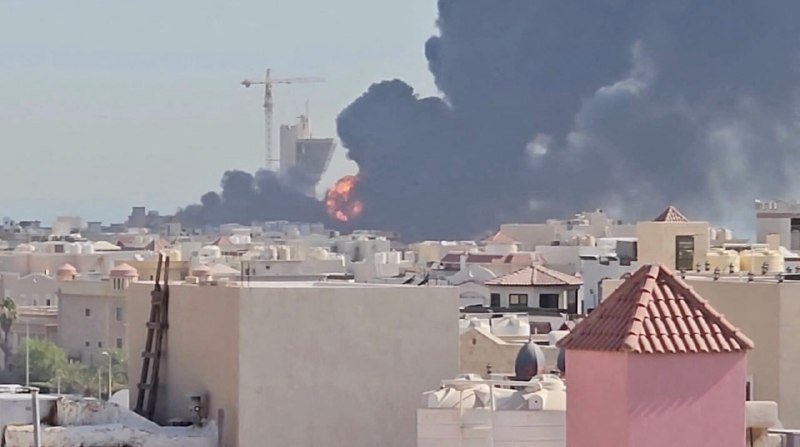
A fourth round of indirect US-Iran talks, mediated through Omani and Qatari channels, wrapped in the Gulf on 28 June without producing anything the Iranian foreign ministry was prepared to call a deal. By the close of the same day, Iran's foreign minister Abbas Araghchi was still travelling through the region selling the procedural track as an achievement in its own right. The Americans, for their part, sent a senior State Department figure to brief reporters on background and on the record, characterising the session as substantive, productive, and the basis for further talks. Both descriptions are accurate, and the distance between them is the story.
The implicit thesis of this round is not that the two sides are close to a nuclear compromise. They are not. It is that a procedural channel has been kept open, and that keeping it open is doing diplomatic work in the background, in part because it allows regional mediators to claim relevance and in part because it lets Tehran avoid the alternative, which is open-ended escalation with no off-ramp. Talking, in other words, has become the product rather than the path to the product.
What actually happened in the room
The 28 June session in Muscat ran for roughly four hours and produced no joint statement, no signed framework, and no announced date for a fifth round. The Iranian delegation, led by Araghchi, described the discussion as serious and focused on narrowing differences, with the foreign minister afterwards telling Iranian state-aligned media that Iran's red lines on missile capability and on the structure of any future enrichment programme remained intact. The American side, led by the State Department's Iran envoy, told reporters that the two delegations had held the most direct exchange of the current track and identified specific texts that might form the basis of a further meeting. The procedural wrinkle, visible in the minutes of what the mediators did and did not say, is that neither characterisation ruled the other out. They simply describe different parts of the same room.
The Gulf as bargaining floor
Qatar entered the picture visibly in the 48 hours after the Muscat session. According to statements from Doha's foreign ministry carried by Iranian outlets and by Fars News on 30 June, Qatar's prime minister and foreign minister, Mohammed bin Abdulrahman, used the same window to consult American officials on both the Washington-Tehran track and the still-stalled Lebanon ceasefire. The dual track is not a coincidence. Doha has positioned itself, alongside Muscat and to a lesser extent Baghdad and Riyadh, as a mediator of last resort in disputes where Washington and Tehran cannot meet directly and where the regional cost of collapse falls largely on the Gulf monarchies. The payoff for Doha is obvious: relevance, diplomatic capital, and a seat at any table that ends up being built.
Iranian foreign minister Araghchi's separate framing in Iraqi-aligned coverage, also on 30 June, that Iraq was preparing to host a major state funeral procession for Iran's supreme leader, sits awkwardly next to the negotiating track and is worth flagging only because Iranian state-aligned media flagged it themselves, treating regional mourning protocols as part of the same choreography of leverage. The point is not the funeral. The point is that the Iranian system is investing its public diplomacy in a parallel narrative about regional standing even as the talks produce nothing on the nuclear file.
Why the procedural track matters
For the United States, the procedural track does three jobs at once. It keeps a sanctions and snapback architecture intact without forcing a public decision on whether to invoke it. It gives Gulf partners a continuing stake in whatever eventually emerges, which hedges the bet that any deal will collapse in implementation. And it allows Washington to defer the question of whether the current Israeli-Iranian exchange of strikes and counter-strikes, suspended in mid-June, has actually stabilised or merely paused. Each of those objectives is real and none of them requires the talks to succeed on a 90-day horizon.
For Iran, the same procedural track does symmetric work in the opposite direction. It creates a parallel channel to the broader confrontation with Israel and to the pressure of the snapback review at the IAEA. It lets Tehran claim that the United States is, in practice, bargaining with the Islamic Republic rather than treating it as a sanctioned outlier. And it gives the Iranian negotiating team a stage on which to be seen holding the line on missile capability, which inside Iran's own political market is the metric that matters far more than any Western assessment of which clauses are still in play.
Reading the senior American brief
The senior American official who briefed on 28 June used language carefully chosen to concede nothing while committing to nothing. The line that the talks had produced specificity on texts and that a further meeting would follow is the kind of sentence that survives both a breakthrough and a breakdown. It is exactly the formulation an administration uses when it wants the channel to keep existing for reasons that have nothing to do with the headline metric the press is tracking. Treating that line as a substantive breakthrough, the framing most Western wires defaulted to in their ledes, misreads the genre. The brief itself is a procedural artifact, and reading it as such is closer to what the brief is doing.
What to watch next
Three dates will decide whether the procedural track hardens into a real one. The IAEA Board of Governors meeting in September, where the snapback question returns in some form, will force both sides either to produce text or to formally extend the diplomatic runway. Any resumption of direct Israeli-Iranian military action closes the channel by removing the political cover Tehran needs to keep negotiating. And the next round of US-Iran talks, the date of which neither side has confirmed but which the Qatari consultations imply is being staged in the Gulf, will test whether the negotiators actually have texts to argue over or only the memory of having argued. The reasonable working assumption is that the channel survives all three events. Whether that produces a deal is a separate question, and the evidence so far is that the channel's existence has become more important to both sides than its content.
Sources
- Telegram / Al Alam Arabic feed
- Telegram / OSINT Live channel
- Telegram / IRNA English on Araghchi Iraq funeral remarks (30 June 2026)
- Telegram / Tasnim News on Qatari-US consultations (30 June 2026)
- Telegram / Fars News International on Qatari foreign minister consultations (30 June 2026)
- Telegram / Tasnim News on Qatari-Washington consultations and Lebanon ceasefire track (30 June 2026)
Desk note: Monexus treated the senior American official's 28 June 2026 line as a procedural artifact rather than a substantive breakthrough, and steelmanned the Iranian reading of the same procedural track rather than defaulting to the Western-wire reassurance frame.