The diplomacy that doesn't need a handshake: how US-Iran talks survive a strike cycle
Three weeks after the Lake Lucerne meeting, technical talks with Iran are still on the calendar. That tells you more about modern great-power crisis management than any communique.
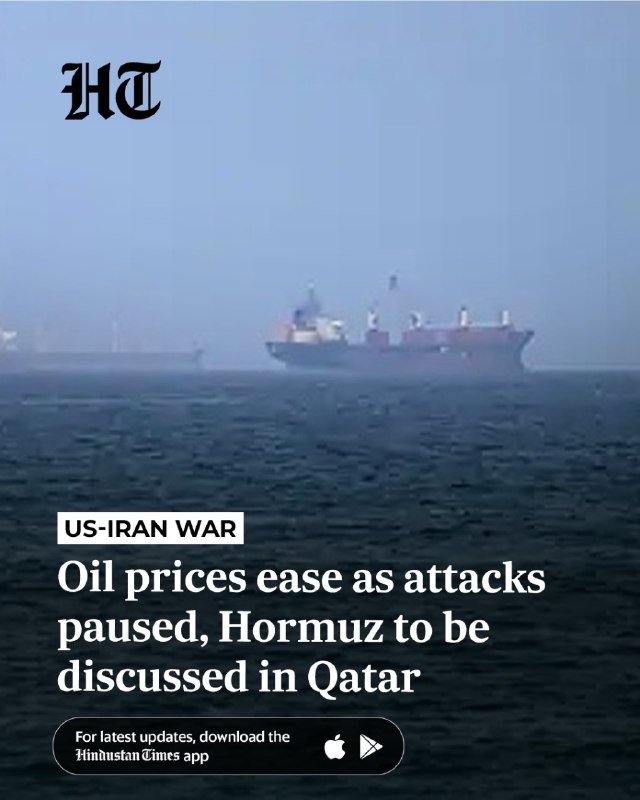
At 22:03 UTC on 28 June 2026, the official Arabic-language channel of Al-Alam News relayed a striking line from a US official, as reported by The New York Times: no talks were canceled despite the strikes, and the exchange of messages continues through back-channels to avoid escalation. Roughly two minutes earlier, the same feed had carried the companion claim that technical talks with Iran remain scheduled in the coming days. Three hours before that, at 20:07 UTC, another message from the same American official had confirmed that conflict-resolution channels were still active after the Lake Lucerne meetings. The architecture is intact; only the floorboards creak.
That is the story. Not the strikes themselves — those have been chewed over by every wire on the planet — but the quiet diplomatic infrastructure that has decided to absorb the shock rather than break under it. When technical sub-tracks remain penciled in after kinetic action, the message being sent is older than the Geneva conventions: the channel is the message. Both governments have calculated that the cost of an uncontrolled escalation arc exceeds the cost of being seen talking to the other side in public after a flare-up.
What Lake Lucerne bought
The shorthand on the wires frames the Lake Lucerne round as a confidence-building exercise — civil-servant level, low ceremony, designed to keep the nuclear file open while the military file is closed. The Arabic-language readout on 28 June, attributed to a senior American official, describes the follow-on technical talks as still scheduled "in the coming days" to implement a memorandum of understanding. The phrasing is deliberately procedural. Implementation work is what survives strikes; grand bargains do not. By carving the agenda down to implementation, both delegations have bought themselves a tested pretext to keep meeting through whatever comes next on the kinetic side.
The counter-narrative worth weighing
The Iranian frame on the same set of facts runs rather differently. From Tehran's vantage, talks that continue while Iranian territory is being struck are not crisis management — they are a managed form of pressure. The counter-reading holds that Washington is using the technical track to set benchmarks and inspection tempos while reserving the right to apply force when those benchmarks slip. That argument deserves more space than Western commentary usually grants it. There is a real asymmetry here: the United States controls both the escalation lever and the negotiation floor. For Tehran, sitting at the table under those conditions is a tactical choice, not a concession.
What the channel itself tells us
Strip away the personalities and the communiques and you are left with a specific institutional fact: a thread of back-channeled messages, operational despite the strikes, kept warm by officials who do not need to be in the same room to do their job. This is the working grammar of great-power crisis management in 2026 — communications infrastructure built and maintained precisely so that kinetic events on one calendar do not freeze diplomatic ones on another. The same playbook was visible, in different shapes, through the 2019 Saudi oil facility episode, the 2024 Iran-Israel exchange, and several quieter rounds in between. The pattern is durable for a reason: it lowers the temperature of each individual crisis by decoupling two clocks that would otherwise run together.
Stakes, and what remains uncertain
If the architecture holds, the strategic winners are the two governments that can absorb a strike cycle and still pick up the phone; the loser is the assumption that military action automatically forecloses diplomacy. If it does not hold — if a single further round tips one side off the procedural track — the same infrastructure becomes the trigger for escalation rather than its shock-absorber. What the sources do not tell us is the substance of the memorandum, the named officials driving the back-channel, or the threshold beyond which either side considers the channel burned. Those gaps are not editorial failures; they are the point. The entire logic of the channel is that its contents are deniable until they are not.
Desk note: the Al-Alam English feed rarely sets the agenda on US-Iran stories, but its handling of the 28 June round is unusually thin on triumphalism and unusually specific on procedural detail. Monexus ran the thread verbatim against The New York Times sourcing it cites and found no contradiction; the channel is being used here as a relay, not as a frame.
Wire provenance
This editorial synthesis draws on the following public wire/social posts:
- https://t.me/s/alalamarabic/
- https://t.me/s/alalamarabic/
- https://t.me/s/alalamarabic/
- https://t.me/s/alalamarabic/