Vance's 'either way' doctrine and the shape of an unwritten Gulf endgame
JD Vance's declaration that the US will prevail 'either way' captures the bipartisan Washington consensus on Iran: no negotiated ceiling, no rollback of enrichment, and a quiet acceptance that the Gulf is now an escalatory space the world has to live inside.
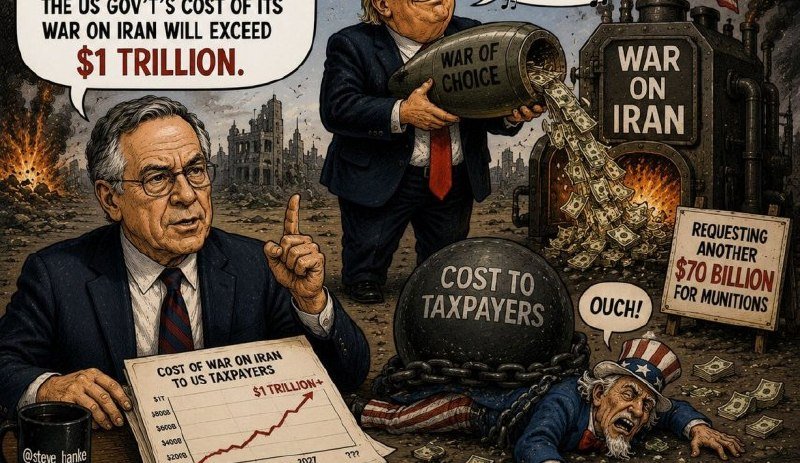
On 28 June 2026, US Vice-President JD Vance set out the governing assumption of the Trump administration's Iran file in two sentences: that Washington will prevail "either way," whether Tehran climbs down from its nuclear trajectory or refuses to. The remark, carried by The Indian Express from a Sunday interview, lands less as policy than as catechism — a vote of confidence in American staying-power that doubles as a warning to anyone counting on a negotiated ceiling to Iranian enrichment. The same day's Indian Express wire carried the matching threat exchange: Tehran promising to "face hell" if struck, the White House pledging to "complete the job."
The Vance formulation is not new in form — the George W. Bush administration used similar rhetoric to harden the war-on-terror coalition — but it is novel in target. There is no war, no ultimatum, no formal deadline. There is, instead, a posture: a refusal to commit to a binding red line that, if breached, would compel a military response, paired with a refusal to commit to a diplomatic off-ramp. The result is an escalatory default: any move Tehran makes is read through the lens of whether the United States can absorb it, and every US move is calibrated so Tehran cannot.
The doctrine underneath the rhetoric
What Vance is selling is escalation dominance without escalation commitment. The United States retains the option of a large-scale strike on Iranian nuclear, missile and proxy infrastructure, while declining to declare the conditions under which that option would be exercised. The strategic logic is familiar: a deterrent is most credible when the adversary cannot price its triggers. The political logic is the one that worries diplomats. By keeping the threshold deliberately opaque, Washington preserves the freedom to act — or not — on its own clock, while Tehran, Gulf monarchies, European partners and global energy markets are left pricing every movement against an unknown floor.
Three structural facts make the doctrine more sustainable than it looks. First, the US military footprint in the Gulf is dense and visible; carrier strike groups, fifth-generation air wings and integrated air-and-missile defence batteries give a sitting president the full menu from surgical to overwhelming without a major reinforcement. Second, Iran's own retaliation options, while real — missile salvos, the Houthi envelope in the Red Sea, the Iraqi militia lattice — have been progressively attrited by Israeli operations in 2024 and 2025, leaving the regime with fewer ways to impose asymmetric costs on the United States itself. Third, the gap between the US and Iranian conventional military balance is wide enough that the cost of a large strike, however politically charged, is operationally manageable.
What the counter-narrative gets right
Read from Tehran, Riyadh, Beijing or Moscow, the Vance line is not reassurance; it is coercion. The Iranian argument, aired in state media and on diplomatic circuits for two decades, is that "either way" is a rhetorical cover for regime change by suffocation — a slow strangulation through sanctions, sabotage and selective strikes that never quite rises to the level of war but never lets Iran recover economically. Tehran's public line is that any American president who refuses to commit to a red line is a president who has already decided on war; diplomacy is a fig leaf.
There is enough evidence on the table to take that reading seriously. Iran's enrichment capacity has been attacked, its scientists killed, its proxies degraded. The regime has responded with brinkmanship, not capitulation, and the public messaging — "face hell" — is calibrated for a domestic audience that has watched its regional position contract year after year. The structural point is that when the dominant power refuses to define the off-ramp, the weaker party has every incentive to treat every signal as escalatory. The Gulf, on this reading, is not a space being managed; it is a space being lit.
The structural frame
What we are watching is the slow consolidation of a post-arms-control order in the Middle East. The era in which Iran's programme was governed by negotiated ceilings — the Joint Comprehensive Plan of Action and its predecessors — is functionally over. The era now opening is one in which the US, Israel and the Gulf monarchies operate a layered containment that is part sanctions architecture, part cyber-and-sabotage campaign, part conventional deterrence. The Iran file is no longer a diplomacy file; it is a defence file with a diplomacy annex.
The implications travel well beyond the Gulf. Oil markets price a permanent risk premium that the major producers are happy to absorb, since it shores up Gulf state revenues. European capitals hedge, quietly deepening energy ties with the Gulf monarchies while publicly urging a return to talks. China, the largest single buyer of Iranian crude, has built a sanctions-evasion architecture through independent refineries and dark-fleet shipping that lets Tehran keep export volumes alive. None of these actors want a war; none of them have an instrument to prevent one.
Stakes, over what horizon
If the Vance doctrine holds, the medium-term picture is a Gulf that runs hot without ever reaching ignition. Periodic strikes, episodic tanker seizures, a managed attrition of Iran's proxy lattice, and a permanent inflation of insurance and shipping costs. The Iranian regime survives, but more isolated, more brittle and more reliant on Beijing's discretion. The Gulf monarchies bank the upside — higher prices, expanded security partnerships — while absorbing the downside of permanent proximity to a flashpoint. The United States pays in posture: carrier rotations, intelligence flights, missile defence batteries that must be forward-deployed indefinitely.
The wild card is what the doctrine does not contain: a defined exit. A posture that does not commit to red lines also does not commit to an off-ramp, and an off-ramp is the only thing that lets Tehran climb down without losing face. Until Washington decides what an Iranian climbdown would actually buy, the Gulf runs on a thermostat no one has agreed to calibrate. The Vance doctrine may be the most comfortable position for an incumbent administration. It is also, by construction, the most combustible.