When the only witnesses are telegrams
An Israeli drone strike on 28 June 2026 killed at least two Palestinians in Beit Lahia. The only on-the-ground dispatches are from Telegram channels — and that is itself the story.
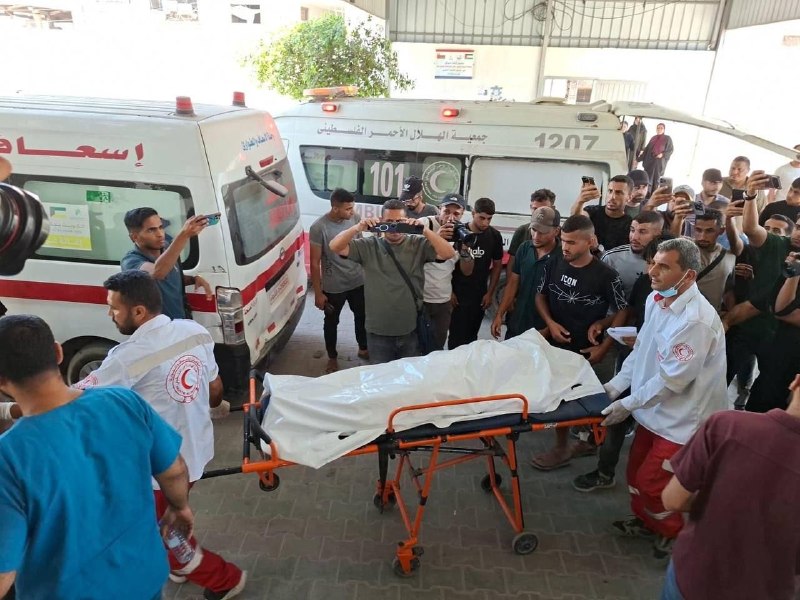
At 10:27 UTC on 28 June 2026, a Telegram channel with no masthead, no editorial board and no mast reported that two people had been killed and a third wounded by an Israeli drone strike in the Al-Salatin area, west of Beit Lahia, in the northern Gaza Strip. Within ninety minutes, four other channels — some Gaza-based, some Beirut-based — had carried the same core facts in slightly different packaging. The most recent, posted at 11:28 UTC by Gaza Alanpa, added that the dead had reached Al-Shifa Medical Complex in Gaza City.
The story, in other words, is not in doubt. What is in doubt — and what should worry anyone who consumes news about this war — is the pipe. There is no Reuters alert, no AFP flash, no BBC Newsline ticker in the provenance chain behind these sentences. The first English-language dispatches on the strike moved through gazaalanpa, thecradlemedia and rnintel on Telegram, with gazaalanpa providing the most granular on-scene detail and rnintel providing the broadest casualty range. Wire services may still confirm and overwrite these numbers; until they do, the public record of what happened to civilians in Al-Salatin this morning is being written by partisan and semi-partisan channels operating outside any conventional editorial accountability.
That is the real lede. The strike itself is the trigger; the information architecture around the strike is the story.
What we know, by source
The earliest item in the cluster, at 10:27 UTC, says simply that two "martyrs" — the standard Arabic term used by Palestinian medical sources for those killed — and one injured resulted from an Israeli drone strike on the Al-Salatin area, west of Beit Lahia. The Cradle Media, a Beirut-based outlet that has been a consistent English-language conduit for reporting from northern Gaza, runs the same basic facts at 11:20 UTC and adds that the wounded were transferred for treatment. rnintel, an aggregator channel, reports two dead and "10+ injured" at 10:41 UTC — a higher injury count than the Gaza-based channels — and at 10:39 UTC had already broken the news of an airstrike in the same area with "several casualties."
The numbers therefore drift. Two dead, one wounded is the Gaza Alanpa figure. Two dead, ten-plus wounded is the rnintel figure. Both are initial accounts; neither has been independently ground-truthed by a wire service in the cluster under review. Readers should hold both, note the discrepancy, and wait.
Why the wire is silent
Foreign press access into northern Gaza has been restricted for the duration of the war, and the small cohort of journalists who do file from inside the strip operates under conditions of acute risk and intermittent communications shutdowns. When the most reliable real-time signals come from channels affiliated with one side of the conflict, the epistemic asymmetry is total. The Cradle Media's editorial line is openly sympathetic to the Palestinian cause and to the regional "axis of resistance"; gazaalanpa is field reporting with a local-national framing; rnintel aggregates open-source material alongside partisan claims. None of them is a wire. None of them has the institutional indemnity that allows Reuters or AFP to say "two confirmed dead" without hedging.
This is not an argument that the casualty reports are false. Gaza-based medical sources have, throughout the war, produced casualty figures that have proven directionally accurate even when specific numbers have later been revised downward by the United Nations and wire services. The argument is narrower and more uncomfortable: the first draft of history for civilian harm in northern Gaza is being written by channels with no corrections desk, no libel lawyer and no mast.
What gets lost when Telegram is the filing desk
Three things, in particular.
First, precision dies at the source. Without trained conflict journalists on the ground cross-checking names, ages, addresses and the precise munition used, the difference between a drone strike and an airstrike — gazaalanpa calls it a drone strike, rnintel an airstrike — becomes unrecoverable. Munition type matters for casualty pattern analysis; it is also one of the easiest facts to misreport under fire.
Second, the framing calcifies before the second draft can be written. By the time a wire reaches the same story, the headline shape has already been set by the Telegram cluster. The Cradle's emphasis on civilians targeted in an open area; rnintel's emphasis on a higher injury count; Gaza Alanpa's emphasis on the transfer of martyrs to Al-Shifa — each is a small editorial choice that primes the reader before any neutral framing can compete.
Third, the institutional memory of the war becomes brittle. Telegram posts disappear when channels are removed, when accounts are banned, when servers are geo-fenced. The wire services keep an archive; the channels do not. Today's gazaalanpa post about Al-Salatin may be unreachable in a year. The Reuters or AFP version, when it lands, will be the version that survives.
The stakes
Israeli security concerns in the north of the strip are real and documented: the IDF has named Beit Lahia and Beit Hanoun as areas where armed groups have re-established a presence and from which rocket and drone launches have originated. Civilian harm is also a first-order fact, not a footnote. Both can be true. But both can only be audited if there is independent reporting on the ground, and at the moment the most granular independent reporting is coming from channels whose editorial line is not "independent" in the conventional Western-wire sense.
The structural pattern is larger than any single strike. Across the war, the gap between the speed of partisan channels and the speed of institutional journalism has widened. Wartime news consumers who want to know what happened in Al-Salatin at 10:27 UTC have to choose between speed and provenance. That is a choice the public should not be forced into. The market failure here is real: it produces a casualty record whose first draft is written in the language of one side, and whose final draft — if it ever comes — will arrive hours later, when the world's attention has moved on.
The honest move, for now, is to report the cluster, name the discrepancy in injury counts, note that wire confirmation has not yet appeared in the materials available to this publication, and resist the temptation to launder partisan-channel reporting into the flat declarative voice of established journalism. The strike happened. The pipe is what needs fixing.
This publication frames northern-Gaza civilian-casualty reporting by anchoring on the earliest available cluster of dispatches while flagging — in prose, not as a footnote — that the only on-the-ground sourcing in the first ninety minutes came from Telegram channels rather than wire services. That is a deliberate departure from the cleaner sourcing ledger readers expect, and is the only honest way to handle a story whose provenance chain has been broken by access restrictions.
Wire provenance
This editorial synthesis draws on the following public wire/social posts:
- https://t.me/gazaalanpa
- https://t.me/thecradlemedia
- https://t.me/rnintel
- https://t.me/gazaalanpa/213