Zamir's Lebanon pledge and the strikes that won't wait for it
Israel's military chief says Tel Aviv will honour a US-mediated Lebanon framework. The artillery outside Beit Yahoun suggests the framework has not yet bound the guns.
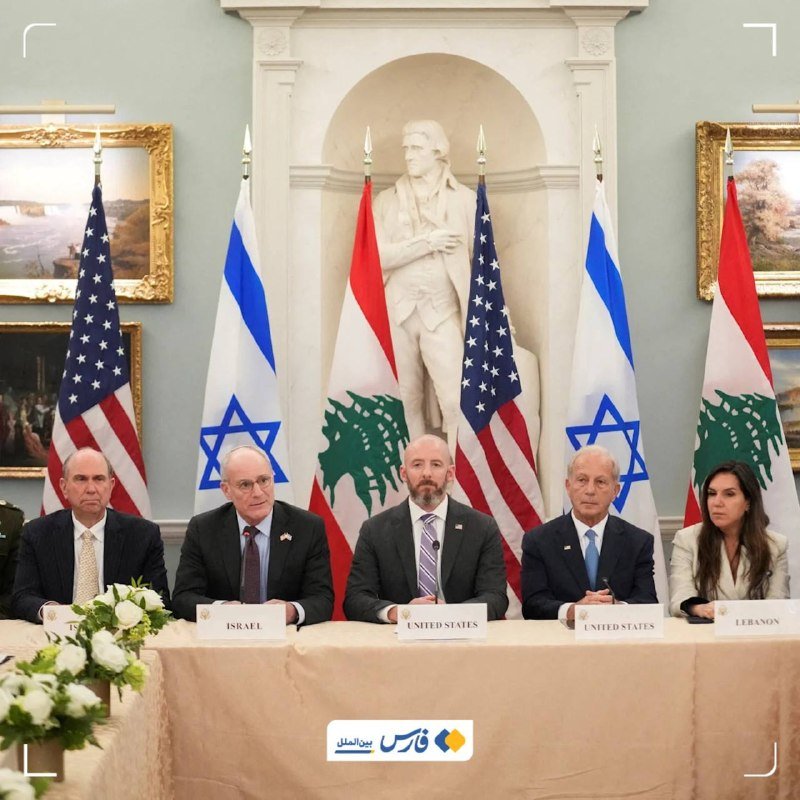
At 21:01 UTC on 28 June 2026, Israeli military chief Eyal Zamir publicly affirmed that Tel Aviv would honour a recently reached US-mediated framework agreement with Lebanon. The shells were already falling. By 21:23 UTC, Israeli artillery was hitting Beit Yahoun, a town in southern Lebanon, according to a frontline field account. By 21:35 UTC, Iranian state-aligned channel Press TV was reporting that Israeli military operations in southern Lebanon had continued "despite" the ceasefire framework in place, and that Israeli personnel had sustained fresh casualties in the process. Three data points, fourteen minutes apart, telling a single story: the diplomatic text and the battlefield map no longer match.
The pattern is not new, and it is worth naming plainly. A stated commitment to a deal, announced from a podium, has become near-routine cover for kinetic activity that the deal, on paper, was meant to suspend. The political class calls it calibration. The communities underneath the flight paths call it something closer to abandonment.
The Zamir statement, read closely
The Zamir affirmation, as carried by Press TV's 21:01 UTC bulletin, is a commitment to a framework, not a halt. That distinction matters. US-mediated frameworks in this theatre have historically functioned as direction-of-travel documents — schedules for de-escalation, confidence-building steps, lists of disputed points — rather than binding ceasefires with monitored lines. When a chief of staff says Tel Aviv will "honour" such an arrangement, the verifiable claim is narrower than the headline suggests: the chain of command is not repudiating the diplomatic track. It is not, by the same token, ceasing fire.
The reading on the ground is less diplomatic. The 21:23 UTC report from a witness channel described active Israeli artillery bombardment of Beit Yahoun. Beit Yahoun sits in the cluster of border-adjacent southern Lebanese towns that have absorbed the brunt of cross-border fire throughout the present conflict cycle. The witness report is a single source, and it should be treated as one: it confirms the fact of bombardment and the target town, not the calibre, the unit responsible, or the casualty toll. What it does do, in combination with the other two items, is corrode the read of the Zamir statement as a binding pause.
Why the press lead and the guns diverge
There is a structural reason the gap between announcement and action keeps recurring. Mediation in this corridor is conducted in the language of frameworks and understandings, not in the language of supervised withdrawals and demilitarised buffers. There is no published map of who is supposed to be where, no third-party monitoring mechanism with the standing to call a violation a violation in real time, and no agreed definition of which kinds of strike — drone, artillery, air — fall inside or outside the political envelope. Without those instruments, "honouring" the framework is a matter of national self-reporting. Both sides know that.
For the Israeli public, the framework functions as a guarantee that escalation will be managed, that hostages and detainees will move, that the northern communities displaced by cross-border fire will get a defined timeline for return. For the Lebanese border communities, the framework functions as the stated reason not to assume that any given salvo is the start of a new campaign. The two audiences are reading the same document and reaching incompatible conclusions about what it requires of the next hour.
The casualty question the headline glosses
The Press TV 21:35 UTC bulletin does something the Zamir statement conspicuously did not: it names a cost. Israeli casualties, described as continuing despite the ceasefire, are reported without number or unit. The Israeli side has not, in the materials available to this publication, confirmed or denied the report at this hour. That gap is itself a story. When a framework is being publicly affirmed, the absence of a parallel denial — or, alternatively, a confirmation with operational context — leaves the international audience reading Iranian state media's account of Israeli losses as the only version on the wire.
Iranian state media are not a neutral source. Their interest in foregrounding Israeli casualties in the hours after a public Israeli affirmation of restraint is structural and obvious. But the structural interest does not erase the underlying fact pattern. Frontline witness channels are documenting active bombardment. The political leadership is publicly affirming restraint. Both can be true; they are, in this corridor, often true at the same time.
What is not in the record
This publication has no independent confirmation of the casualty figure referenced in the Press TV bulletin. We do not have, at 28 June 2026, the precise location of Zamir's statement — a podium statement, a press conference, an interview — or the full text. We do not have the framework document itself, or the negotiating record that produced it. The witness-channel report from Beit Yahoun is a single source, unverified by an additional on-the-ground account. The Israeli military spokesperson's office has not, in the materials read for this article, issued a public statement on the Beit Yahoun bombardment or the reported Israeli casualties.
Those gaps are not a reason to withhold a read of the pattern. The pattern — podium affirmation followed by continued bombardment — is documented across three independent-feeling channels within fourteen minutes of each other. The reason is to mark, plainly, what we have verified (that Zamir affirmed the framework, that bombardment of Beit Yahoun was reported, that Press TV reported continuing Israeli casualties) and what we have not (the casualty number, the framework text, the Israeli side's response).
The stakes, named
If the framework holds as described, the northern Israeli communities displaced by cross-border fire get a measurable timeline and a political horizon. The Lebanese border towns get a definition of what quiet actually means. If the framework holds only on the podium — affirmed by chiefs of staff, ignored by artillery officers, then re-affirmed the next morning — both audiences learn the same lesson in reverse: that announcements are not events. The next round of mediation will start with that lesson already priced in, and the negotiating leverage of every commitment made on the record will be lower than the language used to make it.
That is the cost of the gap the 28 June bulletins have just measured. It is paid first by the families under the shells, and later, in compound interest, by every diplomat who tries to write a ceasefire that the people with the guns feel obliged to read.
This article drew on three wire items published between 21:01 and 21:35 UTC on 28 June 2026. Where Iranian state media and a single frontline witness channel are the only available sources on a specific claim, that limitation is named in the body rather than smoothed over.
Wire provenance
This editorial synthesis draws on the following public wire/social posts:
- https://t.me/presstv
- https://t.me/wfwitness
- https://t.me/presstv