Deir al-Balah strike kills three, including a child, as Gaza's civilian toll keeps mounting
Three people — among them a child — were killed in an Israeli drone strike on Deir al-Balah in central Gaza on 29 June 2026, according to hospital sources at Al-Aqsa Martyrs Medical Complex. The strike lands in a phase of the war where civilian-casualty reporting is contested and verification is partial.
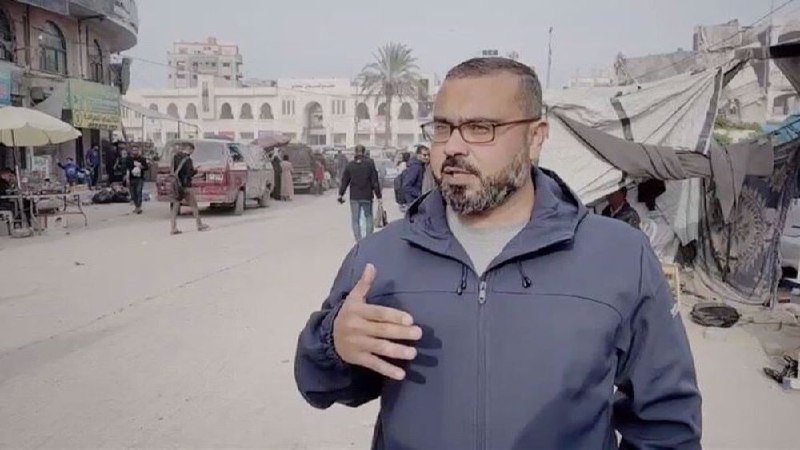
An Israeli drone strike hit the city of Deir al-Balah in central Gaza early on 29 June 2026, killing at least three people, including a child, according to hospital staff at Al-Aqsa Martyrs Medical Complex. The figures were first surfaced at 07:13 UTC by Gaza-facing Telegram channel @gazaalanpa and corroborated at 07:43 UTC by Iranian-state outlet Tasnim's Jahan account, which cited "hospital sources at the Al-Aqsa Martyrs Medical Complex" and identified one of the dead as a child. Iran's Tasnim is openly government-aligned; the corroboration is therefore weighted as a counter-claim rather than independent confirmation, but it tracks a single institutional source — the hospital.
The strike lands inside a deeply untransparent information environment. International wire reporting from inside Gaza has been heavily constrained since the early phase of the war; much of what reaches editors in real time originates from field hospitals, local journalists operating under duress, or partisan Telegram networks. Casualty figures produced inside Gaza — including those released by the Hamas-run health ministry — have historically converged with UN and independent tallies when later audited, but the lag between event and independent verification now stretches from hours to weeks. On 29 June the lag is, in practical terms, total: the most that can be said is that a strike happened, that a hospital received three fatalities including a child, and that two channels aligned with different political poles are reporting the same baseline.
What the sources actually say
The earliest report — at 07:13 UTC from @gazaalanpa — states that "3 martyrs, including a child" arrived at Al-Aqsa Martyrs Hospital following an Israeli strike on Deir al-Balah. At 07:43 UTC, Tasnim's Jahan account published images it described as "the first moments after the bombing" of the city and reported that "hospital sources at the Al-Aqsa Martyrs Medical Complex announced that at least 3 people, including a child, were martyred." The framing across both posts is consistent. Neither post identifies the strike's target, specifies the weapon used beyond "drone," or names any combatant killed alongside the civilian casualties; neither post identifies the child. An additional note in the Jahan post refers to the strike as the "third martyr of the Zionist regime's drone," language that signals an editorial line and indicates that the channel itself is sourcing casualty counts rather than generating them.
What the sources do not say
The thread contains no on-the-record statement from the Israel Defense Forces, no formal casualty list, and no geographic precision beyond "Deir al-Balah city in the center of the Gaza Strip." The number of injured is not given. The number of additional strikes that may have taken place in the same window is not given. There is no wire confirmation from Reuters, the BBC or Al Jazeera in the source material available to this publication on 29 June. A reader who wants a corroborated picture is being asked to wait for either an IDF briefing, a UN OCHA flash update, or independent field reporting — none of which appear in the inputs.
That absence matters. Central Gaza, and Deir al-Balah in particular, has been described in multiple wire reports earlier in the war as a designated evacuation zone; civilians remaining in the area have been a consistent source of friction between Israeli and humanitarian framings. A drone strike inside or adjacent to that zone is therefore not a routine event — it is, on the available evidence, an escalation of a documented pattern. But escalation is a claim about trajectory, and one strike on one morning cannot carry a trajectory argument on its own.
Structural frame
What is being reported is not just a single strike but the continuation of a reporting problem. Gaza-casualty figures — and the imagery that travels with them — increasingly reach Western newsrooms through partisan intermediaries rather than staff correspondents. Channels aligned with the Iranian state have a clear editorial interest in foregrounding civilian harm and in routing the story through vocabulary ("Zionist crime," "martyr") that signals its politics before it conveys a fact. Gaza-based local channels have an interest in documenting what their cameras can capture. Both incentives produce real reporting and curated reporting simultaneously; separating the two requires independent verification that is, in this case, still pending.
The structural pattern is that the burden of proof has shifted. When Western wire access to a conflict zone collapses, casualty claims become harder to audit and easier to disbelieve. The Israeli government has argued, across the war, that figures released from inside Gaza are systematically inflated and that the health apparatus is compromised; humanitarian and UN bodies have argued, across the same period, that the underlying toll is roughly accurate even when precise numbers are not. Both positions are downstream of the same collapse in field verification. Until access reopens, every strike is going to sound like a talking point.
Stakes and what to watch
If the trajectory holds, the strike toll inside Gaza is going to continue to be transmitted through a small number of partisan intermediaries while global audiences receive it filtered through whichever political channel they trust most. The losers in that environment are the dead and the readers; both ends of the chain lose access to ground truth. The winners are whichever actors can best align the language of casualty reporting with their own political narrative — Israeli, Iranian, Qatari, American — and that is precisely the incentive structure that produces disputes like the one playing out over this morning's three names.
Over the next 24 to 72 hours the concrete things to watch are: an IDF statement identifying or not identifying the strike target, any OCHA or ICRC update, and any independent verification of the hospital intake. If all three remain absent, the strike and its toll stay inside the partisan reporting layer where they began.
What remains uncertain
The total number of casualties beyond the three reported at Al-Aqsa Martyrs is unknown. The strike's target — whether a combatant, a vehicle, an infrastructure node — is not specified in the source material available to this publication. The framing language in the Iranian-state channel is a known editorial choice and does not, by itself, corroborate the casualty count; the matching count from the Gaza-facing channel narrows but does not close the verification gap. And the missing voice in the public record is, as it has been for months, the Israeli military's specific account of what was hit and why.
Desk note
This piece documents the strike as it has been reported through the channels available to Monexus, with the political alignment of each channel noted in line. Independent wire confirmation was not in the input set on 29 June 2026, and readers should treat the three-fatality figure as the baseline hospital claim, not as a closed total.
Wire provenance
This editorial synthesis draws on the following public wire/social posts:
- https://t.me/gazaalanpa
- https://t.me/JahanTasnim
- https://t.me/JahanTasnim