Venezuela's Earthquake Aftermath Is Being Reported in English. The Sanctions Aren't
Two strong earthquakes struck Venezuela this week. The Western wire cycle is full of rescue footage. The sanctions architecture that constrains the response is barely mentioned.
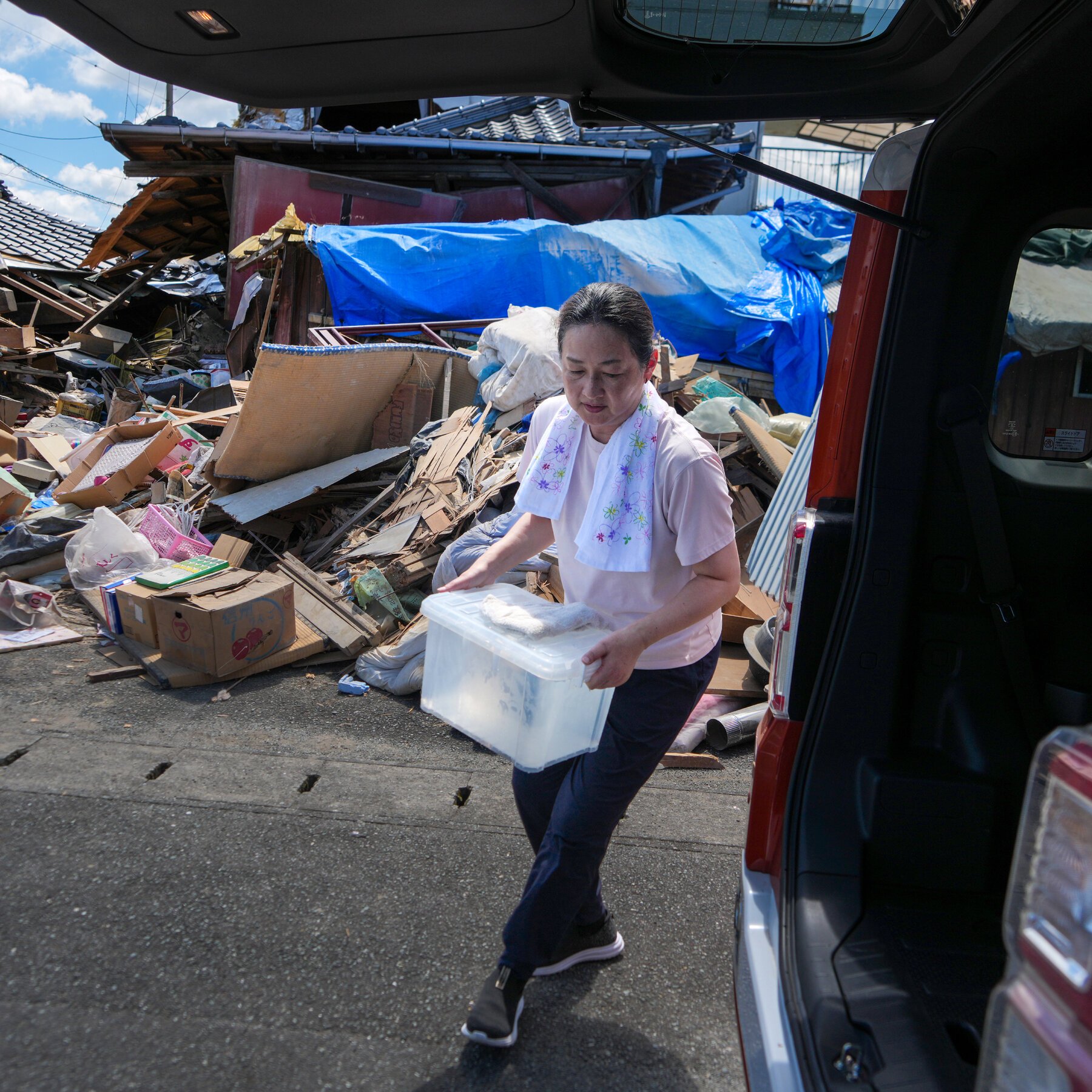
On 28 June 2026, a father and his son were pulled alive from the rubble of a collapsed building in Venezuela — four days after two powerful earthquakes struck the country's north-central coast. Reuters reported the rescue on 29 June at 02:40 UTC. An 11-year-old boy was pulled from a collapsed apartment block in the port city of La Guaira, three days after the same shocks. U.S. teams were conducting aerial damage assessments over the same coastline. The footage is undeniable. So is the relief effort. What the wire cycle is not yet doing is the harder reporting.
The natural disaster is real. So is the political architecture that shapes how a country can respond to one. When an English-language news cycle rushes to cover the rescue and the ruin but skips over the U.S. sanctions regime that limits Caracas's access to dollars, reconstruction financing, and the international banking plumbing that any modern disaster response depends on, the framing is incomplete. This publication has nothing against the rescue footage. The point is that the picture is being cropped.
What the wire is running
The dominant frame is straightforward: two earthquakes, collapsed buildings, a difficult rescue operation, occasional signs of life. Reuters' 29 June 02:20 UTC brief captures the rhythm precisely — rescue teams racing to find more survivors from the two powerful quakes, signs of life bringing occasional relief to a grim effort to whittle down a list of tens. Epoch Times's aerial imagery, distributed over Telegram at 03:05 UTC on 29 June, shows the structural damage in La Guaira with U.S. assessment aircraft visible overhead. Iranian state broadcaster PressTV, in a 02:05 UTC Telegram post, highlighted the La Guaira child rescue. The visual language is the same across ideological registers: a humanitarian story, told competently.
The reporting problem is not in what is being said. It is in what is being left out.
The architecture the cycle is not naming
The United States has maintained comprehensive economic sanctions on Venezuela since 2017, with successive administrations layering oil-sector penalties, financial-sector restrictions, secondary-sanctions risk on third-country buyers of Venezuelan crude, and asset blocks on state entities. OFAC general licenses have, at various points, carved out narrow relief windows for humanitarian transactions, but those windows have been described by humanitarian NGOs and UN agencies as operationally narrow — banks and insurers de-risking faster than licenses can be issued. Venezuela's sovereign oil revenue, the country's principal source of hard currency, has been routed through a sanctions-compliant licensing arrangement rather than standard commercial channels, with the proceeds subject to U.S. oversight.
None of this is hidden. Treasury press releases and OFAC fact sheets are public. UN OCHA situation reports have, in past years, flagged how sanctions architecture interacts with humanitarian response capacity. The structural point is simple: when a country cannot freely access the dollar-based financial system, its ability to import reconstruction equipment, hire international structural-engineering firms, or pre-position emergency medical supplies is constrained. After a major earthquake, those constraints are not theoretical.
The two pictures, held together
The honest framing holds both pictures at once. The rescue teams in La Guaira are doing their work. U.S. assessment aircraft are overflying the damage. The 11-year-old pulled from the apartment block is a real child, alive because someone dug. These facts should not be contested, and this publication does not contest them.
At the same time, an earthquake response is partly a function of the dollar. Reconstruction financing, reinsurance markets, the willingness of international engineering firms to deploy, the speed at which a government can move hard currency across borders — all of these sit inside the architecture that sanctions shape. A cycle that runs the rescue footage and the aerial shots but omits that second frame is doing the audience a disservice. The structural argument is not that sanctions caused the earthquake. It is that the response capacity available to any government is a function of the financial perimeter it sits inside, and that perimeter is a policy choice.
What the counter-narrative gets right and wrong
The Western-wire default, stripped down, treats a natural disaster as a natural disaster. The counter-narrative on outlets closer to the Caracas government — and on some Global-South commentary — treats the disaster as proof that sanctions constitute collective punishment. Both framings overshoot. Earthquakes are not man-made; their lethality is a function of building codes, depth, population density, and response speed, not sanctions. But response speed is shaped by state capacity, and state capacity is shaped by revenue, and revenue is shaped by access to the dollar system.
The serious position is also the boring one: in a country under comprehensive economic sanctions for nearly a decade, a major seismic event exposes the constraints in a way that ordinary politics does not. That is a reportable fact, not a polemic.
Stakes and what remains uncertain
If the trajectory continues, the pattern will repeat. The next major natural disaster in a heavily-sanctioned jurisdiction will again produce dramatic rescue footage, again produce aerial assessment imagery, again produce a wire cycle that names the rubble and not the perimeter. The audience will be left with the rescue but not the constraint.
What remains genuinely uncertain, even four days in, is the casualty count — the wire is still reporting in terms of a search that has not yet closed, with the list of those still missing described in tens rather than pinned to a specific figure. The full extent of structural damage across the affected municipalities of La Guaira and the surrounding Vargas state is also not yet public. The political question — whether the current U.S. posture toward Caracas will be adjusted to expedite humanitarian flows — is, as of 29 June 02:40 UTC, unanswered.
This publication will keep watching. The cycle should report both pictures.
Desk note: Monexus ran the wire's rescue framing as the lead and then widened the lens to the sanctions architecture that shapes any state's disaster-response capacity — a structural beat the English-language cycle has not yet taken up.
Wire provenance
This editorial synthesis draws on the following public wire/social posts:
- https://t.me/s/presstv
- https://t.me/s/epochtimes