Doha meeting tests Trump's denuclearisation ultimatum as Iran's delegation stays home
US envoys fly to Qatar for talks Iran says it never agreed to attend, leaving denuclearisation demands dangling over a weekend of mixed White House signals.
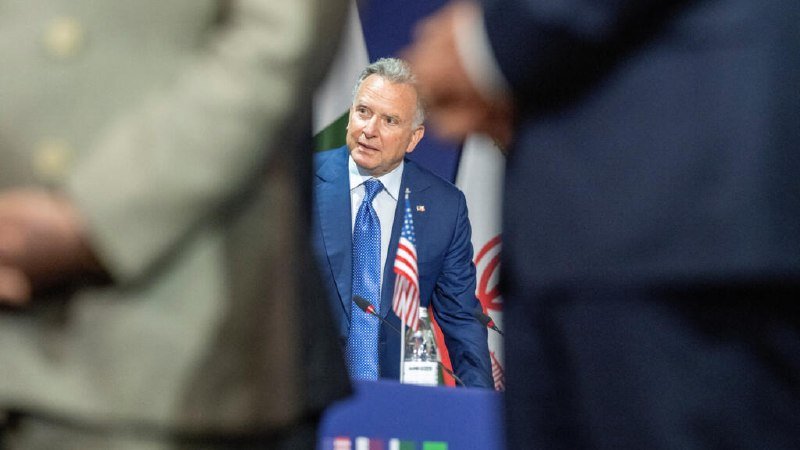
By the time Air Force One's shadow crossed the Atlantic on 29 June 2026, the diplomatic script for the day's Iran meeting had already begun to tear. President Donald Trump told reporters the encounter in Qatar's capital could be "perhaps important, perhaps not," while a senior adviser to Iran's negotiation team announced, hours earlier, that Tehran would not be sending a delegation at all.
What was framed in Washington as a high-stakes denuclearisation sit-down is, on the evidence available this Monday, a meeting the Iranian side did not confirm it would attend. The mismatch — between an American expectation of talks and an Iranian denial that talks are happening — sets up a weekend of asymmetric diplomacy in which the headlines are being written largely from one capital.
The diplomatic shape of 29 June
At 18:15 UTC, Reuters reported that two of Trump's envoys, Jared Kushner and Steve Witkoff, would travel to Doha for an Iran meeting. The wire did not identify an Iranian counterpart in its lead. By 19:14 UTC, Open Source Intel relayed remarks from Mohammad Marandi, a senior adviser to Iran's negotiation team, who said: "Of course, the request came from the Trump regime, but Iran will not be sending a delegation to such a meeting." Less than an hour later, the same channel carried Trump's own characterisation of the encounter: "The meeting in Doha is going to be perhaps important, perhaps not. We will find out… It's really very simple. It's the denuclearisation of Iran. We don't want" — the quote truncated in the post.
That sequence matters. Within roughly ninety minutes, the public record contained a US announcement of a meeting, an Iranian denial of participation, and a presidential framing of the encounter as a test of Iranian willingness to abandon its nuclear programme. The substantive ask — denuclearisation — is the same demand Trump's first-term administration made the centrepiece of its 2018 withdrawal from the Joint Comprehensive Plan of Action, and the same demand Tehran has, for three decades, treated as existential rather than negotiable.
What Trump actually said
Trump's remarks, captured as he prepared to leave Washington, ranged across two registers. On the meeting itself, he was studiously non-committal: "perhaps important, perhaps not." On the underlying US objective, he was categorical: the goal is "the denuclearisation of Iran." On the broader trajectory of the confrontation, he was more expansive still: "We're winning militarily. It's almost won militarily I would say."
That last formulation does significant work. It collapses a multi-year, multi-actor standoff into a near-completed military outcome, and it does so at the precise moment the United States is attempting to convene a diplomatic track. Whether the remark is bargaining posture, a signal to domestic audiences, or an inadvertent revelation of strategic confidence, it tightens the space in which any Iranian interlocutor — if one emerges — can negotiate. Few governments sign binding instruments while their counterpart is publicly asserting that the military option is effectively exhausted.
The Iranian counter-frame
Marandi's statement is the clearest articulation yet of Iran's public position heading into the Doha round: the request originated in Washington, and Iran will not attend on the terms implied by that request. The phrasing — "Iran will not be sending a delegation to such a meeting" — leaves a narrow diplomatic opening. It does not foreclose future contact; it rejects the framing of the specific encounter.
That distinction is the kind Iranian statecraft has historically used to preserve optionality. By declining a meeting defined by an American demand rather than a negotiated agenda, Tehran preserves the ability to argue, in regional and multilateral forums, that it engaged only when the basis for engagement was reciprocal. The cost is that the diplomatic optics for the week belong to Washington: pictures of American envoys arriving in Doha for a meeting the other side says it will not attend.
Structural frame: coercive bargaining, asymmetric information
What is unfolding is a familiar pattern in which one side sets the venue, the other side sets the terms of non-attendance, and the press writes the story from the airport tarmac. The information asymmetry is severe: the US side is generating the meeting narrative through travel announcements, presidential remarks, and wire pickups; the Iranian side is generating the counter-narrative through carefully selected academic-adviser quotes. Neither capital has, on the public record, published a written agenda.
In this configuration, "denuclearisation" functions less as a negotiating position than as a benchmark against which Iranian non-cooperation can be measured. The structural pattern — maximum public demand, minimum agreed agenda, presence-without-partner diplomacy — recurs across decades of US-Iran contact, from the 2013-15 Oman back-channel through the 2019 Abqaiq attacks to the 2025 maritime escalations. Each round has produced more communiqués than commitments.
The harder question is what changes this round. Trump has publicly claimed near-completion of the military track. Iran has refused to dignify the diplomatic track with a delegation. The Gulf hosts — Qatar has mediated past US-Iran back-channels, including elements of the 2013-15 process — are left to manage an encounter between a sender and a non-respondent.
Stakes and what remains unresolved
If a meeting does occur, the substantive agenda will be: scope of any nuclear-capable activity permissible inside Iran; timeline for verification; sanctions sequencing; and the fate of Iranian assets frozen abroad. If no meeting occurs, the Doha weekend will be read as a US-led demonstration of willingness to talk, paired with an Iranian demonstration of willingness to refuse — a configuration that historically precedes escalation rather than detente.
Three things remain genuinely uncertain as of 19:44 UTC on 29 June 2026. First, whether Tehran will send any representative to Doha at any level — the Marandi statement is categorical but not formally issued by the foreign ministry. Second, whether the US side will adjust its public posture after the denial; the president's "almost won militarily" formulation has already hardened Iranian incentives against concessions. Third, whether Qatar or another Gulf intermediary will surface as a confirmed venue for indirect contact if the formal meeting fails to materialise.
The sources do not specify a written agenda, do not name an Iranian counterpart, and do not include any official statement from Iran's foreign ministry or the US State Department. What they do contain is a clear sequence: a US announcement of travel, an Iranian denial of attendance, and a presidential framing of the encounter as a test of denuclearisation. The diplomatic week will turn on which of those three signals the region treats as authoritative.
This publication framed the Doha round as an asymmetric encounter — one side announcing, the other declining — rather than as a meeting in progress. The wire coverage, by contrast, has emphasised US travel logistics and presidential remarks, with Iranian non-participation relegated to follow-on coverage.
Wire provenance
This editorial synthesis draws on the following public wire/social posts:
- http://reut.rs/4uWM9vL
- https://twitter.com/Osint613/status/2071678821766459898/video/1
- https://t.me/osintlive
- https://t.me/ClashReport
Follow the event.
These dated source records provide context. They do not retrospectively verify this archive article.
Separate what the nuclear watchdog reported from what it could not determine after the June 2025 strikes.