Ezra Collective take the Love Supreme Q&A: a London jazz story bigger than one festival weekend
The Guardian is hosting a live Q&A with Ezra Collective at Love Supreme. The booking is less a programming choice than a marker of how far London jazz has travelled in five years.
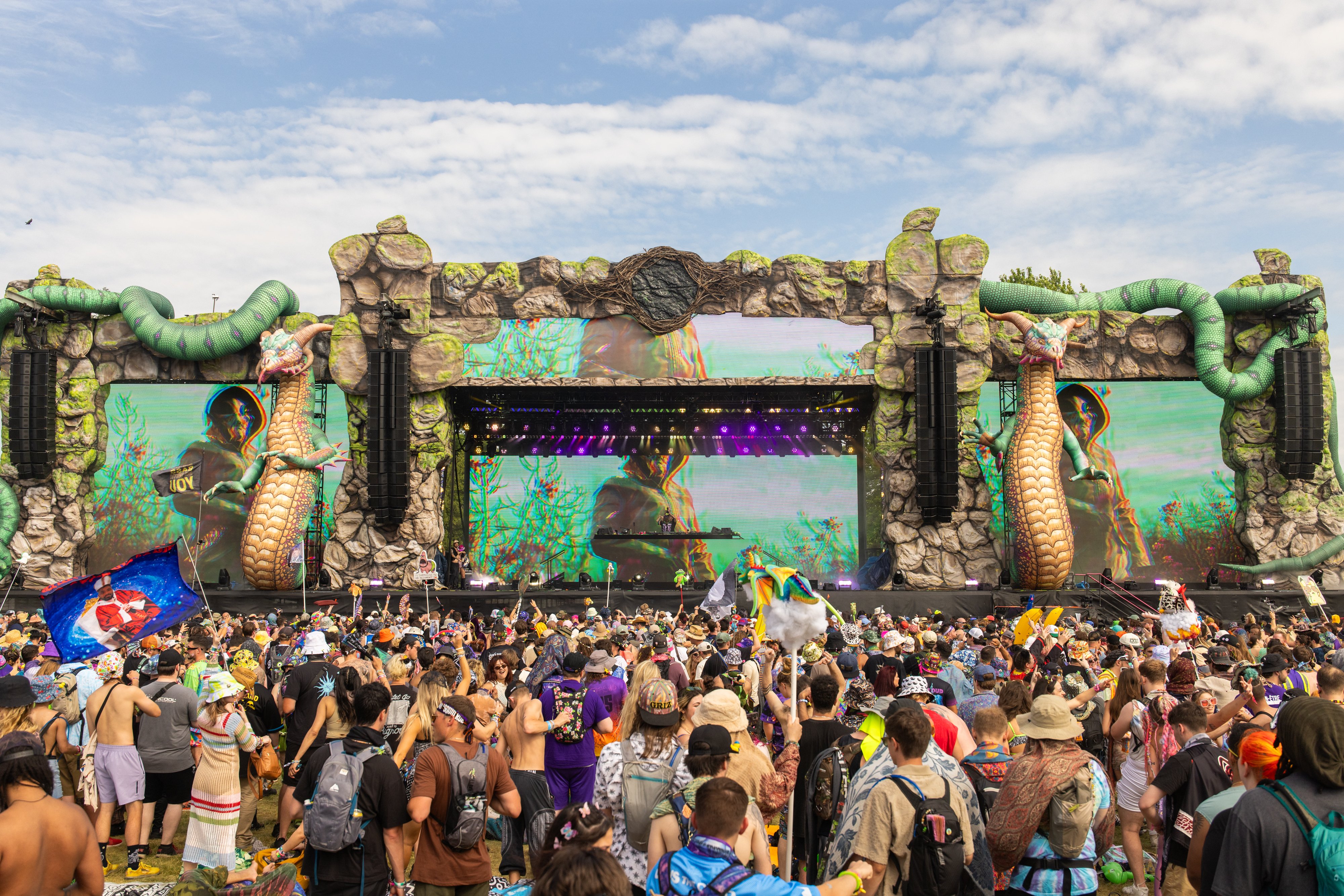
On 29 June 2026, The Guardian opened the floor to readers with an invitation to submit questions for Ezra Collective, the five-piece London jazz outfit headlining this year's Love Supreme festival in an on-stage Q&A the paper is hosting on its behalf. The format is unremarkable in itself — a partner outlet, a marquee act, a comment-thread. The booking is not.
Ezra Collective's elevation to Love Supreme headliner status is the most legible marker yet of a London jazz scene that has, over roughly half a decade, gone from late-night rooms in Tottenham and Dalston to festival main stages and Mercury-shortlist contention. Treating the moment as a coronation would flatter nobody. It is, instead, a useful occasion to ask what conditions produced the cohort, and whether the institutional infrastructure now courting it can keep up with what it actually is.
A scene that built its own infrastructure first
Ezra Collective emerged out of a network of London musicians — many of them conservatoire-trained, many of them rooted in grime, broken beat and Caribbean dance forms — who began cutting their teeth in pirate-radio sessions, promoter-led nights and the Tottenham jam circuit that fed into venues like Total Refreshment Centre and Church of Sound. The band's early visibility was not a function of label spend. It was a function of a tightly-wound local ecology: promoters willing to take a loss, journalists covering the scene in the long-form, and audiences willing to turn up on a Tuesday.
Love Supreme, held in the South East of England, has been the UK's principal jazz festival since its launch and has spent the better part of a decade building a roster that treats British jazz as a living tradition rather than a heritage act. Booking Ezra Collective as a focal point of the 2026 edition is the festival signalling — to audiences, to broadcasters, to the rest of the European festival circuit — that the centre of gravity for the form is not only New York and not only the older Canterbury and Bristol lineages.
The counter-narrative: festival economics and the flattening problem
The honest read is less celebratory. Festivals book what sells, and Ezra Collective sell. The band's 2022 debut on a major label moved units, and their subsequent releases have kept them in rotation on BBC Radio 6 Music and on the algorithmic surfaces of streaming services that now do the gatekeeping the NME and Melody Maker once did. Once a scene is legible to a marketing department, the question becomes whether the festival-stage spotlight changes what the music is for.
There is a real argument that festival Q&As of this kind are an editorial product as much as a journalistic one — a way for The Guardian to associate its brand with a culturally safe, broadly sympathetic cultural institution at a moment when arts coverage is being squeezed in the very pages that once broke bands. Readers are right to be cynical about the framing. The band itself is, fairly or not, being asked to perform a role in someone else's content strategy as well as their own.
What the booking actually signals
Strip the marketing off and the structural fact remains. A London five-piece, working in a Black British improvisational vernacular rooted in grime, broken beat and Caribbean rhythm, is now the gravitational centre of a major British jazz festival. That is a different distribution of cultural authority than the one that obtained in 2015, when the live circuit for instrumental UK jazz was thinner and the press attention was the preserve of specialist outlets.
The broader pattern is not unique to jazz. UK live music in the 2020s has been shaped by two pressures pulling in opposite directions: the collapse of mid-sized venues on one side, and a festival-and-streaming duopoly on the other. Acts that survive tend to do so by being legible to both. Ezra Collective have managed the translation without obvious compromise — a harder trick than the success makes it look. The Love Supreme Q&A is, in that sense, less a coronation than a checkpoint.
The stakes for the scene
What follows from here matters more than what has already happened. The London jazz ecosystem that produced this band was sustained by underpaid promoters, by venues operating at margins, and by a generation of musicians willing to subsidise their own development with side work. None of that is solved by a festival Q&A. If the institutional attention now turning towards the cohort converts into paid work for the wider scene — into tour support, into rehearsal space, into commissioning for the acts one rung below — then 2026 will look like a hinge year in retrospect. If it converts only into a small number of highly visible careers, the cohort effect will fade and the festival stage will revert to its older habits.
The audience submitting questions to The Guardian is, in effect, voting on which of those futures they want. The answers the band gives on stage will be less important than the conditions the rest of the industry builds around the moment.
This piece sits inside Monexus's culture desk as a reading of a live-arts development rather than a review; the wire treats the Love Supreme booking as a festival note, while the structural question — what UK institutional infrastructure now owes the scene that produced this band — gets less column-inch.