France's heatwave death toll is a climate-preparedness verdict, not a weather story
Paris mortuaries are overflowing and the official excess-death figure has already crossed four digits. The story is not the temperature; it is a state that treated a foreseeable crisis as a once-in-a-century surprise.
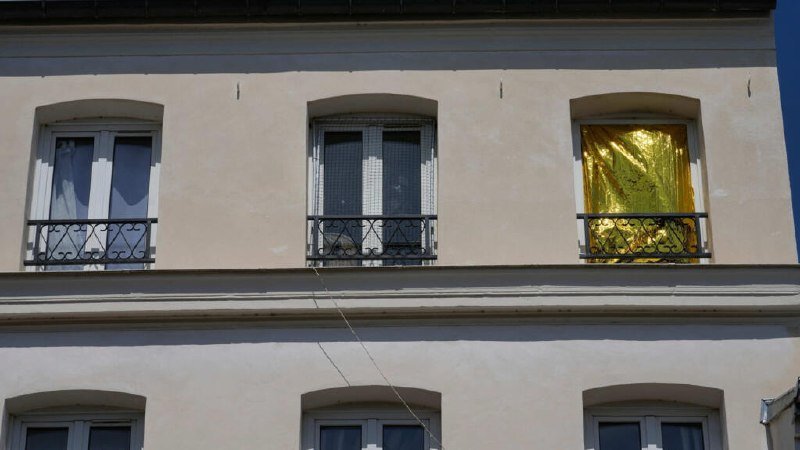
Paris mortuaries are overwhelmed. According to France 24 reporting on 29 June 2026, French authorities estimate the country's death rate rose by at least 1,000 people during the heatwave that swept France in the preceding week, with the figure described as the cautious end of the range rather than the ceiling. The detail matters: the official count is not a guess from climate modellers or an opposition talking point, it is the working estimate of the same government now coordinating the response.
That number is the story, and the story is not the weather. Western Europe has just been told, in writing and with a body count attached, that its preparation for an event repeatedly flagged as inevitable is materially inadequate. A heatwave of this magnitude in late June was forecast, modelled, and warned about by France's own meteorological services. What was not in place at sufficient scale — given the casualty figure now being acknowledged — was the public-health apparatus that should have absorbed the shock.
The heat dome was the trigger, not the cause
The proximate cause is a heat dome that parked over metropolitan France in the final week of June, driving urban temperatures into territory the country's housing stock, hospital capacity, and emergency protocols were not built for. France 24's 29 June 2026 dispatch is explicit that the 1,000-plus figure is the floor of the estimate, not the upper bound. Past European heat episodes — 2003, and the more recent summer waves — produced delayed excess-death counts that took weeks to reconcile with the initial morgue numbers. There is no reason to assume this round will resolve any faster.
The framing question is whether to treat the death toll as an act of nature or as a policy outcome. Treating it as weather is the politically convenient read; it absolves planners and lets the conversation reset the moment the thermometer drops. Treating it as a policy outcome is the harder read, because it forces an audit of specific decisions: how many cooling centres were pre-positioned, how aggressive the messaging to elderly residents was, how the hospital system triaged heatstroke admissions, how labour inspections handled outdoor work sites during the peak.
The counter-narrative — and why it does not hold
The standard counter-narrative is that no adaptation programme could have absorbed a heat event of this intensity, and that the appropriate response is resilience investment rather than recrimination. There is something to this: even the best-prepared European jurisdiction would record excess deaths under sustained 40-plus conditions, and the marginal return on cooling infrastructure flattens at the extreme tail.
But the counter-narrative overstates its case. France has had two decades to harden its response since the 2003 catastrophe, which killed roughly 15,000 people and produced a national post-mortem that explicitly recommended a permanent heat-response architecture. That architecture plainly was not scaled for what arrived in June 2026. The 1,000-plus figure France is now reporting is, by construction, the gap between the system that was built and the system that was needed.
Structural frame — adaptation as a fiscal and political choice
What this episode exposes is that climate adaptation is a fiscal and political choice dressed up as a technical problem. The technical toolkit exists: cool roofs, retrofit subsidies, urban tree canopy expansion, occupational heat standards, early-warning registries for the medically vulnerable, emergency cooling capacity in social housing. The reason it is unevenly deployed across Western Europe is not engineering but budget priority — and budget priority is a record of what governments decided mattered before the thermometer spiked.
There is a second-order point. The same week that France was counting its dead, US housing-market data surfaced showing that an unusual share of American homes were selling below list price — a signal of a cooling domestic market and stronger buyer leverage (Unusual Whales, 29 June 2026, citing market data). Read together, the two items sketch the asymmetry of the climate decade: the cost of inaction is paid in human lives in already-warm latitudes, while capital in cooler housing markets re-prices itself around shifting demand. The externalities of a warming planet are not evenly distributed, but they are not abstract either.
What remains contested — and what it costs
Two things remain genuinely uncertain. First, the final excess-death count: France 24's reporting flags that the 1,000-plus figure is the cautious end, and the eventual reconciled total will likely climb as in previous episodes. Second, the policy response: whether Paris treats this as the trigger for a step-change in adaptation spending, or as a one-summer news cycle that fades by September.
The stakes are not abstract. France has a rapidly ageing population, an urban housing stock built for a climate that no longer exists, and a public-health system already under structural strain. Each future heat event arrives into a population more vulnerable than the last. The cost of treating the June 2026 toll as a weather story is paid, literally, in the next round of deaths that an un-prepared system fails to prevent.
Desk note: Monexus framed this as a public-health and adaptation-policy story, not a meteorological one. The wire line leaned on the heat dome as headline; the editorial choice was to push the framing onto preparedness, because the death toll is a verdict on decisions made years before the temperature spiked.
Wire provenance
This editorial synthesis draws on the following public wire/social posts:
- https://t.me/france24_en