Gaza again: the framing war is settled before the first strike lands
Israeli strikes killed at least eight people across Gaza on 29 June 2026, including two young girls. The day's tragedy arrived inside a familiar information architecture — and the architecture itself is part of the damage.
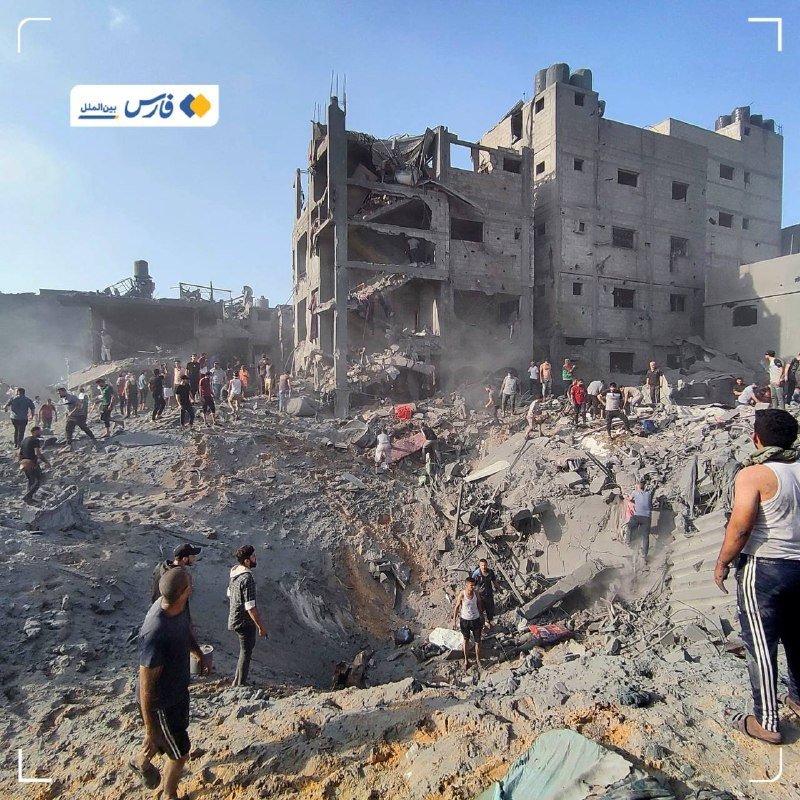
By 21:33 UTC on 29 June 2026, the day's news cycle in Gaza was already organised. Israeli strikes had hit multiple sites across the Strip since morning. Hospital accounts, relayed through field correspondents, recorded eight people killed — including two young girls — and more than forty injured by 20:50 UTC. Five of the dead were confirmed separately by 21:20 UTC. Illumination flares lit the northern edge of Rafah; an airstrike struck northwest of Gaza City. A peace accord between the United States and Iran was, separately, scheduled for signing in Geneva on Friday — a piece of regional news that, in a less crowded week, might have been the headline.
The pattern is the story. Each Israeli operation in Gaza now arrives pre-narrated: a strike, a hospital morgue, a press release, a wall-to-wall cable on Western networks, and then the next strike. What is reported is not in serious dispute; what is at stake is the angle from which it is reported, and the angle has hardened into a reflex.
What the day's record actually shows
Middle East Eye's live coverage, updated at 21:33 UTC, runs a photo essay of Palestinians mourning the dead from the day's Israeli attacks. Earlier in the evening, the same outlet's live blog reported Israeli strikes killing at least five people in Gaza on Monday — a figure that rose to eight as hospital tallies came in over the following ninety minutes, according to field dispatches summarised by Middle East Eye at 21:20 UTC. Telegram channels carrying correspondents on the ground — including gazaalanpa and rnintel — relayed the casualty figures, the location of fresh strikes, and the flare deployment over Rafah. By 20:13 UTC, illumination flares were visible north of Rafah city; by 20:12 UTC, an airstrike had hit northwest of Gaza City. The reporting is granular, dated, and largely consistent across independent channels.
What it does not contain is context: how many strikes, against what targets, announced by which Israeli authority, with what claimed justification. Those details will arrive, when they arrive, through Israeli military spokesperson briefings and Western wire paraphrase. The Western wire will say "Israeli forces said"; the field channel will say "Israeli forces"; the rest of the world will read whichever version crosses its feed first.
The framing war that precedes the strike
Coverage of Gaza routinely defers to the language of official spokespeople. Active strikes are described as "targeted operations"; casualty figures from Palestinian hospitals are routinely qualified with "Gaza-run" or "Hamas-controlled" caveats, even when the figures originate with medical staff whose professional training is the same as their counterparts in Tel Aviv or Haifa. Meanwhile, Israeli civilian deaths — when they occur from rocket fire, as they did on 7 October 2023 and in smaller incidents since — are reported with the unhedged moral weight they deserve. The asymmetry is structural, not conspiratorial: it reflects which voices the wire infrastructure treats as authoritative by default.
The result is not censorship. It is something subtler and harder to fix: a vocabulary. "Targeted" is the IDF's word, repeated verbatim. "Alleged" attaches to Palestinian casualty claims more readily than to Israeli ones. "Militants" is applied to adult male Palestinian dead at higher rates than to adult male Israeli dead, despite the term's contested empirical basis in either direction. None of this requires anyone to lie. It requires only that the same words be selected, every cycle, in the same order.
Why the asymmetry persists
Two forces explain the consistency. The first is institutional: wire services depend on access, and access to the Israeli military and political establishment is structured, English-language, and on-the-record; access inside Gaza is negotiated through a smaller set of local journalists and humanitarian agencies whose institutional weight in Western newsrooms is lower. The second is political: Western publics have been told, for the better part of two decades, that Israeli security is the operative frame against which Palestinian life is weighed — and that frame survives even as the scale of Palestinian civilian harm has grown to a point that demands a different sentence.
Both forces are addressable. Wire services could, and occasionally do, attach sourcing caveats in both directions rather than one. Editors could, and occasionally do, question whether "militants" is the right noun for a dead adult whose militant status rests on a single anonymous claim. But the incentives point in the other direction. Restraint reads as bias; balance reads as moral confusion.
What the Geneva signing changes, and what it does not
The US-Iran accord scheduled for Friday in Geneva is a real piece of news and a real shift: it formalises a diplomatic track that, until recently, did not exist. Israel and Iran have been exchanging blows through proxies for the better part of the calendar year, and a US-Iran understanding takes some of that temperature down. It also, however, redirects Western attention. A signing ceremony in Geneva is a story with protagonists, quotes, and a single location; a night of strikes in Gaza is a story with neither a beginning nor an end. Cable news has limited column-inches per day. When Geneva takes the front of the paper, Gaza gets the inside page, and the inside page carries less.
This is not an argument for ignoring Geneva. It is an argument for not letting Geneva, or any other diplomatic milestone, displace the granular work of documenting what happened in Gaza on 29 June 2026: eight people dead, two of them children, in strikes the Israeli military announced in its own language and the rest of the world re-announced in the same.
Stakes
If the current vocabulary continues, the next cycle will look like this one: a strike, a hospital morgue, a press release, and a Geneva ceremony that the cable finds more photogenic. If it changes, the change will not come from a single newsroom. It will come from editors willing to apply the same sourcing standards in both directions, from correspondents willing to use the same unhedged language for the same kinds of deaths, and from readers willing to hold the line on what counts as evidence.
The dead in Gaza tonight are beyond anyone's editorial standards. The reporting about them is not.
This publication treats the Israeli-Palestinian conflict with equal weight on Israeli security concerns and Palestinian civilian harm. The day's casualty figures are drawn from field-channel and Middle East Eye reporting; the structural observations above are editorial.
Wire provenance
This editorial synthesis draws on the following public wire/social posts:
- https://t.me/gazaalanpa
- https://t.me/rnintel