Gaza strikes resume even as the cameras move to Geneva
Israeli airstrikes killed at least eight Palestinians across Gaza on Monday, hours before Washington and Tehran were due to sign a framework accord in Geneva. The disconnect is the story.
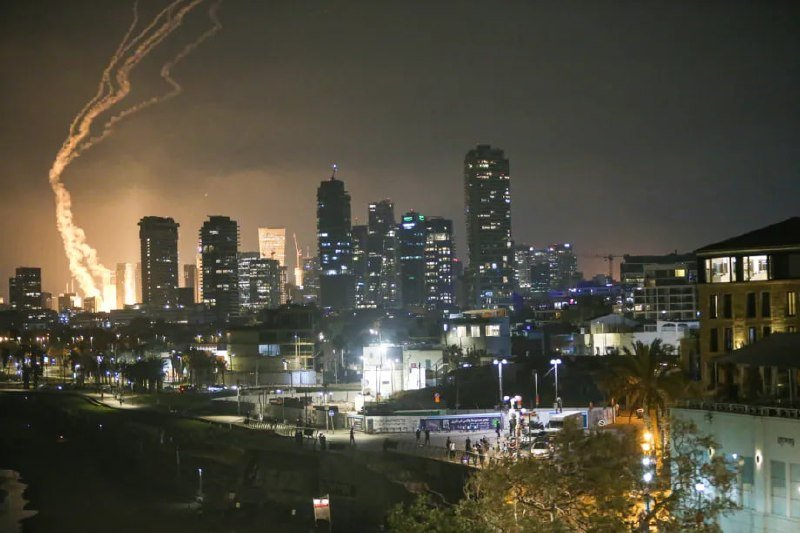
The arithmetic of the day, before the speeches, is the usual one. Gaza hospital officials reported on the evening of 29 June 2026 that at least eight people — among them two young girls — had been killed and more than forty others injured in Israeli airstrikes across the Strip since morning. The toll is a moving figure; earlier in the day Middle East Eye's live desk put the confirmed dead at five. The discrepancy is itself a fact about the reporting environment: when the only cameras left in northern Gaza are flares and the after-image of a strike, the count is always a range, never a number. Within hours, the same city block of diplomatic airspace will host Iranian and American delegations signing a framework accord in Geneva. The two events are not in different time zones. They are in the same news cycle.
The Geneva ceremony is being sold as the closer of a long Middle Eastern chapter. A peace accord, brokered through months of back-channel work, is to be initialed on Friday. The signing has been trailed by both governments as evidence that sustained engagement — not maximalist posture — produces results. That framing is not wrong. It is, however, incomplete. Because the same Monday that delivers the pen in Switzerland delivers bombardment in Rafah, illumination flares over the southern city, and a strike reported northwest of Gaza City. Theatrical diplomacy and kinetic operations are running in parallel, and the gap between them is the actual story.
What the wire is saying
The Western diplomatic read, the one that will dominate the Geneva coverage, runs roughly as follows. Tehran and Washington have spent eighteen months on a back-channel that moved from prisoner swaps to nuclear constraints to a broader security architecture. The Friday signing is the capstone. Israeli operations in Gaza are framed by that same official ecosystem as a separate, ongoing counter-terror campaign, with civilian harm regretted and investigated and never quite large enough to derail the larger strategic project. The two tracks are presented as parallel, not in tension — different files, different ministries, different metrics of success.
That framing is internally consistent. It also has a name for its blind spot. The signing in Geneva, designed to lock in de-escalation with one regional capital, is happening while another front — the most densely populated piece of land on earth — is being struck by the closest US ally. If the goal of the accord is regional stabilisation, the Gaza file is not a footnote to it. It is a stress test.
What the counter-narrative is saying
The opposition frame, voiced most clearly by Palestinian and regional outlets, refuses the separation. To read the day's coverage from Gaza-side channels is to read a single continuous sentence: a new massacre in Gaza this evening, eight killed and forty wounded since morning, flares over Rafah, strikes in the north, and in twelve hours the people who claim to be ending this will be photographed at a table in Geneva. The argument is not that Iran is blameless. The argument is that a Middle East settlement which leaves the Palestinian theatre untouched is not a settlement at all — it is a permission slip for the next round.
There is a structural point buried in the outrage. The diplomatic architecture being built around Tehran is bilateral by design. It treats the region's crises as a portfolio of discrete files, each to be negotiated in its own channel. The Iranian nuclear file is one file. The Palestinian file is another. The Lebanese file is another. That division is convenient for negotiators; it is also the mechanism by which Gaza becomes the permanent residue of every agreement that does not address it. The framework accord can be initialed in good faith and still leave the next war unwritten.
The pattern, in plain language
What the day demonstrates, again, is a familiar feature of the regional order: peace processes in the Middle East have historically been declared in capital cities and contested in the territories that the declaration does not name. The 1978 Camp David framework was a model — a settlement between two governments that left the third population in suspension, with consequences that ran for decades. The same shape is visible in 2026. Geneva can be a real diplomatic achievement and Gaza can be a real battlefield on the same Monday, because the diplomatic register and the military register have been formally decoupled for the duration of the negotiation.
The decoupling is not accidental. It is the design. It allows each negotiating party to claim the gains of its preferred track without inheriting the costs of the other. Washington gets a non-proliferation win. Tehran gets sanctions relief. Tel Aviv retains operational freedom. The Palestinian civilian bears the cost of the freedom that was retained. None of the principals is lying. The arithmetic just does not have a row for them.
What is at stake on Friday
If the Geneva accord holds in its initialed form, the immediate consequences are concrete. Inspectors return to facilities, sanctions tranches unlock, regional shipping lanes quieten, and the premium on insurance for Gulf energy routes falls. All of that is real, and most of it is good. The longer-term test is whether the architecture has any mechanism to absorb the next Gaza, or whether the next Gaza is, by construction, outside the architecture.
That question is not rhetorical. Israeli flare operations over Rafah in the hours before a signing are not the action of a government that believes the day requires quiet. They are the action of a government that has calculated, correctly or not, that Geneva will not touch what happens in the southern Strip. The verification of that calculation comes in two stages: first in the silence of the signing ceremony, and second in the casualty reports of the week after.
What we still do not know
The sources available to Monexus at publication are largely wire-level: a live blog, two regional Telegram channels, and OSINT footage. They do not give us an authoritative Israeli military readout for the day's operations, a named IDF spokesperson briefing, or a Western-wire confirmation of the eight-killed figure. The number is consistent across the two Gaza-side channels, which is a low bar but not nothing. The strike reported northwest of Gaza City and the flare activity north of Rafah are corroborated by the same channels in near-real time. Where the picture thins is on the Geneva side: the framework text has not been published, the Friday agenda has not been detailed beyond the signing itself, and the Palestinian file's status in the accord is, as of this writing, unaddressed by either principal. Read with that gap in view, the day's story is not that diplomacy failed. It is that diplomacy is being asked to succeed on a moving floor.
Desk note: Monexus ran the day's two events — Geneva signing and Gaza bombardment — as a single story rather than two, because the news cycle is running them as one. The Western-wire framing will treat them as separate files; the regional framing will treat them as one story. We have presented both and let the reader weigh which frame holds.
Wire provenance
This editorial synthesis draws on the following public wire/social posts:
- https://t.me/gazaalanpa
- https://t.me/gazaalanpa
- https://t.me/gazaalanpa
- https://t.me/rnintel
- https://t.me/rnintel