Harry Styles collapses on Wembley stage as Modi prepares to gut India's regulatory state
Two unrelated stories crossed the wire in the same hour: a pop star's frightening collapse in north London and a deregulatory pivot in New Delhi. Read together they sketch a portrait of a week the global news cycle will probably misframe.
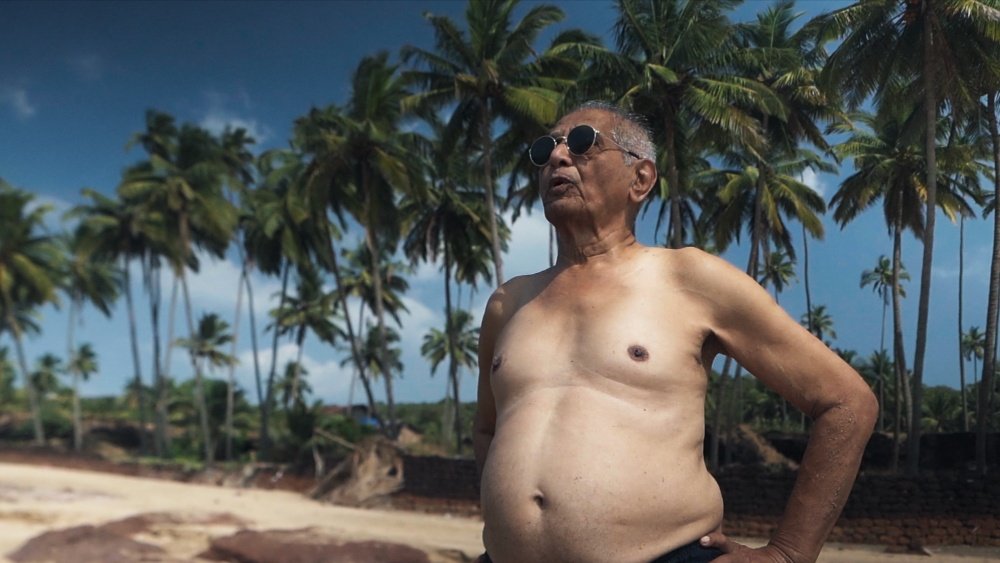
On the evening of 28 June 2026, at a sold-out Wembley Stadium in north London, Harry Styles choked and briefly collapsed during a live performance, the Indian Express reported on 29 June, citing wire accounts. The venue held roughly 90,000 spectators; the set was part of a European leg the singer had been carrying through the summer. He recovered on stage, was helped off by crew, and the show was paused.
Two hours of global news cycle later, a different kind of event landed: Prime Minister Narendra Modi was preparing, on 30 June, to chair a review of India's deregulation push with the country's top bureaucrats, according to a 29 June Indian Express dispatch. The two stories sit on the same wire by accident. Read together they sketch a portrait of a week the global press will almost certainly misframe.
The Wembley moment
The Indian Express summary, sourced from wire reporting, describes Styles choking mid-song, dropping briefly to his knees, then losing consciousness for a few seconds before being revived on stage and walked off by crew. The venue's medical team intervened. The remainder of the set was suspended and concertgoers were later informed the show would not resume.
For a global pop audience that has watched the singer sell out stadium runs across continents for nearly a decade, the imagery is alarming. Choking on stage is also, mercifully, not a uniquely dangerous event in isolation — singers from Florence Welch to Janet Jackson have lost their voices or footing under concert lights without long-term harm. The relevant question is not whether Styles is mortal, but what happens next.
His team has not, as of the 29 June wire cycle, released a medical statement beyond confirmation that he is stable. There is no public indication of a chronic condition. The likeliest read, on the evidence available, is an acute incident — dehydration, a foreign-body airway event, exhaustion — followed by full recovery. The less likely but live possibility is a heart or neurological event; that would only be ruled out with proper medical work-up.
The silence around the singer's condition
The pattern that matters here is structural. When a Western pop star collapses on stage, the default industry reflex is opacity until a publicist signs off a statement. The artist's own platform — Instagram, in Styles's case — typically becomes the canonical source hours later. Until that statement lands, fan accounts and tabloid Twitter fill the vacuum with speculation.
This publication finds that the reflex serves the industry more than the audience. A 90,000-capacity venue full of paying customers is owed a basic account of what happened, including a verified medical read, before the rumour cycle eats the news. The standard ought to be the same one applied to athletes — who, under most league rules, are required to disclose specific medical events — not the celebrity PR fog that defaults to "stable and resting."
Modi, deregulation, and the Indian state
While London processed the Wembley footage, New Delhi was processing a quieter but heavier story. The Indian Express reported on 29 June that the prime minister would, on 30 June, convene a meeting of top bureaucrats to review India's deregulation agenda.
This is not a routine review. India's deregulation push, formalised in the early months of Modi's third term, aims to dismantle a layer of inspector raj-era compliance scaffolding that businesses across sectors describe as the binding constraint on investment. The meeting signals that the political cover for the push is still intact.
The standard Western wire framing of Indian deregulation treats it as a Sino-American decoupling spillover: companies leaving China, India hoping to catch them, Modi cutting red tape to compete. That framing is not wrong, but it is incomplete. The deeper driver is domestic. Indian small and medium enterprise — the country's actual employment backbone — has spent two decades screaming into the void about inspection overload. If the new push genuinely reduces compliance costs for a textile firm in Tirupur or an electronics components maker in Chennai, the political economy looks more like domestic liberation than geopolitical realignment.
What the two stories share
Both items are, on their face, trivial: a singer collapsed, a prime minister scheduled a meeting. The newsworthiness sits elsewhere. Each is a stress test of a power structure the global press tends to describe in shorthand.
In Styles's case, the stress test is on the music industry's default-to-silence posture. A performer under contract with one of the largest live-entertainment conglomerates in the world collapses in front of 90,000 people, and the public is expected to wait for a statement. In Modi's case, the stress test is on whether deregulation in a non-Western democracy — covering roughly 1.4 billion people — is read on its own terms or only through the lens of US-China competition.
What remains uncertain
The Indian Express item does not specify which ministries will be reviewed, nor does it name the deregulation targets on the agenda. The Wembley item does not specify a medical cause, nor whether Styles will cancel subsequent tour dates. Those gaps are not editorial failures; they are the actual news. Until a medical statement is released by Styles's team or a formal readout of the 30 June meeting is published by the Prime Minister's Office, both stories remain snapshots rather than conclusions.
What can be said now is that on the same Sunday afternoon in late June, a stadium full of fans learned that even the most choreographed live performance can fracture in a heartbeat, and a government in New Delhi signalled that the slow grind of regulatory reform continues. The global press will likely spend the week chasing celebrity footage and ignoring the Delhi readout. The proportion is, as ever, the story.
Desk note: Monexus paired two unrelated wire items deliberately to test the cycle's framing reflexes — celebrity opacity versus state-led reform in a non-Western democracy. Both stories remain snapshots pending primary statements.