Hezbollah Says No to Normalisation, Accuses Israel of Ceasefire Breach in Southern Lebanon
As Israel's demolitions continued overnight in southern Lebanon, Hezbollah's leader ruled out any end to the conflict — and accused Jerusalem of 'blatant' violations of the November understanding.
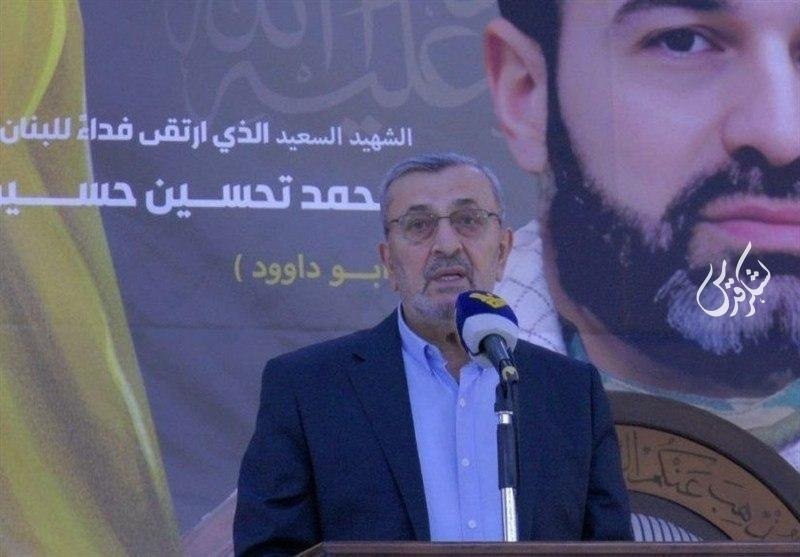
On the morning of 29 June 2026, two signals crossed paths in southern Lebanon. Hezbollah's secretary-general, Naim Qassem, stood before his movement and drew a hard red line around any framework agreement with Israel: "No one may sign anything that undermines Lebanon's sovereignty." He ruled out normalisation and any end to hostilities on terms Beirut does not set. Hours earlier, the Israeli military said it had completed overnight demolitions of a major Hezbollah tunnel running beneath Majdal Zoun, a border village in south Lebanon, releasing footage through the Osint613 channel at 06:36 UTC. By midday, Hezbollah's media operation had already characterised those strikes as "blatant" ceasefire violations, citing the destruction of a "large infrastructure site" in the same village and warning that the group "reserves the right to respond."
The pattern — political rejection in Beirut, kinetic action on the ground — is now the operating rhythm of the post-November arrangement that paused the full-scale cross-border war. Both sides insist they are upholding the deal. Each side also insists the other is breaking it. The question for the next several weeks is which framing holds, and whether the pause collapses back into open war.
What Qassem actually said, and what he left out
Reporting carried on 29 June by the Open Source Intel channel summarises Qassem's position as three interlocking refusals. First, no Lebanese signatory — president, prime minister, or speaker — has the authority to commit the country to anything that touches sovereignty. Second, normalisation with Israel remains categorically off the table. Third, there is no path to ending "the resistance" — Hezbollah's own framing of its armed wing — through external negotiation. The remarks echo the movement's standing posture since the November 2024 ceasefire that ended the open war: the armed structure is non-negotiable; political language is.
What the remarks do not address is whether Hezbollah retains the operational capacity to enforce those positions. The Israeli demolition at Majdal Zoun, if confirmed at the scale the IDF footage suggests, removes a specific piece of cross-border infrastructure built precisely for the war that the ceasefire paused. Reading the two signals together, the morning looks less like a drift back to war than a slow-motion negotiation over what the ceasefire is allowed to mean.
What the Israeli campaign is doing
The IDF's southern Lebanon demolition campaign is not new. Tunnel networks along the Litani corridor have been a stated Israeli target since the war. What the 29 June footage appears to confirm is that those operations are continuing into the seventh month of the ceasefire framework — and that Israel continues to publicise them through third-party channels (Osint613) rather than through formal UN-mandated reporting mechanisms. The choice matters. It signals that Jerusalem is asserting a right of self-defence that the Lebanese government, Hezbollah's own statements notwithstanding, has not formally contested through the ceasefire's institutional channel — UNIFIL, the ceasefire mechanism, or the Lebanese armed forces liaison.
The structural read: the November deal was always ambiguous about who had the authority to police what. Israel has interpreted the arrangement as licence to destroy residual infrastructure. Hezbollah has interpreted it as a binding pause on Israeli action inside Lebanese territory. Both readings cannot be right. Both readings are currently being enforced simultaneously.
Counter-read: who is escalating?
Hezbollah's "we reserve the right to respond" line is a standard deterrent formulation, not a declaration of war. Read narrowly, it is a warning that further demolitions could trigger a return to rocket fire and infiltrations. Read broadly — and this is the read that will dominate Western wire coverage — it is evidence of Iranian-axis recalcitrance, of a movement that never accepted the ceasefire in good faith.
The counter-read, less common in Western coverage but worth holding, is that Hezbollah fought a war it did not start, lost the open phase, paused under conditions that left its political leadership in Beirut and its armed wing under sustained Israeli pressure, and is now buying time while signalling that the movement cannot simply be legislated out of existence by an external agreement. From that vantage, Qassem's statements are the predictable posture of a defeated-but-not-pacified actor trying to set the ceiling on what the next round of negotiation will cost.
Stakes and what comes next
The immediate stakes are localised: the villages of south Lebanon, the Israeli communities within rocket range, and the residual Hezbollah infrastructure that the IDF is methodically dismantling. A return to open war would be costly for both sides but asymmetrically so — south Lebanon's civilian population, already displaced once, would bear the brunt.
The deeper stakes are about the architecture of the post-November arrangement itself. If Israel is permitted to continue demolitions without triggering a Hezbollah response, the ceasefire effectively becomes a unilateral Israeli instrument — a pause for re-equipping and route-clearing, not a binding commitment. If Hezbollah does respond — and the threshold for that response is set by the movement's own internal calculus, not by external observers — the November framework collapses and the regional escalation ladder reopens, with Iran, the US and the Lebanese armed forces all pulled back into the logic of the open war.
This publication has relied on Open Source Intel reporting carried over the Telegram channel on 29 June 2026 for the framing of both Qassem's remarks and the Israeli demolition announcement. The footage cited is the Osint613 video circulated via X. No independent ground confirmation of the tunnel's scale or the extent of damage has been published at time of writing.
Wire provenance
This editorial synthesis draws on the following public wire/social posts:
- https://t.me/s/osintlive
- https://t.me/s/osintlive
- https://t.me/s/osintlive
- https://twitter.com/Osint613/status/2071477319630287348/video/1