Tehran draws a red line in the Strait of Hormuz — and hands Europe a headache
Iran's deputy foreign minister says only Tehran demines the Strait of Hormuz and warns foreign vessels off unspecified paths — a posture that turns a French offer of help into a sovereignty flashpoint.
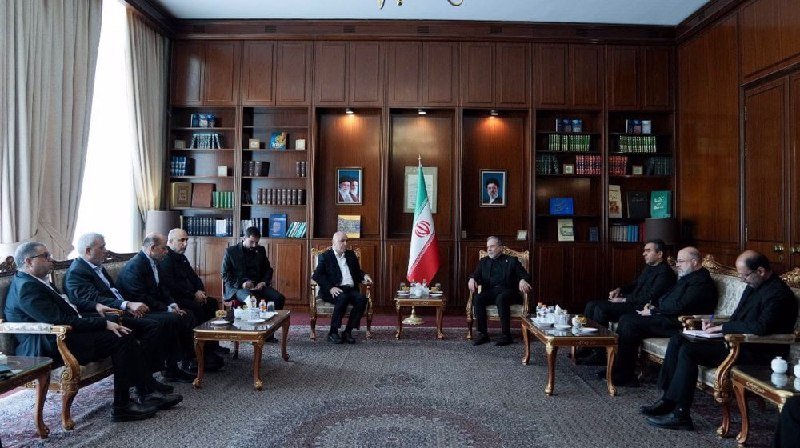
On the evening of 29 June 2026, Iran's Deputy Foreign Minister Kazem Gharibabadi pushed back against a French presidential offer to help clear mines from the Strait of Hormuz, declaring that "demining in the Strait of Hormuz is done only by Iran." The statement, carried by Fars News International at 19:11 UTC, came hours after a separate message relayed by open-source monitors in which Gharibabadi warned that Iran "opposes, and will try to obstruct, any vessels transiting through paths in [the Strait of] Hormuz that are not specified by Tehran." In a third remark, the deputy minister said that if Oman is "not willing to cooperate on a mechanism to manage Hormuz, Iran will advance this work," while adding that he had seen "readiness on their part."
The sequence is small in words but large in implication. Tehran is doing two things at once: reasserting an exclusive claim to police the most consequential energy chokepoint on earth, and converting an ostensibly humanitarian offer from Paris into a question of sovereignty. It is the diplomatic equivalent of moving a piece sideways on the board while telling the opponent it has nowhere to go.
What Gharibabadi actually said
The deputy minister's three messages, dispatched within roughly half an hour of each other, form a coherent posture rather than a set of off-the-cuff remarks. The first — the only-mines-we-mine line — is a direct rebuttal to the Élysée, which had publicly raised the prospect of European mine-countermeasure assistance in the Strait. The second elevates the dispute from ordnance to traffic management: any vessel not following routes laid down by Iran risks obstruction. The third brings Muscat into the frame as a potential partner in a bilateral management mechanism — a familiar Iranian preference for managing the Strait with one friendly neighbour rather than with a multinational flotilla.
None of the three statements is new in substance. Tehran has long insisted that it alone is responsible for security in its own waters, including the Strait through which roughly a fifth of the world's traded oil passes. What is new is the explicit, on-the-record warning that non-Iranian paths will be met with obstruction, framed in English-language channels monitored by Western open-source analysts as well as in Fars's Persian wire.
The French offer, and why Tehran rebuffed it
Paris's framing — help with demining — was deliberately humanitarian. Mine-clearance assistance is the kind of language militaries use when they want to put a ship in a place without saying they are putting a ship in a place. From Tehran's vantage point, the distinction is thin. Any European naval presence clearing mines in the Strait is, in Iranian eyes, a European naval presence in the Strait, with the legal and political consequences that follow. Gharibabadi's response draws a bright line: Tehran will accept demining, but only its own.
This is not a posture designed to please European chancelleries. It is designed to do two things Iran actually needs. First, it preserves a lever. As long as the world believes Iran can drop mines faster than anyone can clear them, the Strait remains a card Tehran can play in any negotiation over sanctions, nuclear file, or regional security. Second, it pre-empts the slow normalisation of an outside naval presence in waters Tehran considers its own backyard — a presence that, once established, is rarely rolled back.
What Oman changes — and what it doesn't
The Muscat reference is the most underrated line of the evening. A bilateral Iranian-Omani mechanism for managing Hormuz is the option Tehran prefers because it keeps external powers out and gives a friendly neighbour a stake. Oman's longstanding role as a quiet interlocutor between Tehran and the Gulf, and between Iran and the West, makes it the natural candidate. The deputy minister's claim that he saw "readiness" in Muscat suggests the conversation is already live.
The catch is that a bilateral mechanism, however diplomatically tidy, would still need to be acceptable to the Strait's other principal users — Saudi Arabia, the United Arab Emirates, Iraq, Kuwait, Qatar, and the major importers in Asia. None of those governments were named in the Iranian statements. Their silence is itself a data point: a working arrangement brokered through Muscat would be a regional settlement, not a global one, and the global customers of Gulf energy have their own views on who gets to set the lanes.
The structural picture
What is unfolding is a familiar pattern dressed in new vocabulary. Chokepoints are where the gap between physical geography and political authority is widest, and Hormuz is the textbook case. The Strait is twenty-one miles wide at its narrowest, with shipping confined to two-mile-wide lanes in each direction, and roughly a fifth of globally traded petroleum passes through it. Any actor who can credibly threaten that flow — by mine, by fast-attack craft, by coastguard inspection, by selective route designation — owns a lever that no sanctions regime, no diplomatic agreement, and no fleet of minehunters can fully neutralise. Tehran has held that lever for decades; what Gharibabadi did on 29 June was explain, in unusually plain English, how it intends to use it.
There is also a multilateral layer. The United States Fifth Fleet is based in Bahrain precisely because Washington is unwilling to leave the Strait to regional management. European mine-countermeasure offers, French or otherwise, sit inside a long-running conversation about burden-sharing in the Gulf, and about whether European navies can operate in waters the USN considers its primary theatre. Tehran's rebuff pushes that conversation back to square one.
What remains uncertain
The three statements are crisp, but several things are not. The French offer that prompted Gharibabadi's first remark was not quoted at length in the materials available to this publication, and it is not clear whether it was a unilateral proposal, a coordination with Gulf partners, or a response to a specific mine-laying incident. Oman's "readiness" is described by the Iranian side alone; Muscat has not, in the same window, confirmed the substance of the exchange. And the phrase "obstruct" — strong language in an open-source relay — leaves the operational meaning deliberately ambiguous. Obstruction could mean coastguard turn-backs, it could mean selective boarding, it could mean something more kinetic. Tehran has not said which.
What is clear is the intent. Iran is signalling, in advance, that any attempt to internationalise the management of Hormuz — through mine clearance, through convoy escort, through any third-party naval operation — will be treated as a sovereignty question first and a security question second. That is a posture Paris, and any other European capital weighing a ship-borne offer of help, now has to price in.
— Monexus is framing this as a sovereignty dispute over the management of a global commons, not as an imminent kinetic escalation. The wire treatment has tended to lead with the demining question; the deputy minister's statements make clear that the underlying issue is who sets the lanes, and who decides who clears them.
Wire provenance
This editorial synthesis draws on the following public wire/social posts:
- https://t.me/FarsNewsInt
- https://t.me/osintlive
- https://t.me/osintlive