Tehran redraws the rules of the Strait of Hormuz — and Oman is in the room
Deputy foreign minister Kazem Gharibabadi says the Strait has entered a 'critical state.' The implied message to Oman, and to Western navies, is that Tehran intends to dictate the terms of transit.
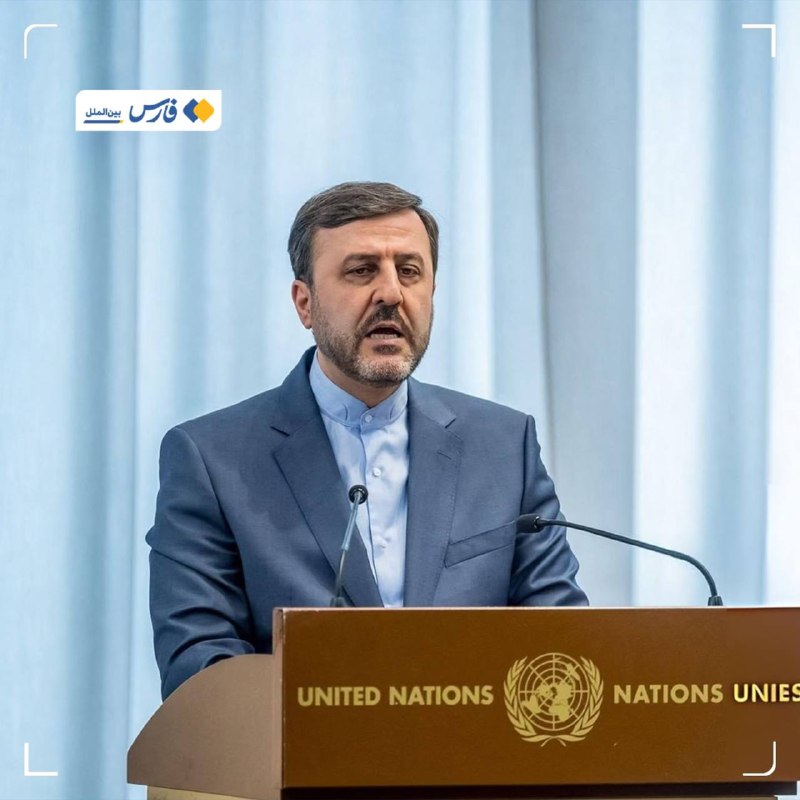
At 19:50 UTC on 29 June 2026, Iran's deputy foreign minister Kazem Gharibabadi declared that the Strait of Hormuz has entered "a critical state" and that the waterway "needs new management organizations," according to a Telegram post by Tasnim News. Less than an hour later, Open Source Intel, a Telegram channel that aggregates Iranian official statements in English, paraphrased the same minister: absent an understanding with Oman on "the route and arrangements" of the strait, Tehran will "apply Iran's new sovereignty and policy." The two messages, taken together, are less diplomatic code than a public posture: Iran intends to renegotiate the operating rules of the world's most important oil chokepoint, and it intends to do so over the heads of the Western navies that have policed those waters since the 1980s.
The relevant fact is not the rhetoric. It is the sequencing. Gharibabadi's intervention came hours after he publicly rebuffed French President Emmanuel Macron's call for international demining of the strait, insisting — per Fars News International on Telegram — that "demining in the Strait of Hormuz is done only by Iran." That claim is, on its face, narrow: mine-clearing is a sovereign capability, not a concession. But it is also the precondition for any other unilateral move Iran might make. Whoever clears mines clears routes. Whoever clears routes sets terms of transit. The diplomatic friction with Paris is, in effect, a turf dispute over who has the standing to speak about passage through a corridor that carries roughly a fifth of globally traded oil.
What Tehran is actually proposing
The "new management organizations" line is the substantive payload. The current architecture is informal but durable: transit is governed by the 1982 UN Convention on the Law of the Sea, with Iran and Oman sitting on the strait's northern and southern shores and the Combined Maritime Forces — a 46-nation naval partnership led by the United States — providing de facto escort. Gharibabadi's framing suggests Tehran wants a parallel or replacement structure, one in which Iran and Oman write the rules bilaterally and external navies are reduced to guests rather than guarantors. The Oman dimension is not incidental. Muscat has historically been Iran's diplomatic back-channel to the Gulf and to Washington; it brokered the secret 2013 and 2023 rounds between Tehran and the United States. Putting Oman at the centre of a "route and arrangements" conversation is, in effect, an attempt to convert that back-channel into a governing institution.
The counter-narrative from Western capitals
The Western wire line, when it arrives, will likely treat the statement as coercive brinkmanship: an attempt to weaponise a transit corridor against Gulf Arab monarchies and European energy buyers. The case for that reading is straightforward. Iran has form — the 2019 seizure of the British-flagged Stena Impero, repeated harassment of tankers during 2023 and 2024, the IRGC Navy's drone and fast-boat doctrine explicitly built around choking the strait in a crisis. From a European vantage point, a unilateral Iranian "management" regime is indistinguishable from a tollbooth. The case against that reading is also straightforward and rarely made in Western coverage: the strait's current security regime is itself an artefact of US naval dominance, not a neutral international order. Combined Maritime Forces patrols exist because Washington chose to make them exist; Iran has never consented to them. Calling that arrangement "the rules-based order" and an Iranian counter-proposal "coercion" is, structurally, a claim that the status quo is not itself a coercive choice.
Why the timing matters
Three things have shifted in the past eighteen months. First, the regional balance after the 2024–25 exchanges with Israel left Iran's missile and drone arsenal demonstrably intact, restoring Tehran's confidence in its deterrent posture. Second, the Omani-mediated track with Washington has produced intermittent but real de-escalation, giving Tehran room to argue that bilateral diplomacy — not multilateral naval stewardship — is the legitimate framework. Third, France's public call to internationalise mine-clearing handed Gharibabadi a visible European interlocutor to push back against, which is rhetorically useful at home. None of this means the strait is about to close. It means Iran is signalling that the next crisis over the waterway will be fought on institutional terrain, not just on the water.
Stakes and what to watch next
If the Gharibabadi line holds, the practical consequences are layered. OPEC-grade crude shipments through the strait would face a new Iranian permit regime on top of existing insurance and flag-state costs; European and Asian refiners would see their routing options narrow even without a single mine being laid. The diplomatic consequence is sharper: Oman is being asked to choose between its Iranian relationship and its Western security partnerships, and the Western navies that have treated the strait as a free transit zone will need to decide whether to contest the new Iranian claim or absorb it. The Omani response — quiet, almost certainly — is the next data point worth watching. Tehran has put a question to Muscat in public. The answer will tell the rest of us how much of the old order in the Gulf still stands.
Desk note: Monexus treats Iranian state-media reports on this story as primary-source posture statements, not as objective factual accounts. The Gharibabadi quotes are reproduced because they are the news; the framing around them is editorial.
Wire provenance
This editorial synthesis draws on the following public wire/social posts:
- https://t.me/osintlive
- https://t.me/JahanTasnim
- https://t.me/FarsNewsInt