Tehran Walks Back From the Table, and the Friction Comes Into Focus
Iran cancelled technical-level engagement after what it calls violations by the United States and Israel of an unnamed memorandum — a small procedural step that exposes how thin the diplomatic floor still is.
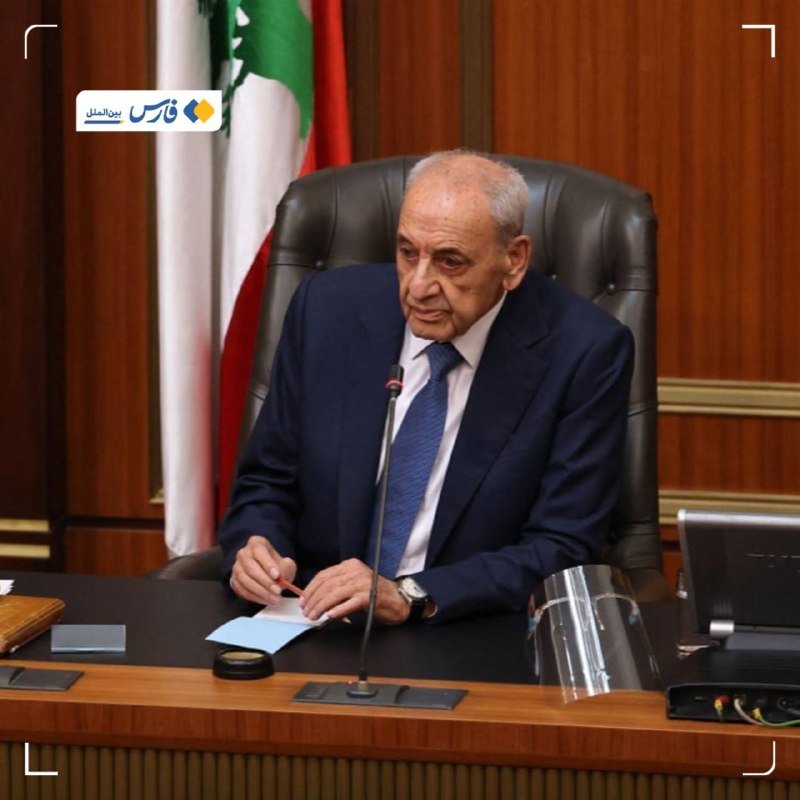
On Sunday 28 June 2026, an Iranian official told state television that the Islamic Republic would not take part in a planned round of technical talks with the United States, citing what he described as recent attacks and breaches by Washington and Israel of an unnamed memorandum of understanding. The cancellation, reported at 00:20 UTC on 29 June, is the second procedural rupture between Tehran and the Trump administration this month.
The episode is small in surface, large in implication. Diplomacy between states that do not formally recognise each other survives on the narrow ledge of working-level conversations; when that ledge is declared off-limits by one side, the public story becomes less about the specific agenda items and more about who can credibly walk back to the table, and who cannot.
The official Iranian frame
Foreign Minister Abbas Araqchi, travelling in Karbala for what Iranian outlets described as coordination around the return of the remains of Ayatollah Ali Khamenei, set the diplomatic tone across a cascade of statements on the evening of 28 June. In one, reported by Al-Alam Arabic at 21:46 UTC, he accused the United States and Israel of violating the memorandum of understanding, "especially the first clause," and said this was an obstacle to restoring regional security. In another, at 21:47 UTC, he insisted Tehran was implementing "the principle of commitment in return for commitment" in good faith but would respond decisively to further breaches.
The phrasing matters. "Commitment for commitment" — taqābul al-iltizām — is the formula Tehran has used since the 2015 nuclear deal's architecture, in which Iranian restraint on enrichment was to be met with sanctions relief. The reference to a "first clause" the US and Israel are accused of vetoing suggests a sequencing dispute: Tehran thinks one set of obligations should have been honoured before moving to a harder set, and that sequencing has been broken.
What the Iranian account actually changes
The framing should be read on its own terms before being weighed against Western wire copy. Iran's complaint is procedural: a memorandum was signed, the first clause was supposed to land, it did not, and now Tehran is signalling that the rest of the schedule will not be honoured either. This is how an adversary that wants to keep a channel open — but only on terms it recognises — speaks when it wants to send a message without closing the door entirely. The choice of language ("veto of some provisions," "hinders the restoration of regional security") keeps the diplomatic grammar alive even as the substance stalls.
It is also consistent with how Iranian diplomacy has historically absorbed pressure: by widening the picture. Araqchi's Karbala movement, the framing of Khamenei's return, the regional-security framing — all of these cast the technical-track dispute as one slice of a larger regional confrontation rather than a narrow disagreement about enrichment percentages or inspector access.
What the Western wire is reporting
Reuters, citing an Iranian official speaking to state television late on 28 June, ran the cancellation story in the early hours of 29 June UTC. The wire line is tighter: Iran is not coming to technical talks in response to recent attacks. Attribution is to an unnamed Iranian official. The reference to "recent attacks" does the heavy lifting in that single sentence; without further context in the wire copy, the targets, the perpetrators, and the timing of those attacks remain deliberately unspecified in the reporting that has reached us so far.
That asymmetry — Iran speaking in detail through state-aligned outlets that name the United States and Israel, the Western wire speaking through anonymous sourcing and stripped-down prose — is itself the story. One side is performing grievance at full volume. The other is indexing it.
Where this leaves the table
Diplomacy of this kind rarely dies from a single cancellation; it dies from a pattern of cancellations that the parties stop bothering to reschedule. Iran's move, on the evidence in front of us, is closer to a calibrated slowdown than a rupture. The formula is intact; the venue is suspended. Reading that correctly matters more than reading it as either breakthrough or breakdown.
The structural read is plain. Two administrations that exchanged threats and restrained strikes through spring 2026 are now operating on a memorandum that nobody outside the negotiating rooms has seen in full. Theore are stated, the goods are not. When that condition persists, every technical meeting is a referendum on the principle of commitment itself — and a single procedural breach is enough to suspend the entire downstream schedule.
The week's open questions
Three things remain genuinely under-sourced. We do not yet know which "recent attacks" the Iranian official pointed Reuters toward, nor whether Israel is a party to the memorandum Araqchi invoked or simply a third-country reference used to harden the political framing. We do not know whether a new technical round is being rescheduled privately. And we do not know what the "first clause" of the understanding contains — without that, every public claim from both sides reads as plausible and proves nothing.
The honest summary is this. As of 28 June 2026, the diplomatic channel between Iran and the United States is publicly slower and substantively unchanged. The next move is Washington and Tel Aviv's: either the memorandum's first clause is honoured to Iran's satisfaction, or a different channel of engagement — back-channel, secondary mediation, Omani- or Qatari-hosted — takes the weight that the formal track has just declined.
Desk note: Monexus treats Iranian state-aligned statements as primary claims of position, not as confirmation of disputed facts, and pairs them against Western wire attribution wherever both are available. This piece reads both registers side by side rather than collapsing them.
Wire provenance
This editorial synthesis draws on the following public wire/social posts:
- http://reut.rs/4v6Zgeb
- https://t.me/s/alalamarabic
- https://t.me/s/alalamarabic
- https://t.me/s/alalamarabic
- https://t.me/s/alalamarabic