A $1,000-per-household bill is the wrong frame for the Iran war
Two headlines out of Tehran are doing the heavy lifting for a war cost story the Treasury has not actually published. The arithmetic, and the politics, deserve more scrutiny than they are getting.
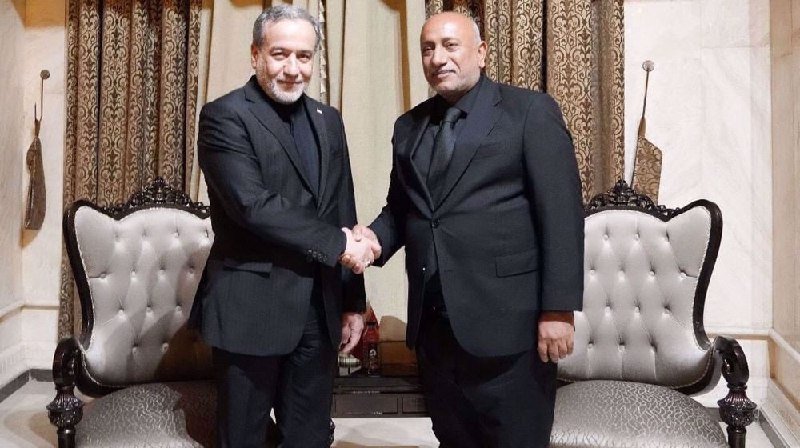
A figure is doing the rounds on 29 June 2026 that ought to give any careful reader pause. According to a CBS report circulated by Tasnim's English service, "America's war against Iran has cost about $1,000 per American household" — a tidy, round, almost designed-for-viral number that lumps war spending, fuel prices and grocery bills into a single per-capita line. On the same day, Iran announced, via France 24, that it has held its first meeting with Oman on new management arrangements for the Strait of Hormuz. Two stories, two channels, one tidy moral: the war is bleeding American households, and Tehran still holds the choke point.
This publication finds both stories true in their narrow factual content, and both deeply misleading as framed. The arithmetic is unanchored, the attribution chain runs through Iranian state media, and the Hormuz announcement is being sold as a fait accompli before its terms are public. A war that is being costed in round numbers is a war whose real bill is being hidden.
The $1,000 figure is doing three jobs at once
The first problem is what the number actually measures. Per Tasnim's rendering of the CBS piece, the $1,000 figure "includes the increase in the price of fuel, food" — meaning the same headline is simultaneously claiming a fiscal cost (Treasury outlays, replenishment of stocks, supplemental appropriations) and a macroeconomic cost (the pass-through from conflict-driven oil prices into household budgets). These are not the same thing. The fiscal cost is borne by taxpayers and is, in principle, auditable through Congressional Budget Office scoring and Treasury statements. The macroeconomic cost is borne by consumers whether or not a single additional dollar of war spending is ever appropriated, because global oil is priced on a curve that responds to perceived risk whether or not the shooting is hot.
Lumping the two together produces a number that flatters whichever conclusion the reader brings to it. For an interventionist, it minimises the war by absorbing it into a price-of-living story. For an opponent, it inflates the war by dressing up inflation as appropriations. Neither effect is accidental. The kind of headline that survives translation through Iranian state media and into viral English circulation is the kind that has already been engineered for maximum compression.
Attribution is not fact
The second problem is the attribution chain. The thread context contains CBS as a named outlet, but the items reaching this desk are Tasnim's own English-channel posts and JahanTasnim's parallel Persian feed. Both re-publish the CBS framing with a clear ideological tilt — the phrase "America's war against Iran" is the giveaway. CBS itself is a credible outlet; CBS via Tasnim is a framing artefact. Without the original CBS segment, the methodology, the time window and the counterfactuals are all unverifiable from the materials at hand.
This is not a counsel of despair — it is a counsel of restraint. The honest move is to report that the figure exists, that it is being amplified through Iranian state media, that the underlying methodology has not been audited on this desk, and to leave the reader to weigh it accordingly. State media on every side routinely package Western reporting for domestic consumption. The packaging is itself information; it tells you which foreign quotes Tehran finds useful. It does not tell you whether the quote survives a primary-source check.
The Hormuz "new rules" story is bigger than the headlines admit
The Hormuz announcement is the strategically significant story of the day, and it is being under-reported. Per France 24, carried again by Tasnim, "Iran announced on Monday that it has held its first meeting with Oman regarding the management" of the strait. Read narrowly, this is a routine bit of regional diplomacy — Oman has long played middleman between Tehran and the Gulf monarchies, and management consultations on a shared waterway are exactly the kind of thing that produces communiqués. Read broadly, it implies that Iran is asserting a regulatory footprint on a transit corridor through which roughly a fifth of seaborne oil normally passes.
The substance readers are not yet being shown is what "new rules" actually means in operational terms: would Iranian naval vessels inspect tankers? Would transit fees be levied? Would flagged shipping from specific countries face differential treatment? Would Omani consent be a precondition for legitimate passage, or merely a courtesy? None of those answers are visible in the materials at hand. What is visible is the announcement itself — a deliberate signalling exercise timed to land in English-language coverage at the start of the US work week, when American and European editors are most likely to pick it up.
The stakes are concrete even if the costs are not
What is at stake, regardless of which headline one credits, is the price-setting mechanism for the global oil market in the second half of 2026. If Hormuz transit rules bind, the floor under Brent rises and the per-household inflation component of that $1,000 figure stops being a static legacy of past conflict and becomes a live, accruing number with weekly receipts. If the rules are signalling without enforcement, the same Brent curve reflects the signal and then fades. The honest read from this desk is that both outcomes are plausible; the dishonest read is the one pretending the announcement is either routine or revolutionary when the evidence does not yet support either label.
The $1,000 figure will probably recirculate for the rest of the campaign cycle. The Hormuz meeting will probably produce a follow-up headline in Omani or Iranian press within the week. Readers who treat the first as audited fact and the second as empty rhetoric will end up surprised in the same direction — and not in their interest. The right posture is scepticism on both, patience on the second, and a refusal to let a round number do the work of analysis.
Desk note: Monexus is publishing this in the staff-writer voice precisely because the inputs available — Iranian state-media reposts of a CBS original and a France 24 relay of an Iranian announcement — are the kind of material that benefits from being re-stated rather than amplified. Where Western wires and Iranian state media converge, the convergence itself is the story.
Wire provenance
This editorial synthesis draws on the following public wire/social posts:
- https://t.me/tasnimnews_en
- https://t.me/JahanTasnim
- https://t.me/tasnimnews_en
- https://t.me/JahanTasnim