Israel buries a soldier, Hezbollah says the truce is breaking, and Lebanon is again the fault line
A single Israeli funeral and a Hezbollah statement in the same news cycle expose how thin the November truce has become — and how the next escalation will be choreographed in plain sight.
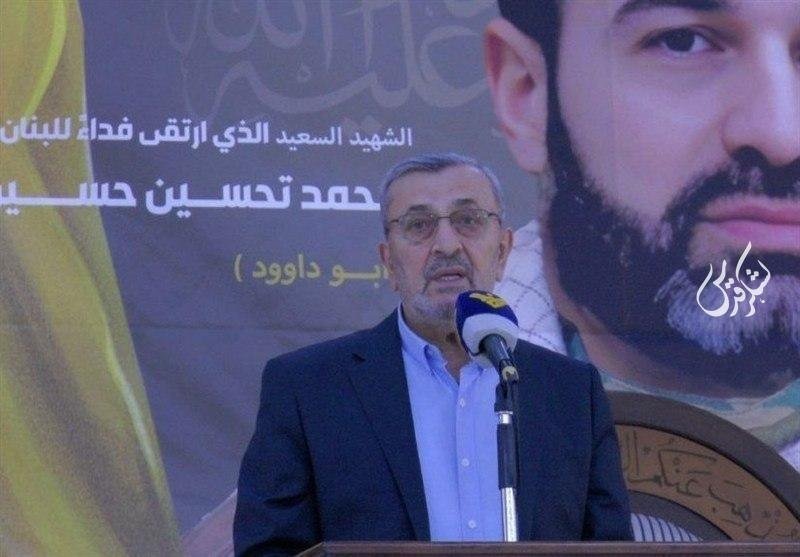
On the morning of 29 June 2026, Israel buried a soldier killed inside Lebanon, the casualty confirmed by the Telegram channel Clash Report at 08:25 UTC. By that evening the framing of the day had already split in two: an Israeli family in mourning, and a Hezbollah statement, relayed by Iranian state-aligned Press TV at 07:33 UTC, accusing Israel of "continuous" violations of the ceasefire that nominally ended the autumn 2024 war. The two messages were issued within an hour of each other; the political distance between them could not be wider.
The pattern is now familiar. A truce holds in name, occasionally in fact, and is steadily re-interpreted by each side as a baseline rather than a binding limit. Lebanon is again the fault line where that re-interpretation gets tested in real time.
What the day's reporting actually shows
Clash Report's clip, time-stamped 08:25 UTC, documents the funeral of an Israeli Defense Forces soldier whose death is attributed to operations inside Lebanese territory. The clip is short, the footage is what one would expect of a state military ceremony, and the channel's editorial voice is descriptive rather than analytical. The relevant fact is the date and the geography: an Israeli soldier killed in Lebanon, and a state burial on Israeli soil, in the same news cycle as a Hezbollah statement disputing the ceasefire.
Press TV's bulletin, filed 07:33 UTC, carries Hezbollah's claim that Israel "continues to repeatedly violate the ceasefire agreement." The framing is unmistakably adversarial: the resistance movement is described as acting within a "right to defend Lebanon," and Israeli operations are characterised as ongoing aggression rather than discrete incidents. Press TV is the English-language outlet of Iranian state broadcasting; the language is calibrated for an audience that already accepts the premise that the November truce exists in name only.
A third piece of the same day's mosaic comes from Israeli journalist Amit Segal at 06:17 UTC, reporting on what he describes as an explosion at a Hezbollah underground site in Lebanon. The language is deliberately restrained — "documentation from the explosion" — and the framing is operational rather than political. The implication, left for the reader to draw, is that Israeli forces are continuing to target hardened Hezbollah infrastructure despite the ceasefire.
The counter-narrative, taken seriously
Hezbollah's position is not a marginal one inside Lebanese politics, and the Press TV framing reflects a domestic Lebanese audience as much as an Iranian one. The argument is straightforward: the November agreement was sold to the movement's base as a tactical pause, not a strategic surrender; Israeli overflights, targeted killings, and strikes on what Hezbollah calls civilian infrastructure are not technicalities but continuations of the war. From that vantage point, Hezbollah's reaffirmation of its "right to defend" is the natural political language of a non-state military that retains domestic legitimacy precisely by claiming to enforce a ceasefire the other side is breaking.
This is also the reading under which the Israeli soldier's death makes sense as a single, contained incident rather than a strategic signal. If Hezbollah believes the truce is fraying, its calculus changes: restraint becomes more politically costly than retaliation, and a single funeral on the Israeli side is the price of demonstrating that capacity.
What the structural pattern looks like
Strip the rhetoric away and the cycle is mechanical. A state actor with an air force and an intelligence service can conduct operations it classifies as defensive — striking launchers, command nodes, underground storage — and call them targeted. A non-state military with a political wing and a domestic constituency absorbs those strikes, counts them, and treats each one as evidence that the ceasefire is no longer binding. The funeral becomes the visual receipt; the statement becomes the diplomatic receipt; the next round of strikes becomes the policy receipt.
This is the architecture of a frozen conflict that is not actually frozen. The November deal was always going to be tested at the edges first: a tunnel here, a drone there, a funeral in a military cemetery, a televised address in Beirut's southern suburbs. The question is not whether the truce will hold in some absolute sense. It is whether the parties choose to manage the test — as they did through the spring of 2025 — or to let one incident escalate into the next phase.
The stakes, plainly stated
If the pattern continues, Lebanon absorbs the next round first. The country's political class has no effective leverage over either Hezbollah or Israel, and its reconstruction funding remains contingent on a stability neither party is willing to guarantee. The Israeli home front gets a soldier home in a flag-draped coffin and a renewed political appetite for operations that, by any honest accounting, were supposed to be governed by the truce. Hezbollah's base gets a confirmation of its worldview and a permission slip for the next round of rocket and drone deployments. Iran retains a forward deterrent on Israel's northern border at a fraction of the cost of a conventional ally.
The narrow path is the same one that has held since November 2024: quiet back-channel signalling, third-party mediation through Washington and Doha, and a willingness on both sides to treat each provocation as a violation to be managed rather than a casus belli. The wide path is another war, with the difference that this time it will be conducted while the region's other fronts — Gaza, the Iranian nuclear file, the Syrian frontier — are all simultaneously active.
What we don't yet know
The sources available for this article do not specify the rank, name, or unit of the fallen Israeli soldier, the precise location of the Hezbollah site described by Segal, or the identity of any specific ceasefire violation Hezbollah is alleging. Press TV is not an independent outlet; its framing should be read as a translation of Hezbollah's own messaging rather than a neutral summary. Clash Report is a Telegram aggregator; its footage is real but its editorial voice is minimal. The honest reading is that a soldier has died, that a powerful non-state military says the truce is breaking, and that both claims are, in their own terms, true.
The truce is not over. It is, however, on notice.
This article was written by Monexus's staff desk. Sources are limited to channels and outlets active in the news cycle of 29 June 2026; claims beyond that evidentiary base have been omitted rather than inferred.
Wire provenance
This editorial synthesis draws on the following public wire/social posts:
- https://t.me/ClashReport
- https://t.me/presstv
- https://t.me/amitsegal