Ceiling holds, ground burns: Israel keeps troops in southern Lebanon as ceasefire draws fresh accusations
On the morning a US-Iran accord was due to be signed in Geneva, Israeli forces struck Hezbollah infrastructure in southern Lebanon while Hezbollah accused the IDF of violating the ceasefire — and the Israeli military said it had not been ordered to withdraw.
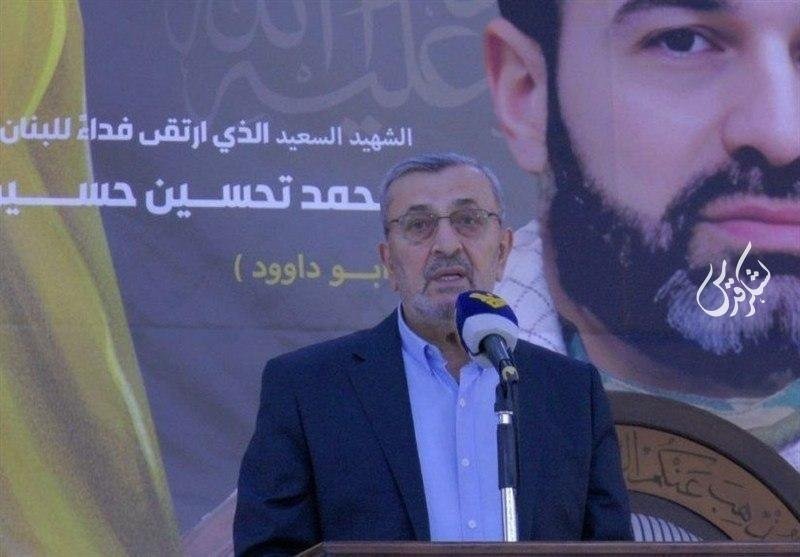
On 29 June 2026, hours before US and Iranian envoys were due to put their names to a long-trailed agreement in Geneva, the Israeli military struck what it described as Hezbollah underground infrastructure in a village in southern Lebanon. A joint statement from the office of Israeli Prime Minister Benjamin Netanyahu, reported by Reuters at 02:35 UTC, said the target had been used by the Lebanese militant group. By mid-morning UTC the same day, Hezbollah was accusing Israel of violating the ceasefire arrangement that has nominally governed the border since November 2025. Haaretz, citing an Israeli military source, reported at 05:00 UTC that "the army" had not yet received orders to withdraw from any area in Lebanon.
That triad — strike, accusation, no withdrawal order — is the daily grammar of the southern Lebanon frontier. It is also a stress test for a diplomatic track that is meant to be climaxing in Switzerland. If a deal between Washington and Tehran is to do anything more than rearrange the regional furniture, it has to coexist with a quieter, uglier reality on the Litani: villages being levelled, ceasefire clauses being litigated in real time, and a Lebanese civilian toll that is no longer an abstraction.
What the morning's reporting actually says
Three discrete wires from 29 June 2026 sketch the picture. Reuters reported at 02:35 UTC that the Israeli military had destroyed underground infrastructure used by Hezbollah in a southern Lebanese village, citing a joint statement from the Israeli prime minister's office. The phrasing — "underground infrastructure," "village in southern Lebanon" — is the standard Israeli military formulation for a category of target that, by design, leaves little physical trace above ground for independent verification.
Middle East Eye's live blog, updated at 04:47 UTC, carried Hezbollah's accusation that the Israeli military had violated the ceasefire in Lebanon. Less than a minute later, at 04:48 UTC, the same outlet reported a cumulative figure that warrants attention on its own terms: more than 4,247 people killed in Lebanon by Israeli attacks since 2 March 2026.
Haaretz, writing at 05:00 UTC and quoting an Israeli military source, said "the army" had not yet received any orders to withdraw from any area in Lebanon. That detail matters. It narrows the gap between what Israeli officials say publicly about respecting the ceasefire and what their forces are doing on the ground: they are still there, in the same positions, with no instruction to thin out. The withdrawal that the diplomatic track appears to assume is, on the Israeli side, an unissued order.
The ceasefire that isn't quite one
The November 2025 arrangement was sold, on both sides of the border, as a halt to open hostilities. What it produced in practice was a thinner, more ambiguous kind of violence: periodic strikes, a continuing Israeli troop presence inside Lebanese territory, and a Lebanese state that lacks the capacity either to police the border itself or to compel Israel to leave. The 2 March 2026 cutoff that anchors the Middle East Eye death toll is the period from which the more intensive phase of Israeli operations dates — not the original ceasefire line, but a renewed escalation that followed it.
Hezbollah's accusation of a violation is therefore not a rhetorical flourish. It is the formal posture of a non-state armed actor that has an interest in keeping the ceasefire paperwork alive even while its patron, Iran, prepares to sign a wider deal in Geneva that may or may not cover the southern Lebanon file. The accusation does two things at once: it preserves Hezbollah's standing as a complainant under the arrangement, and it pre-positions the group's narrative for whatever comes next.
The Geneva track and the ground track
The timing is hard to miss. The Geneva signing is the kind of event that produces a few hours of declared progress and a press cycle about de-escalation. If a deal is announced, it will be measured by Middle Eastern governments against a baseline of what is actually happening on the Litani, not against communiqués from hotel ballrooms.
A reasonable read of the structural picture is that the two tracks — the US-Iran nuclear file and the Israel-Lebanon frontier — have been deliberately separated, or have simply failed to integrate. Iran can deliver a signed piece of paper in Geneva without controlling what the IDF does in Bint Jbeil or Maroun al-Ras. Israel can keep forces in place, conduct strikes on declared Hezbollah infrastructure, and still describe itself as respecting a ceasefire, because the arrangement's withdrawal clause has not been activated.
The counter-narrative, more sympathetic to the Israeli security frame, is that Hezbollah's reconstruction of underground infrastructure in southern Lebanese villages is itself the violation, and that the strike reported at 02:35 UTC was a defensive response to a continuing threat to northern Israeli towns. Israeli security concerns about a re-armed Hezbollah on the border are not invented, and the existence of buried infrastructure is consistent with Israeli military reporting across multiple operations since 2024. The honest reading is that both descriptions are simultaneously true: strikes are happening, and so is Hezbollah re-emplacement, and the ceasefire's monitoring architecture is too thin to adjudicate between them in real time.
What remains uncertain, and what is not
The single hardest number in this morning's reporting is the 4,247 Lebanese deaths cited by Middle East Eye since 2 March 2026. Middle East Eye is a credible outlet with on-the-ground correspondents in Lebanon, but the figure has not, as of the wires available on 29 June, been independently corroborated by a UN agency, the Lebanese health ministry, or a Western wire in the same item. The standard caveats apply: the toll is the toll as currently reported by Middle East Eye's tally; it has not been triangulated in this story. Readers should hold it as a working figure rather than a settled one.
Less uncertain is the geometry. Israeli forces are still in southern Lebanon. Strikes are still being conducted. A ceasefire arrangement that does not produce a withdrawal order cannot, by definition, be in its withdrawal phase. And the political moment that the Geneva signing is meant to anchor — a US-Iran entente that stabilises the region — will be judged, in Lebanese villages, by what happens to their roofs.
Desk note: Monexus leads with the wire facts — Israeli military strike via Reuters, Hezbollah accusation and Lebanese death toll via Middle East Eye, no-withdrawal-order reporting via Haaretz — and treats each as a discrete primary-source claim rather than collapsing them into a single contested narrative. The Geneva timing is treated as context, not as the story.
Wire provenance
This editorial synthesis draws on the following public wire/social posts:
- https://t.me/s/alalamarabic
Follow the event.
These dated source records provide context. They do not retrospectively verify this archive article.
Separate what the nuclear watchdog reported from what it could not determine after the June 2025 strikes.