A Krasnodar refinery still burns. The story Ukraine cannot tell on Western airwaves.
A refinery in southern Russia keeps operating after a Ukrainian strike — and the gap between what happened on the ground and what got reported tells its own story about the war.
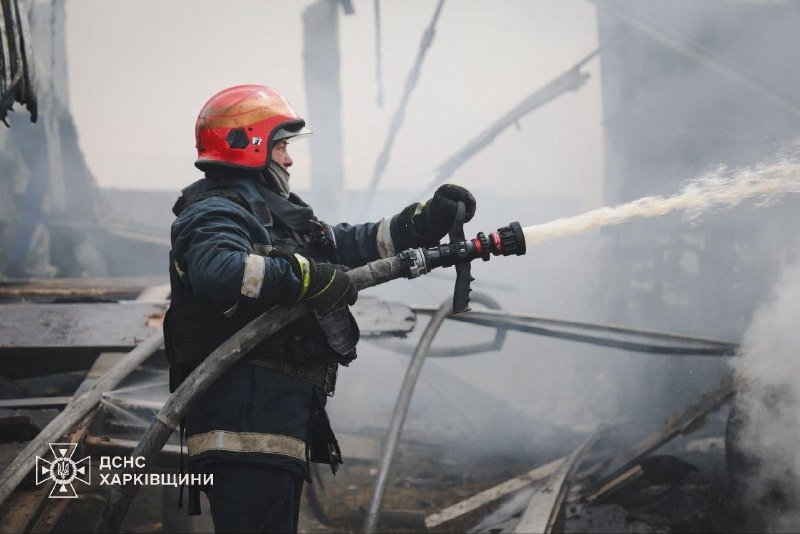
An oil refinery in Russia's Krasnodar Krai was struck on 28 June 2026, and twelve hours later the same fact — whether the plant is burning or still running — is being reported two different ways by two different Ukrainian correspondents. That contradiction is the story.
The cluster of Russian-language Telegram channels that cover the war from Kyiv's side produced two clean, mutually exclusive reads before dawn UTC on 29 June. One reporter, citing the scene on the ground, wrote at 06:11 that the refinery that was hit yesterday continues to burn. A second, citing the same facility, wrote twice between 05:39 and 06:56 that the refinery continues to operate. Both items describe the same plant, the same event window, the same calendar day. Neither is lying. Both are translating the same partial picture through a different source.
This is what routine reporting on strikes inside Russia now looks like. Almost nothing is confirmed independently. Almost nothing is denied independently. The first post-strike hours are a fog of Telegram clips, dashcam frames, satellite hearsay, and the instinct of Ukrainian military reporting to declare success and the instinct of Russian regional authorities to minimise damage. Into that fog a Western news desk tends to insert the cleanest version available — usually the version that fits a single narrative line — and move on.
What two reporters are telling their audiences at the same hour
The clearest illustration is the timing. By 05:39 UTC on 29 June 2026, one of the better-known Ukrainian frontline reporters had already pushed two bulletins saying the Krasnodar Krai refinery hit the previous day is still operating. By 06:11 another reporter had pushed the opposite — that it is still burning. By 06:56 the first had posted a near-identical "still operating" line for the third time. Both accounts are being delivered with the urgency of people who have skin in the game. The fire is large enough to photograph; the operation is visible enough to film. The plant cannot be both on fire and operating normally at the same moment.
A reader is entitled to assume one of three things is happening. Either one of the two reporters is amplifying bad information from an interested party. Or one section of the plant is burning while the rest of the facility is processing crude through a separate train, which is normal post-strike behaviour for a refinery complex. Or — and this is the least flattering possibility — both reporters are slanting an ambiguous scene to fit the line their audience expects from them.
The editorial problem bigger than one strike
Here is what ought to trouble a newsroom more than it does. Until very recently, Western wires covering the war rarely named Krasnodar or similar southern Russian targets on the day they were hit, and when they did they framed the strike as a curiosity — a thing Ukraine did to Russia, mysterious and unsourced — rather than as the deliberate, planned, deeply technical campaign it has been for over a year. Refinery strikes are now happening regularly enough to constitute a sustained Ukrainian programme. They have a name inside Ukrainian general staff briefing rooms. They do not, in most English-language bulletins, have a story.
The structural reason is familiar. Reporting from inside Russia is scarce. Reporting that confirms what happens on Russian soil after a Ukrainian strike is scarcer still — and what does exist tends to flow through the same Telegram cluster the rest of the press is also reading. Western editors end up, often without meaning to, treating Ukrainian claims about Russian targets as marketing and Russian claims about the same targets as ground truth, which inverts the editorial priority. The bombed party is the invader; the invader's ministries are not neutral referees. The default trust order should run the other way.
That does not mean every Ukrainian Telegram post about a refinery strike is gospel. It means the absence of Western reporting on what the strikes actually achieve is its own kind of distortion. A war that disappears off the front page the moment it crosses the border is a war being reported as a one-sided affair, which the underlying events have not been for a long time.
What a single strike in Krasnodar is now load-bearing for
The Krasnodar Krai plant matters beyond its own footprint. The region feeds refined product into southern Russian domestic markets and, until sanctions tightened the routing, into export channels that ran through Black Sea ports. Even a partial shutdown pushes Russian domestic fuel prices, tightens refining margins at adjacent facilities, and complicates the logistics of supplying forces deployed further south and east. A streak of partial disruptions across multiple regions compounds. Each individual strike might look like a pinprick. The pattern does not.
This is why the burn/operate disagreement is informative regardless of which version turns out to be true. If the plant is genuinely operating, the strike did less damage than Ukrainian channels claimed and Russia can probably absorb it. If it is still burning twelve hours after impact, the strike did what Ukraine has spent most of 2026 trying to demonstrate: it forced a non-trivial Russian refinery complex to choose between shutdown and an insurance claim. Either way, the strike is doing what strikes in the programme are supposed to do, which is impose a continuous tax on Russian energy logistics.
What is contested, and what remains unverified
The honest summary is this. Two independent Ukrainian correspondents reporting from Kyiv-friendly networks have, within a single morning, published incompatible accounts of the same facility. The sources do not specify the production train that was hit, the tonnage of crude or product processed before the strike, or the local Russian emergency-services readout. Reuters, the Associated Press, the BBC and the Guardian have not, as of the items available to Monexus at the time of writing, published a confirmation from on-site Russian authorities on the status of the plant. Russian state-aligned channels, which would normally deny or minimise damage from Ukrainian strikes, have not been surfaced in the thread Monexus worked from. The Western wire confirmation that would normally anchor an item like this is simply not here yet. That absence is, in itself, part of the story.
The reasonable judgement — and it is a judgement the reporting does not yet earn — is that both reporters are describing a real scene, that one of them is looking at the part of the complex that is still processing crude and the other is looking at the part that is still on fire, and that the cleanest answer to "is the refinery open?" is the unsatisfying one: parts of it are. Ukraine's general staff will, in time, publish a more technical version. Russian emergency services will publish a more politically useful version. Until then, the only window the international reader gets is the cracked one. That the window is cracked is not Ukraine's fault. It is the consequence of a foreign-press corps that treats strikes inside Russia as colour rather than as the main load-bearing plank of Kyiv's campaign.
Krasnodar Krai is a federal subject in southern Russia bordering the Black Sea. Telegram-sourced Ukrainian frontline reporting was the immediate basis for the contradicted claims in this piece. Monexus framed the disagreement as a media-coverage problem, not as a contest between two reporters' honesty.
Wire provenance
This editorial synthesis draws on the following public wire/social posts:
- https://t.me/Tsaplienko/
- https://t.me/noel_reports/
- https://t.me/Tsaplienko/