Lukashenko in Beijing: a small-state visit with an outsized signal value
Alexander Lukashenko travelled to Beijing on 29 June 2026 for talks with Xi Jinping, framed by Beijing as relations at a "historic peak" — a staging exercise that says less about Minsk than about how China organises its post-Russian periphery.
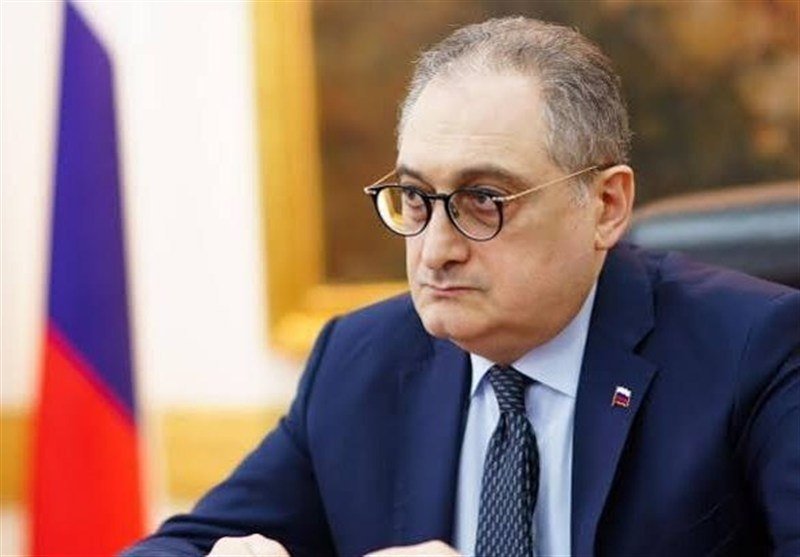
Alexander Lukashenko landed in Beijing on Monday for a working visit that, on paper, looks like a routine stop on the calendar of a sanctions-bound leader with few places left to go. The choreography, however, is the point. Chinese state-aligned reporting carried at 04:50 UTC described the meeting as talks between the Belarusian president and his Chinese counterpart, with Xi Jinping declaring that bilateral relations have reached a "historic peak". Independent Belarusian outlets flagged the same framing within hours, and the trip was set against the backdrop of Lukashenko's recent appearances at other multilateral forums.
The visit is small in dollar terms but heavy in signal value. Minsk is a state of fewer than ten million people, dependent on Moscow for energy, defence, and the political survival of its leadership. Yet it travels to Beijing at a moment when the Russian war economy is visibly stretched and when Beijing is rebuilding a circle of partners who are useful, pliable, and not Washington. What Lukashenko wants is concrete: credit lines, machinery, and a diplomatic counterweight to his deepening isolation. What Xi wants is presence — a visible vote of confidence from a country that still sits inside the post-Soviet security space.
The substance, such as it is
The public readouts from both sides lean heavily on language. "Historic peak" is a phrase Chinese diplomacy uses sparingly and only when it wants the relationship framed as irreversible — a signal to third parties that downgrading it would carry a cost. Lukashenko's earlier trips to Beijing produced similar boilerplate; the 2023 visit generated a stack of agreements on industrial parks and the Great Stone zone, and the 2024 rotation produced joint statements on "multipolarity" and UN reform. None of those produced the kind of headline investment that shifts Minsk's balance of payments.
What is genuinely new in 2026 is the diplomatic weight of the encounter. Belarus is more isolated than at any point since 2010. Its airspace hosted the transit that brought migrants to the EU border, and Warsaw still treats Minsk as a hostile instrument of Russian policy. Against that backdrop, a Xi meeting is one of the few remaining pieces of political currency Lukashenko can spend. Beijing, for its part, gains a podium: every bilateral meeting in the Great Hall of the People is now read across Eurasia for what it implies about the limits of Western sanctions.
The Russian counter-frame
The visit also lands inside a sensitive Moscow file. Russia remains Belarus's strategic patron; any deepening of Belarusian ties to China is read in the Kremlin as a hedge. So far, Russian commentary has stayed measured, treating the trip as a routine consultation between allies-of-allies. That restraint is itself revealing. A decade ago, a Minsk-to-Beijing axis would have been reported in Russian state media with a heavy hand on the geopolitical steering wheel. The current silence is the diplomatic equivalent of a shrug.
The structural reading is that Belarus has become a node in a triangular system in which Russia provides security, China provides economic oxygen, and Belarusian sovereignty is the residual variable. Lukashenko's room for manoeuvre is real but bounded. He can take a meeting in Beijing and collect the photo, but the substantive decisions about energy pricing, military basing, and the country's wider foreign policy remain routed through Moscow.
What Beijing is actually buying
Western commentary tends to frame Lukashenko's visits as evidence of a Beijing-led anti-Western bloc. The framing is not wrong, but it is incomplete. China has no interest in underwriting the Belarusian economy; its banks manage sanctions exposure carefully, and Chinese state-owned enterprises are reluctant to put capital into a country whose regime could be destabilised by a single Kremlin decision. What Beijing wants is something cheaper: a precedent. Every Lukashenko meeting, every Lukashenko phone call with Tehran, every Lukashenko appearance at a BRICS-adjacent forum, normalises the diplomatic standing of a leader Washington refuses to recognise as legitimate. That is a low-cost, high-yield outcome.
The Belarusian side understands the transaction. Minsk will produce photo opportunities, joint communiqués, and token trade delegations; it will avoid any step that would expose China to primary-sanctions risk; and it will quietly make clear to Moscow that it has somewhere else to go when the conversation gets difficult. Whether the relationship survives contact with a serious crisis — a renewed Russian mobilisation, a domestic Belarusian shock, a sharper Western sanctions pass — is the open question.
Stakes and uncertainty
For Europe, the visit is a reminder that the Belarusian file is not closed. Minsk retains both the incentive and the technical capacity to weaponise migration, energy, and airspace against neighbouring EU members. A Belarus that is more confident, more economically diversified, and more diplomatically embedded in Beijing is, on the margin, a more capable actor in that toolkit. The countervailing point is that Chinese support is fungible, not structural. Beijing extracts presence, not loyalty.
The sources do not specify the substantive agreements tabled in Beijing, nor do they indicate whether any new credit facility was signed. What is on the record is the meeting itself, the language used to describe it, and the conspicuous absence of any Russian counter-programming on the day. That is enough to read the visit as a calibrated step in a longer choreography — and to treat "historic peak" as a piece of diplomatic furniture, not a forecast.
This piece leans on the Chinese-side framing as a primary source rather than commentary; Monexus treats the visit as a signal event, with the limits of available reporting flagged where they appear.
Wire provenance
This editorial synthesis draws on the following public wire/social posts:
- https://x.com/reuters/status/4amQjWC
- https://x.com/boweschay/status/2071484007829614592
- https://t.me/wfwitness