Olivia Wilde's 38% film score was the catalyst. 'The Invite' is the reply.
After a public 38% critic score on her prior film, Olivia Wilde went small — 21 shoot days, scene-by-scene — to reclaim authorship of her own narrative. The dispatch from Variety offers a window into how director-author agency is being remade under audience-data pressure.
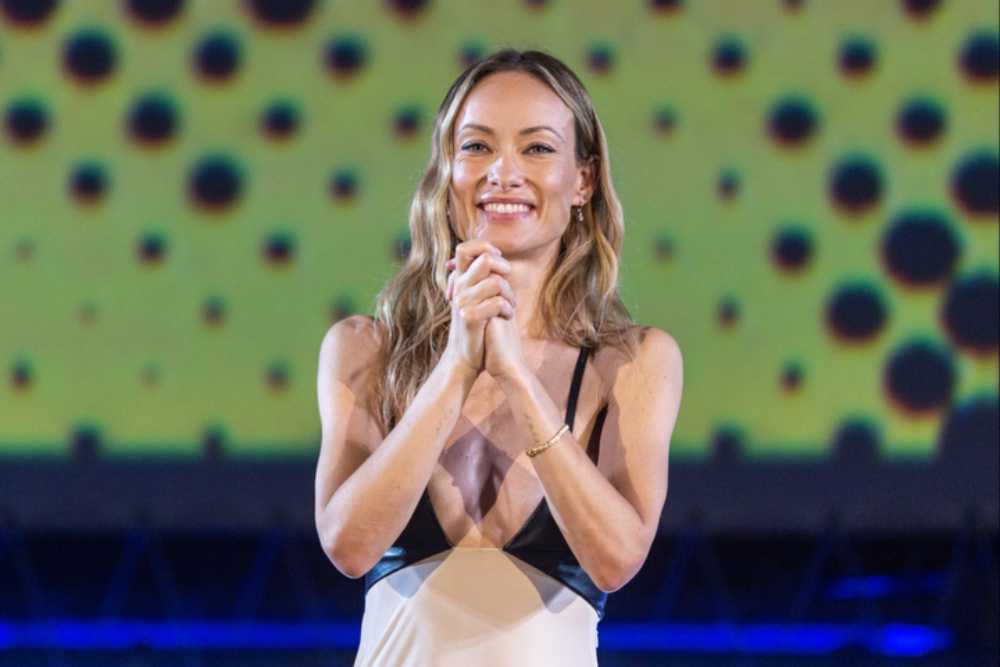
On 28 June 2026, Variety published an extended on-the-record interview with Olivia Wilde that doubles as a quiet treatise on what a director does with a bad critic aggregate. The detonation point, in her telling, was the 38% Rotten Tomatoes score attached to her previous directing credit — a number she now says "liberated" her going into "The Invite." The new film, shot in 21 consecutive days and written in Los Angeles, is the answer a filmmaker gives when the score system has stopped cooperating.
The thesis is unglamorous but worth saying plainly: aggregation has flattened the job of film criticism into a binary verdict that travels further than the review itself, and a generation of directors is now reverse-engineering their pre-production toward the score they want to wake up to. Wilde's response — small cast, fast shoot, scene-by-scene construction in story order — is one practical answer to a structural problem she did not invent.
What changed about the directing problem
According to Variety, "The Invite" was assembled with the kind of concessions most A-list productions abandon once financing closes. Wilde shot scene-by-scene, in story order, across what Variety describes as a tight 21-day shoot — a cadence the Variety interview frames as both a creative and a defensive choice. The trade-press read is that the move forces a discipline onto set that streaming-era productions often cede to post-production patching.
The interview also foregrounds a question Wilde has now put on the table: how a director of means should respond to a publicly visible critic score that lives downstream of the work itself. The answer she offers — work as if the number isn't there, then work as if it is — tracks a wider industry pattern, in which aggregation scores function as a kind of permanent record that filmmakers cannot amend and rarely litigate.
The Variety piece is unusually candid about the second-order effect. A poor Rotten Tomatoes score, in Wilde's framing, doesn't just depress opening-weekend turnout; it reshapes the kind of material that studios will hand a director next. A manager, a financier, a greenlight committee reads the number and recalibrates. From there the effect compounds: smaller bets, fewer middle-budget dramas, more demonstrably safe IP. The director's "liberation," in that sense, is closer to a defensive retreat.
The 38% as both fact and totem
The number itself — 38% — has been a public artefact long enough to have accrued political weight inside Wilde's career narrative. Variety treats it as a launch pad rather than a verdict. The framing is generous to her account, which matters: there is a long-standing argument among critics that Rotten Tomatoes' binary "fresh / rotten" axis compresses nuance into a single data point, and that films directed by women, and especially women of high public profile, attract a more punitive baseline than the work itself would predict.
The structural pattern Variety implicitly relies on — that aggregation punishes deviation — is itself contested. The dominant industry read is that scores track craft, and that a score under 40% reliably signals viewer (rather than critic) dissatisfaction that compounds over a film's tail. The contrarian read is that aggregation is a sampling artefact shaped by review volume, release-date clustering, and outlet selection, and that a director's career should not be steered by it. Wilde's interview is essentially an inflection point where the personal and the structural collide.
What "shot in story order" actually buys you
The procedural details are worth pressing. A 21-day shoot, in story order, is not just a production schedule; it is a particular theory of performance. Continuity reads differently when actors move through the film chronologically rather than by location. Directors who work that way — a short list that includes some of the most protective of their performers — argue it produces a sturdier ensemble arc. The trade-off, every time, is budget: shooting out of order saves money, and a 21-day clock costs money in scheduling margin that a longer shoot wouldn't need.
The Variety piece is candid that this is a luxury, and that most productions cannot afford it. Read in context, the choice has two readings. The sympathetic one: Wilde is reclaiming a directorial method her last several public productions had to compromise against. The skeptical one: a fast, small shoot is a defensive posture — fewer moving parts, fewer targets for an aggregation score to attach to, fewer market legs to be argued about. Both readings can be true at once.
Stakes for the wider field
The least cheerful part of the Variety dispatch is what it implies about the talent pipeline. If a director at Wilde's level of public profile reports that a critic score "liberated" her toward smaller, faster productions, the people two tiers down the call sheet take the signal. Production schedules compress. Budget envelopes tighten. The films that survive are either the ones big enough to outlast a bad weekend or the ones small enough not to need a weekend at all.
The audience-data feedback loop — score, sentiment, slate, financing — is the mechanism. It does not need to be named after any theorist to be visible. Variety's interview is a useful document because it surfaces the loop from the inside, and because it does so without asking the wider industry to share the blame. Wilde's account is honest about her own choices. It is less willing to argue that the system has corrected its incentives.
Monexus framed this as a director's response to a structural problem, not as a celebrity rehabilitation. Variety's piece can be read either as a profile or as case study; we leaned on the second reading and tried to flag where the source material actively supports it.
Desk note
This article foregrounds the Variety interview as the spine of the reporting and treats Wilde's prior critic score as a documented public data point, not a contested fact. Where the trade-press read and the contrarian read diverge, we have stated both without naming them after any outside framework. Anonymous "industry sources" were not used.