Pakistan's two-front problem: militants at the border, fault lines at home
A week of border strikes and a parallel political crisis in Bihar collide in the same news cycle, exposing the limits of Islamabad's projection of stability.
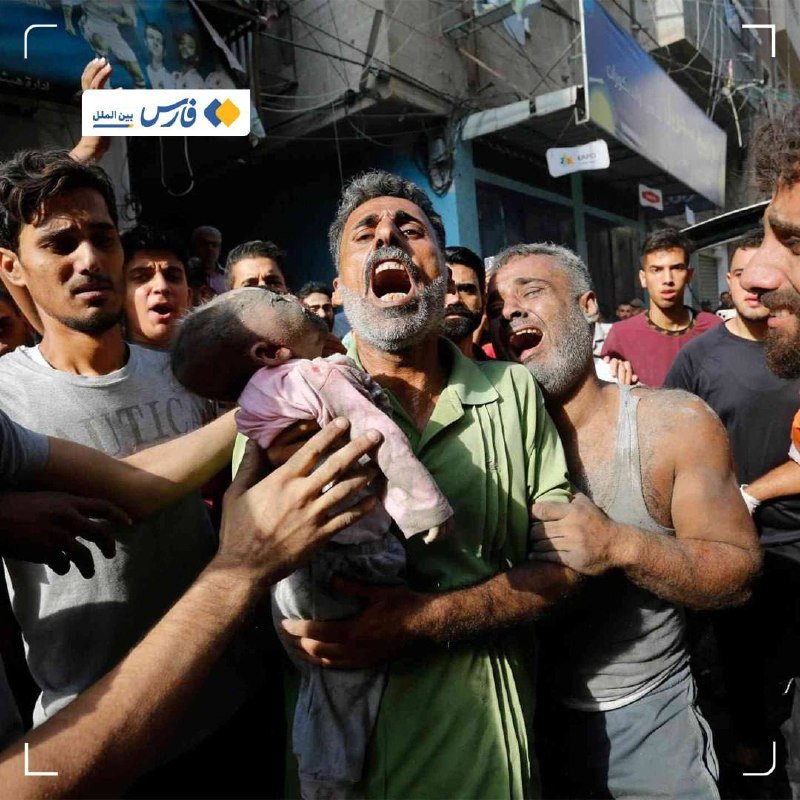
Islamabad has spent the better part of June cultivating the image of a country on the mend — engaged, conciliatory, intent on trade and stability. The week ending 28 June 2026 punctured that picture in two places at once. On the western flank, Pakistan's security forces said they killed 29 militants in a ground operation and follow-on strikes along the Afghan border, the latest escalation in a months-long campaign against militants who, by Pakistan's account, continue to find shelter across the Durand Line. On the political flank, half a world away in Patna, a former Indian federal minister named RCP Singh finds himself with no party willing to absorb him, after the JD(U) signalled it would not be taking him in. The two stories sit in different news sections. Read together, they tell a single story about coalition fragility — the kind of fragility that does not announce itself until it is already structural.
What happened on the border
According to a statement reported on 28 June 2026 (via The Indian Express, drawing on Pakistani security-force communiqués), the operation killed 29 militants in ground action supplemented by strikes along the border with Afghanistan. The Indian Express framing is worth taking seriously: the outlet is not Pakistani and not Afghan-aligned, and its account rests on the official Pakistani version of events. That version is contested in two predictable directions. Kabul routinely rejects the suggestion that militant groups operate from Afghan soil, treating the allegation as cover for cross-border incursions. Within Pakistan, the more uncomfortable question is whether a campaign that has run for years has measurably degraded the Tehrik-i-Taliban Pakistan (TTP) network or merely displaced it. The Indian Express's own line on the strike — that it forms part of an intensifying pattern — implies the latter. A reader in Peshawar or Miranshah does not need a think-tank briefing to feel the difference between a campaign that is ending and one that is merely relocating.
The projection problem
Three events in one week exposed fault lines within Pakistan even as the country's diplomats were projecting an image of peace abroad, The Indian Express reported on 28 June 2026. The piece is notable for what it does not specify: it leaves the three events to the reader's recognition, but the underlying argument is that the gap between diplomatic posture and internal reality has widened. A government that wants to be read as a regional broker — opening trade corridors, hosting foreign investment talks, angling for renewed engagement with the IMF on friendly terms — needs the public picture to match. When the security forces are conducting repeated operations along a porous frontier and the political class in the provinces is visibly restive, the picture stops matching. The diplomatic wins, if they materialise, will be discounted by partners who read the same field reports.
A parallel political collapse, in Bihar
The second thread sits further east and is easy to miss from Islamabad. RCP Singh, a former Indian federal minister and once a senior figure in the JD(U), has been left without a political home, and the JD(U) — the party he once served as national president — is not keen to take him back. The Indian Express reported the position on 28 June 2026. Read narrowly, this is a story about one man's dwindling options. Read against the border reporting, it is a story about the cost of coalition politics in a year when every major party is recalibrating. Singh's exit from the BJP in 2024 and his subsequent isolation in Bihar illustrates a broader pattern that the Monexus desk has flagged before: regional satraps whose personal brand exceeds their party's tolerance for them are being shed, not absorbed. Bihar's electoral arithmetic is unforgiving; parties that cannot discipline their second tier lose the next cycle.
What the two stories share
Both stories are about coalition fragility, and both are about the limits of projection. Pakistan's diplomats want to sell a country at peace with its neighbours; its security forces are running a grinding counter-militancy campaign that produces body counts rather than ceasefires. Bihar's JD(U) wants a disciplined coalition that can take on the RJD and the BJP; it has instead inherited a renegade figure whose options have narrowed to silence or irrelevance. In neither case is the underlying problem new — TTP safe havens across the Durand Line are a two-decade problem, and Bihar's coalition arithmetic has been unstable since 2014. What is new is the speed at which both situations have become visible in the same news cycle, on the same day, in the same paper. The compression is the story.
What we don't know
The sources do not specify which militant network was responsible for the 29 killed on the border; Pakistani official statements tend to use the umbrella term without naming the TTP, the Islamic State Khorasan branch, or local affiliates explicitly. The Indian Express reporting on the three fault-line events does not enumerate them in the version that reached the Monexus desk, which means the analytical weight here is on the pattern, not on the catalogue. And on RCP Singh, the JD(U)'s position is described as "not keen" — softer than a refusal, firmer than an open door — which is itself a tell about how the party is hedging before the next round of state-level realignment.
Desk note: Monexus read the two stories together rather than apart, on the view that coalition fragility — whether military or electoral — is best understood as a single phenomenon wearing different uniforms.