Pakistan's two-tier crisis: a border operation and an internal stress test land in the same week
On 29 June 2026 Pakistan announced the killing of 29 militants in a border operation, three days after The Indian Express catalogued three separate domestic fault lines. The conjunction is the story.
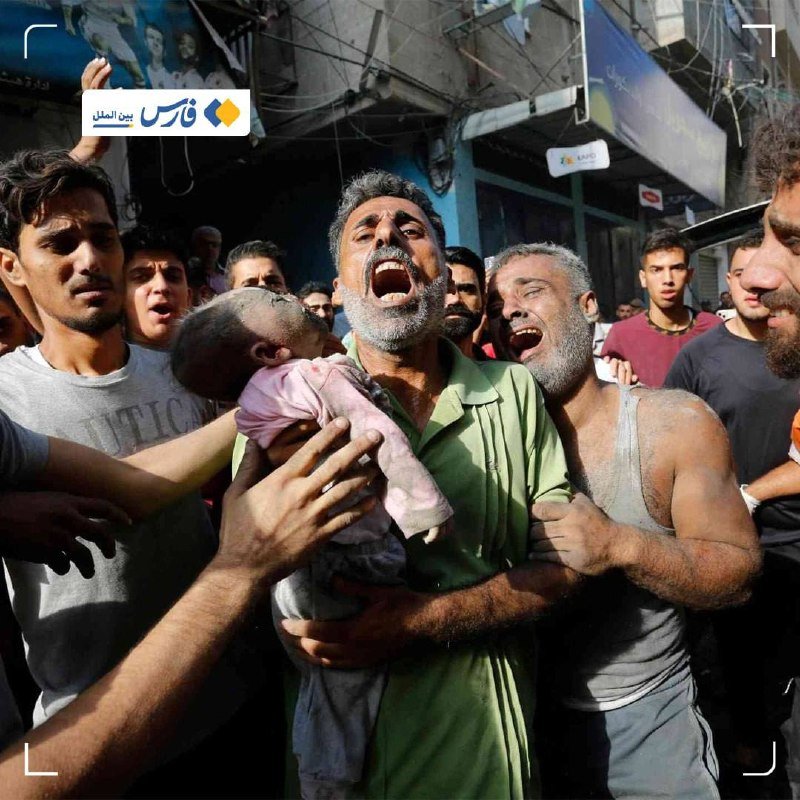
Pakistan's security forces killed 29 militants in a ground operation and strikes along the Afghan border, the country's military spokesperson announced in the early hours of 29 June 2026. The figure, reported by The Indian Express citing Pakistan's official account of the operation, came with a familiar diplomatic caveat: that the strikes were conducted in response to cross-border attacks and that Islamabad expected Kabul to act against Tehrik-i-Taliban Pakistan (TTP) networks operating from Afghan soil.
The announcement lands three days after the same outlet catalogued a quieter but arguably more consequential story — three events inside a single week that exposed fault lines within Pakistan's own political and security perimeter, even as the country's diplomats pressed a peace narrative abroad. Read together, the two reports describe a state that can still project hard power on its western frontier, but is visibly uncertain about the cohesion of its own interior.
Two registers, same week
The border operation and the internal audit are not competing stories; they are two readings of the same week. The Indian Express's 26 June piece on domestic fault lines documented a string of incidents ranging from sectarian violence to political confrontation between civilian authorities and the security establishment. The 29 June strike announcement reads, by contrast, as the public-facing version of statecraft — kinetic, decisive, externally directed.
That duality is not new. Pakistan has long run an external security posture that doubles, at home, as a substitute for political settlement. When the border lights up, the conversation in the drawing rooms of Islamabad and Karachi briefly defers. But the underlying tension — between a military that retains primacy over defence and counterterrorism policy and civilian governments that insist on ownership of the political agenda — does not vanish during operations. It merely migrates to op-eds and courtrooms.
What "29 militants" actually tells us
A figure of 29 militants killed in one operation is, by Pakistani standards, on the higher end of single-event tolls claimed along the western border. The Indian Express report does not specify which network the killed fighters belonged to, nor whether they were TTP, Balochistan Liberation Army, the Islamic State Khorasan Province (ISKP), or a mix. It also does not specify whether the dead were Pakistani nationals, Afghan nationals, or a combination. These omissions matter.
Counterterrorism claims of this kind are politically useful but historically contested. Independent verification of militant deaths along the Pakistan-Afghanistan frontier is rare; bodies are rarely displayed; the terrain is remote. The standard caveat applies: the figure is the figure Pakistan's official account gave, and the figure other actors — including Afghan Taliban spokespeople, who have routinely rejected Pakistani claims of sanctuary-based operations — give, will likely differ.
The internal ledger
The Indian Express catalogue of three domestic fault lines points in a different direction: incidents that have nothing to do with the Afghan border and everything to do with how Pakistan governs itself. One can read the peace-projection abroad as a deliberate counterweight to that ledger — a way for Islamabad to remind external audiences, and its own public, that the state is still capable of decisive action.
The trouble is that the domestic incidents are not noise. They are the texture of an unresolved constitutional argument about who runs the country. When the military is engaged along the western frontier, the civilian government has more political space at home; when the operation winds down, the domestic pressure does not. The arithmetic is repetitive and well-known to anyone who watches Pakistani politics.
What to watch next
Two signals would clarify whether the 29 June operation marks a genuine escalation against TTP networks or is the first move in a longer campaign. The first is the response from Kabul — whether the Afghan Taliban publicly accepts, rejects, or simply ignores the Pakistani claim. Quiet diplomatic protests, not public ones, would be the tell. The second is whether the operations expand to Balochistan, where the BLA and ISKP have both staged high-profile attacks in recent years. A western-border focus alone leaves the southern theatre untouched.
The third signal sits in Islamabad, not on the border. If the internal fault lines catalogued on 26 June harden into a fresh confrontation between civilian and military leadership in the weeks following the operation, the external posture will be revealed as what the structural pattern suggests it is: a temporary solvent, not a long-term one. Pakistan can sustain a two-front posture — one kinetic, one political — for weeks. It cannot sustain it for years.
This publication has reported on South Asian security through primary statements from official spokespeople and triangulated wire coverage; the border announcement was first catalogued by The Indian Express on 29 June 2026, and the domestic-fault-line audit by the same outlet three days earlier.