Putin's ceasefire carve-out is a demand for Ukrainian surrender by other means
Vladimir Putin's 29 June 2026 rejection of limits on long-range strikes isn't a negotiating position. It's a description of the war he intends to keep fighting.
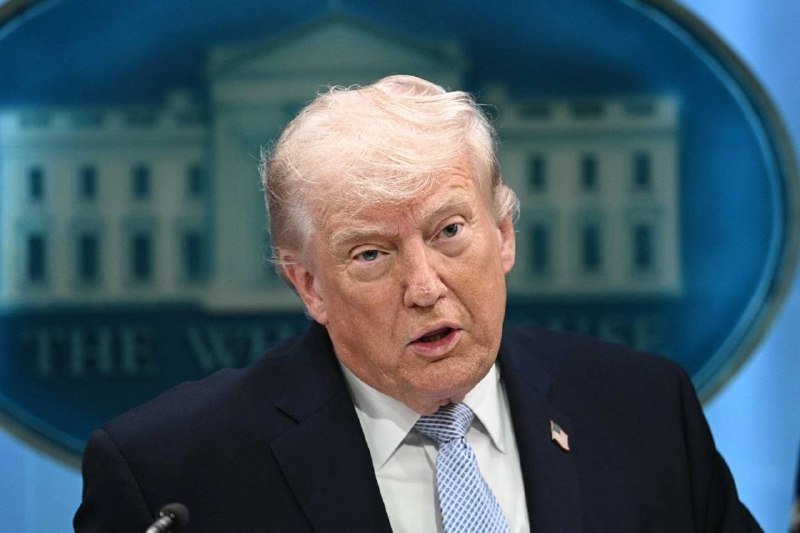
At roughly 07:56 UTC on 29 June 2026, Vladimir Putin did what he has done periodically since February 2022: he described the war he wants, then described the war he is willing to let someone else propose stopping. The Russian leader rejected what he characterised as a Ukrainian proposal to limit long-range strikes and reiterated that Moscow's objective remains the seizure of four Ukrainian regions. Within the hour, his wider remarks, relayed by the Telegram channel Clash Report, made the logic explicit: attacks on Russian civilian infrastructure are not merely punishment but a tool, and new proposals to halt deep strikes inside each other's territory are obvious because Russian retaliatory strikes deep inside Ukraine are more painful than the inverse.
The framing matters because it strips the diplomatic costume off a maximalist war aim. A ceasefire architecture that bakes in Russian freedom to bombard Ukrainian cities while constraining Kyiv's capacity to strike back is not a ceasefire. It is the legitimisation, in treaty form, of an imbalance Moscow has spent four years trying to entrench on the ground.
What Putin actually said
Three messages from 29 June, all carried by Telegram channels monitoring the Kremlin's public statements, converge on the same point. Putin dismissed Ukrainian counter-proposals on long-range strikes, with the channel Kyiv Post reporting at 07:56 UTC that "Putin has ruled out easing the war" and is rejecting limits on long-range strikes while reiterating Moscow's objective of seizing four Ukrainian regions. By 08:20 UTC, Clash Report relayed Putin's observation that the proposal to halt deep strikes is being made because "our retaliatory strikes deep inside Ukraine are far more p[ainful]" than the other way around. By 08:24 UTC, the same channel had Putin framing attacks on Russian civilian infrastructure not as incidental damage but as part of the enemy's design.
Read together, the sequence is a textbook of how a maximalist position is converted into a negotiating stance. First, the war aim is restated in absolute terms. Then the proposed restraint is reframed as something the adversary cannot accept on equal terms. Then the bombing of cities is recast as a deliberate instrument, not a regrettable by-product.
The asymmetry at the heart of the proposal
The proposal Putin is dismissing is the kind of arms-control logic that has ended other wars: stop hitting each other's heartland, narrow the conflict, reduce civilian harm. On paper, the formula is reciprocal. In practice, it would lock in the existing fire-power imbalance between the two air forces and the two missile stocks. Russian glide bombs, Shahed-type drones and cruise missiles reach Ukrainian cities daily. Ukrainian long-range systems, including domestically produced drones, have begun reaching Russian oil refineries, military airfields and command nodes, but the cumulative tonnage and frequency are not symmetrical, and the gap is growing wider as Western-supplied deep-strike munitions have been delivered in tranches rather than continuously.
Putin's own framing concedes the point. The proposal is "obvious," he said, because Russia's retaliatory capacity hurts more than Ukraine's. A deal that ratifies that gap would not just freeze the front line. It would freeze the kill ratio.
What the language tells you
Putin's reference to attacks on Russian civilian infrastructure being important "to the enemy" is a tell. It treats Ukrainian strikes on Russian territory — strikes that have hit refineries, ammunition depots and, on at least one occasion, military command infrastructure deep inside Russia — not as battlefield pressure but as a violation of an unwritten rule. Under that rule, Ukraine may defend itself inside its own borders, but the moment it reaches back, it has crossed into aggression.
It is the inversion of a principle that Western capitals spent three years asserting: that an invaded country striking targets inside the invader's territory is a legitimate response, not an escalation. Putin's 29 June remarks are a public restatement of the opposing view — that the directionality of fire is itself a moral category, with Russian fire into Ukrainian cities routine and Ukrainian fire into Russian infrastructure a transgression.
The structural frame
This is what a hegemonic bargain looks like when it is no longer hegemonic. Russia is no longer in a position to dictate terms from strength, but it retains enough leverage — a grinding air campaign, an entrenched occupation, nuclear signalling, energy blackmail — to make any settlement that ignores those facts unstable. The ceasefire architecture on offer, then, is not a step back from maximalism. It is maximalism domesticated: the war aim preserved, the constraints imposed on the weaker party, the imbalance ratified.
Ukraine's negotiating position, by contrast, has been built on a different premise — that the war ends when Russian forces leave Ukrainian territory, and that strikes deep into Russia are a legitimate means of accelerating that end. The gap between the two premises is not a negotiating gap. It is a clash over what the war is for.
Stakes
If the trajectory of 29 June holds, the war continues on Moscow's terms: a grinding attritional campaign, intermittent Ukrainian deep strikes, and recurring Russian bombardment of Ukrainian cities, with the diplomatic vocabulary of restraint providing cover for an arrangement that constrains only Kyiv. Western publics, four years in, will hear "limits on long-range strikes" as a peace move and reward it as such. The fact that the limits bind only one side will be a footnote.
The counter-read is that Putin's maximalism, by being stated so plainly, clarifies the choice for Ukraine's partners. A peace that locks in Russian freedom to bomb Kharkiv while constraining Ukrainian strikes on Engels or Novoshakhtinsk is not a peace Kyiv can sign and survive politically. The 29 June remarks, read that way, are not a negotiating stance. They are a refusal to negotiate, delivered in negotiating language.
What remains uncertain
The exact content of the Ukrainian proposal Putin dismissed has not been disclosed in the materials available to this publication. Russian and Ukrainian claims about the volume and targets of recent long-range strikes diverge sharply; the Telegram-channel sourcing here reflects Kremlin talking points and cannot substitute for independent battle-damage assessment. Whether any back-channel movement exists behind the public rejection is not knowable from these sources. What the 29 June record does establish is that the Russian leader is content to keep the war running on terms he has publicly described as more favourable to Moscow than to Kyiv.
Desk note: Monexus has framed this as a maximalist war aim dressed as a negotiating position, drawing on the actual sequence of Putin's 29 June remarks as carried by Telegram channels monitoring Kremlin statements. We have not relied on Russian state media as stand-alone sourcing; the framing here is built on the asymmetry the Russian leader himself described.
Wire provenance
This editorial synthesis draws on the following public wire/social posts:
- https://t.me/Kyivpost_official
- https://t.me/ClashReport
- https://t.me/ClashReport