Rushdie's London return: a cultural honor that doubles as a verdict on literary survival
The Booker-winning author of "Midnight's Children" and "The Satanic Verses" will receive Liberatum's 14th Cultural Honor in London on 8 July, three and a half years after the attack that nearly killed him.
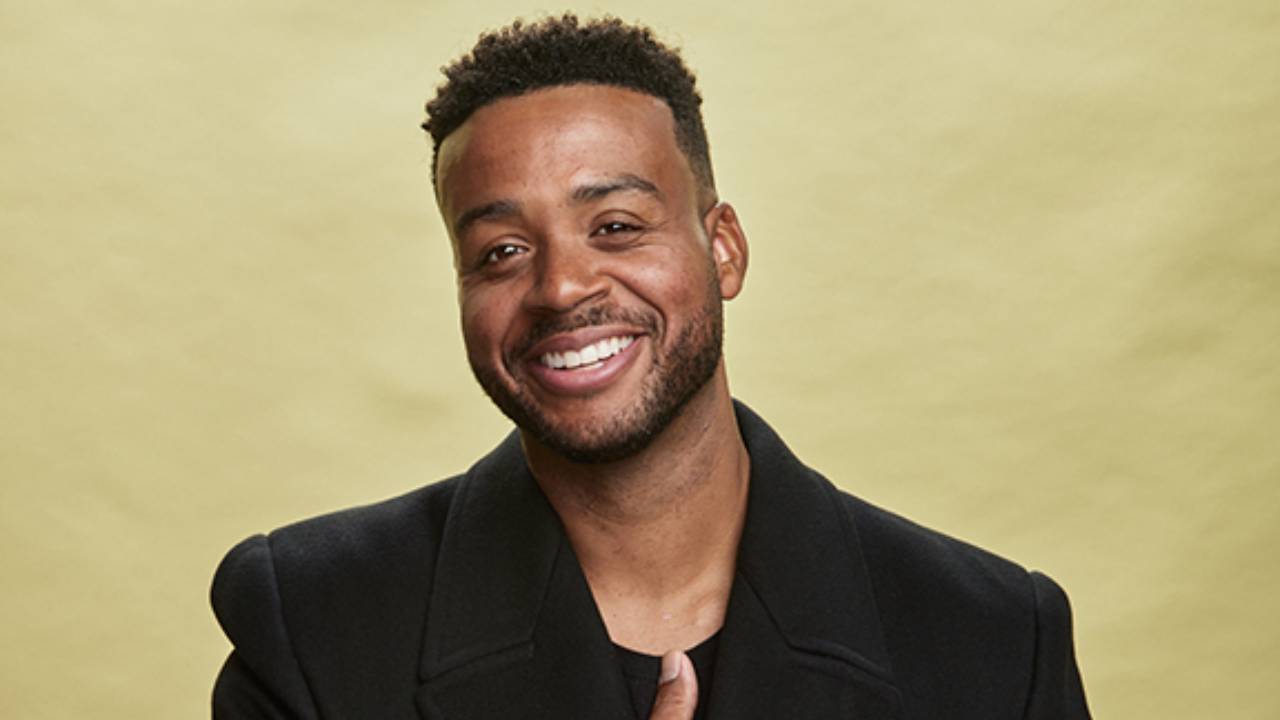
On 8 July 2026, Salman Rushdie will walk into a London ceremony room and accept Liberatum's 14th Cultural Honor — a quiet, choreographed moment of public return. Three and a half years have passed since the knife attack that nearly killed him at a literary festival in upstate New York. The British author of "Midnight's Children" and "The Satanic Verses" will collect the prize before an audience that, by design, treats the ceremony as both an artistic gesture and an argument about the cost of writing under fire.
The award itself is modest in scale and explicit in framing. Liberatum, the London- and Miami-based cultural platform founded by Argentine-British cultural entrepreneur Pablo Ganguli, hands out a Cultural Honor roughly once a year to a figure whose work has reshaped how a global audience reads, watches, or thinks. Previous recipients include Mick Jagger, Helen Mirren, Bono, and Naomi Campbell — names calibrated for recognition, not for provocation. Rushdie joins that list on 8 July in London.
The selection is the easy half of the story. The harder half is what the selection signals in 2026, when novels can still get writers killed — and when the institutions that defend writers are visibly tired.
The honor, the honoree, and the institution behind it
Liberatum announced on 29 June that Rushdie would receive the honor at a ceremony on 8 July in London. The platform frames its Cultural Honor as recognition of "an outstanding contribution to cultural life," awarded by a selection committee that includes, in recent years, figures from entertainment, philanthropy, and the literary world. The honor is not a cash prize; it is, in Liberatum's own telling, a public moment with a private dinner, designed to move a name back into circulation at the centre of a cultural conversation.
That mechanism matters here. Rushdie does not need the validation. His place in the late-twentieth-century canon is fixed: "Midnight's Children" won the Booker Prize in 1981, three Booker of Bookers later confirmed its standing, and "The Satanic Verses" remains the novel that turned literary scandal into a geopolitically dangerous business. What he does need, post-attack, is a stage that confirms him as a working author rather than a survivor on a circuit.
The attack, and what it cost
On 12 August 2022, Rushdie was stabbed multiple times on stage at the Chautauqua Institution in western New York state while preparing to deliver a lecture. He spent weeks in hospital, lost the sight in one eye, and survived what New York State Police described as a planned assault by a man who had travelled to the venue specifically to attack him. The literary world registered the attack as an attempt to enforce a fatwa issued in 1989 by Iran's then-supreme leader Ayatollah Khomeini — a directive that, in formal terms, was never rescinded, even as Iran publicly distanced itself from the act and the attacker.
Three and a half years on, Rushdie has published again. He has appeared on stages in America and Europe, sometimes with visible security, sometimes with less. The Liberatum honor arrives inside that slow, deliberate return — a return that has been uneven, sometimes contested, and never simply triumphant. The coverage that greeted his post-attack memoir treated him with the awkward combination of awe and inventory-taking that publishers tend to apply to authors who have been pronounced dead and then declined to die.
The contested reading, then and now
The harder question is whether the cultural establishment should treat this as a return to normalcy. The dominant Western framing — that an author was attacked for words on a page and survived, and that the literary world rallied to defend him — holds. It is supported by the documented record: the 1989 fatwa, the assassinations of his Japanese and Italian translators, the decades of security arrangements, the 2022 assault, the criminal conviction of his attacker.
There is, however, a counter-reading worth taking seriously. It runs through two registers. First, the political: that a novel published in 1988 can still produce, in the 2020s, an organised attempt to murder its author is not a story about one man with one knife. It is a story about the international infrastructure — clerical, state, and crowd-funded — that kept the threat credible for almost four decades. By that reading, an honor in 2026 is not a conclusion but a marker that the infrastructure is still alive.
Second, the cultural: that the institutions now lining up to honour Rushdie were, in many cases, slower to defend him than they now claim to remember. Publishing houses weighed contracts; festival programmers cancelled and re-invited; university departments taught him with footnotes for years. The Western literary world's late conversion into a loud defender of Rushdie is real, but it is recent. The honor, in that reading, is partly a confession.
Neither reading cancels the other. The attack happened. The recovery is documented. The honor is genuinely conferred. But the framing of the moment — as closure, as celebration, as politics — is still being negotiated in the rooms where these decisions are made.
What the ceremony tells us about 2026's literary politics
Liberatum is a useful barometer precisely because it programs for a transnational, status-conscious audience — not the literary priesthood, not the festival circuit, but the layer of global culture where a Cultural Honor carries weight. Putting Rushdie on that stage in 2026 is a directional signal: that the post-attack decade has not erased him, and that the platforms willing to platform him have decided the public-risk calculus still favours association.
The stakes are mostly his, but not only his. The reading public that picks up a Rushdie novel in 2026 — particularly a young reader in South Asia, in the Middle East, in any diaspora where the fatwa is still a present-tense fact — will read it inside a different atmosphere than the 1988 reader did. The book is now a relic of a colder war and a marker of a colder present. The honor tells that reader that the publishing and cultural infrastructure of the West intends, at least for one evening in London, to stand behind it.
There is an open question hanging over the ceremony, and it isn't about Rushdie. It is about who else gets the next seat at this kind of table. The list of writers, journalists, and cartoonists living under fatwa-equivalent threats, mostly outside the Western canon's spotlight, is long and largely uncelebrated. Liberatum's committee will make its choice; the wider industry is, as ever, watching to see whether the commitment travels further than one dinner.
A note on what remains uncertain: the ceremony's guest list, the exact citation text Liberatum will read on stage, and the size of the live audience have not been made public in the announcement coverage. The 8 July date is confirmed; the substance of the evening is, for now, a stage being built.
This publication framed the honor as a continuation of a long argument about literary survival rather than as a clean redemptive arc. The Wire tends to lean on the language of triumph; this reading holds the line on what the case file still contains.