Stephen Poliakoff Returns to the Big Screen at Home with 'The Order,' a Cold War-Era Political Thriller
After a decade away from prestige television, the multi-BAFTA and Emmy-winning writer steps back into large-scale drama with 'The Order,' an international political thriller about a 1950s spy ring — and what it means that the genre's appetite for the Cold War remains undimmed.
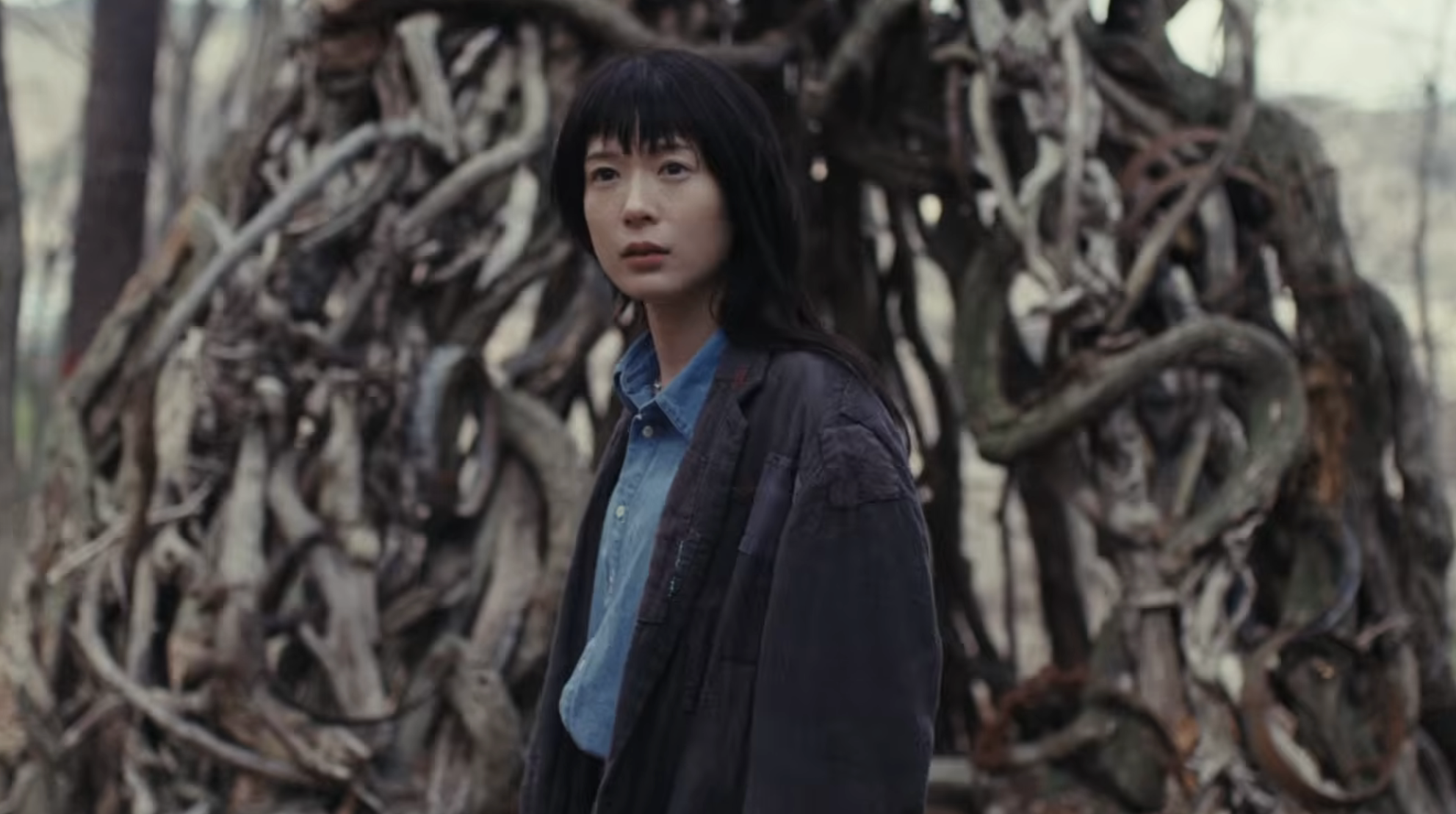
Twenty-five years after he first made his name as the brooding conscience of British television, Stephen Poliakoff is going back to the well. On 28 June 2026, Variety reported that the multi-BAFTA and Emmy-winning writer and director has been attached to a newly announced series titled "The Order," an international political thriller set against the paranoid political landscape of the 1950s. The project, described in the original Variety exclusive as "epic" and "historic," marks his first major long-form scripted return since a body of work that helped define a particular strain of literate, atmospheric British drama.
The detail is thin on the ground — Variety has confirmed Poliakoff's involvement and the series' broad setting, and little else. But the announcement itself is the news. Poliakoff's career arc has tracked the rise and gradual erosion of a certain kind of ambitious, mid-budget auteur television: the kind of show that broadcasters once commissioned in good faith, with international co-production partners and Patient Trust attached. The Order arrives into a market that has, since 2020, remade itself around streamers chasing global hits and advertisers chasing retention. The interesting question is not who is in the cast, which has not been disclosed; it is what kind of show the international political-thriller format has actually become, and who is still willing to fund it.
The shape of the thing
The series, per the Variety announcement, is "set in the modern era" with an international political-thriller engine, and is being positioned as Poliakoff's return to large-scale television after a long absence from the prestige-drama space. That phrasing matters. Writers of Poliakoff's generation built their reputations on the assumption that public-service broadcasters would greenlight literary, slow-burn historical drama and that international partners would close the financing gap. The architecture underneath that assumption has thinned out, even if the prestige language around it has not.
It is the fact that the announcement names Poliakoff — and the fact that the trade press considers the newsworthy to be his return, not his arrival — that gives "The Order" its initial weight. Poliakoff has been an intermittently visible figure on the British cultural scene for decades, with body of work stretching back through the 1990s and 2000s, including the BAFTA and Emmy honours that Variety's announcement references. A new Poliakoff project, in other words, is less the launch of a career than a punctuation mark on one.
The Cold War, recycled
Series-peddlers have not tired of the early-Cold-War setting. The reasoning is not difficult to map, even on the limited public information available: the period offers a ready-made toolkit — espionage tradecraft, ideological paranoia, the texture of typewriter-and-trenchcoat Europe — that travels well across borders and that commissioning editors from London to Los Angeles understand on first read. It is also the period in which the moral grammar of the modern thriller was written, with consequences that contemporary politics keeps rediscovering.
What is harder to read from the announcement alone is whether "The Order" intends to interrogate that grammar, or simply to borrow its furniture. Both moves are legitimate; both have produced very different kinds of television. Variety's framing — "epic historic political thriller" — leans toward the furniture end of the spectrum, though it is too early to tell, given how little the writers have disclosed about plot, structure, or tone.
Where the financing comes from now
A Poliakoff-sized international political thriller does not get made on a single national broadcaster's cheque. Historically these projects were assembled from public-service money — Channel 4 in the United Kingdom being the most consistent patron of this kind of work — and then closed out with sales to US cable networks and continental European partners. That assembly line still exists, but the relative weights have shifted. US cable's appetite for the slow, mid-budget literary thriller has been the part of the market most visibly squeezed by the streaming wars, and the work that used to find a home there has had to relocate — to premium SVODs, to international co-production funds, or, increasingly, to a hybrid model in which a streamer commissions a series that is also presold into a foreign territory as a primary partner.
It is the Variety original that will be read by industry financiers for signals about which path "The Order" intends to follow — whether the project is being built around a major SVOD commissioning commitment, a heritage broadcaster as lead partner, or a multi-territory co-production arrangement that splits the prestige language across several budgets. None of those details has been disclosed publicly.
Stakes
For Poliakoff personally, the project is a chance to bring his particular register — his patience with ambiguity, his taste for institutional settings seen at street level — back to a format that has historically rewarded exactly those qualities. For the broader British drama industry, the announcement is a small data point in a longer argument about whether the auteur-led prestige drama of the late twentieth and early twenty-first centuries is a sustainable proposition in a market that has rearranged itself around global IP and quarterly subscriber growth.
The honest answer, on the evidence available, is that it depends on the financing. A prestige Poliakoff thriller is plausible at almost any budget if the right combination of partners comes together; it is impossible if no broadcaster or streamer is willing to be the lead. The gap between those two outcomes is now occupied by an entire class of projects that get announced, get photographed at international TV markets, and then vanish. "The Order" will join a longer list when Variety's trades publish the casting.
What remains genuinely uncertain is the project's substance. Variety has not reported a showrunner beyond Poliakoff himself, has not disclosed a commissioning partner, has not named a cast, and has not signalled whether the series is intended as a closed-ended run or an ongoing anthology. The announcement tells the reader that Poliakoff is back. It does not yet tell the reader what he has brought back with him.
This piece leans on Variety for the announcement of "The Order" and on Poliakoff's prior BAFTA and Emmy record as the only externally verifiable scaffolding available at the time of writing. The project specifics — casting, commissioning partner, episode count, distribution — are not disclosed in the source material and have not been inferred.