How to mourn a man nobody outside Tehran knew
Tehran staged a national funeral this week for a figure almost no one abroad can name. The silence on the English-language wire is itself the story.
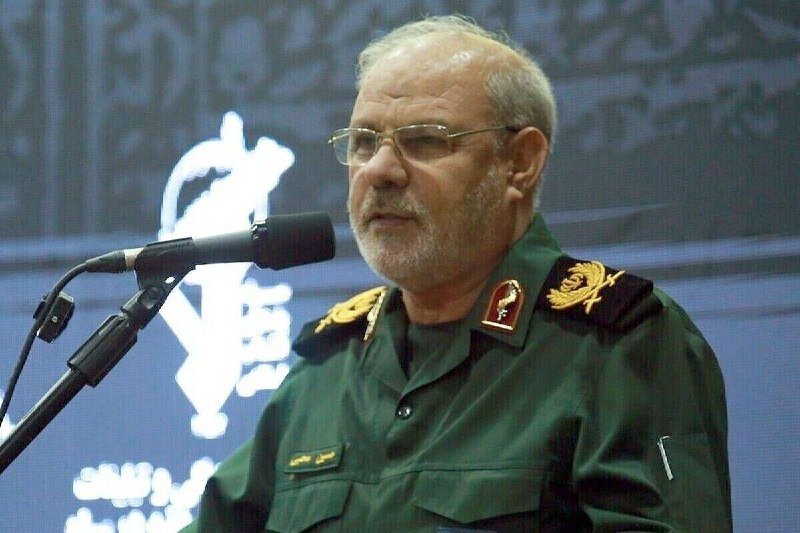
Tehran held an elaborate state funeral this week for a man whose name most readers outside the Islamic Republic would struggle to place on a map. The ceremony, staged in central Tehran on 28 June, drew senior commanders of the Islamic Revolutionary Guard Corps, the country's president, and a tightly managed phalanx of state-aligned outlets that ran the same pool footage across Telegram, domestic broadcasters, and English-language wire feeds for hours. Outside Iran, the silence was almost total. The asymmetry is the story.
Iranian state media, including Tasnim and IRNA, framed the funeral as a national moment of grief and resolve. According to Telegram posts by Tasnim, the procession moved through Enghelab Square before prayers were led at Tehran University, with senior political and military figures in attendance. The English-language Tasnim channel carried coordinated coverage of the eulogies and the symbolic flag-draped coffin. The numbers available to outside observers are fragmentary: state outlets repeated official attendance figures, while independent verification of those tallies is, as ever with Iranian state functions, partial at best.
What we know from the public wire is limited. The Telegram channels cited above carried the staging and the choreography, but provided little in the way of independently verifiable detail about who exactly was being mourned, why the funeral was elevated to a national-security-calibre ceremony, or what role the deceased played in the chain of command. This is itself worth pausing on. The visible machinery of state grief is not, in a system like the Islamic Republic's, a transparent window onto the actual hierarchy of power. It is a performance for an audience that includes allies, rivals, and a domestic public trained to read symbolic elevation as a signal.
There are three plausible readings of why Tehran would stage an event of this scale for a figure so obscure abroad. The first is that the deceased sat further up the chain of command than Western outlets typically map, and that the ceremony is intended to signal continuity or succession within a specific organ of the state. The second is that the funeral is being used instrumentally to communicate with a particular external audience, perhaps a regional partner or a domestic faction, and the foreign-press silence is part of the intended framing rather than a failure of outreach. The third is that the ceremony is genuine, locally resonant grief over a figure who mattered within Iran's security and political elite in ways that simply do not translate into English-language coverage. All three can be partially true at once.
The staging matters more than the man. Compare the apparatus deployed in central Tehran this week with the way the death of a comparable-ranking figure would be reported in, say, Tel Aviv, Washington, or London. A funeral at that level in those capitals would generate immediate wire copy from Reuters, AP, AFP, and the BBC, with biographical detail, official obituaries, and analyst reaction within hours. The fact that almost no comparable machine exists for this event in English is not an accident of newsroom attention. It reflects the structural reality that Iran's security apparatus is opaque by design, and that Western outlets have limited bench depth on figures outside the named handful who rotate through sanctions lists and IAEA filings.
This points to a recurring problem in how Western media covers Iranian state institutions. Coverage of Iran's supreme leader, its foreign minister, and its nuclear negotiators is dense and sustained. Coverage of the mid-tier figures, the IRGC brigadier generals, the Basij commanders, the heads of provincial security councils, falls off a cliff. When those figures die, retire, or rotate, the outside world often learns about it only through indirect signals: a changed face at a known event, a new name attached to a known portfolio. The Tehran funeral this week belongs to that second tier of visibility, and the result is that the ceremony floats free of context. Readers in New York or Brussels see the imagery, the flags, the chants, and have no scaffolding to attach it to.
There is a further layer worth naming. Iranian state media has become adept at staging events specifically for Telegram distribution, with English-language feeds running parallel to Farsi-language originals in a way that optimises for foreign media pickup on a delay. The Tasnim channels referenced above are the clearest example. The choreography this week, from route maps to camera placement, suggests an event designed to be translated into Western coverage once the embargo lifts. Whether that translation lands, and how much of it survives the editing, will tell us as much about the state of Western Iran coverage as it does about the funeral itself.
What to watch in the next 48 to 72 hours is whether any wire agency actually publishes a fuller biographical reconstruction, whether any Iranian opposition outlet offers a contradictory account of who the deceased was and what he controlled, and whether Western foreign ministries issue any statement at all. The combination of those three signals, or their absence, will be the real indicator of how much this funeral actually moved.
Desk note: Monexus treats the Tasnim feeds as primary sources for Iranian state framing while flagging their institutional position. The wire's translation will land in Western outlets within 24 hours; the staging is in the Telegram thread now.
Sources
- Tasnim Plus Telegram channel: https://t.me/tasnimplus
- Tasnim Plus Telegram channel: https://t.me/tasnimplus
- Tasnim News English Telegram channel: https://t.me/tasnimnews_en
- Tucker Carlson via x:newstart_2024, 1 July 2026: https://x.com/newstart_2024