Trump's Iran Showdown Hits a Ceiling in the Atlantic
A peace accord signing is set for Geneva, but Tehran's drones are still hitting ships and a US governor is publicly calling the war aims unmet. The gap between White House rhetoric and operational reality is widening.
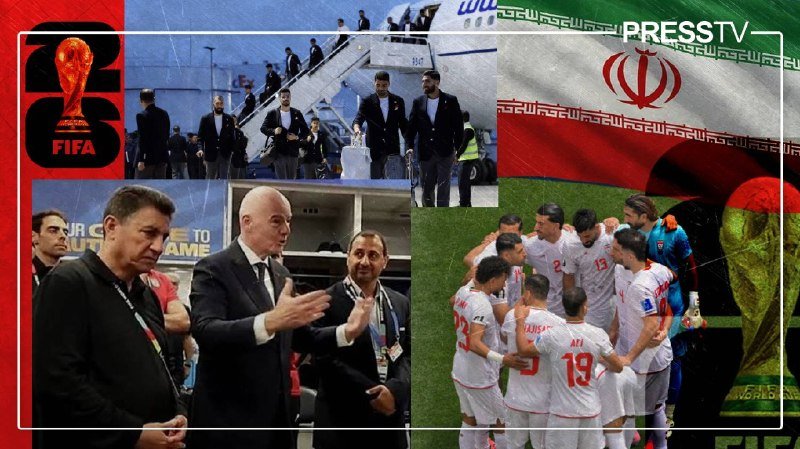
A peace accord between the United States and Iran is now formally scheduled to be signed in Geneva on Friday, according to a live Middle East Eye dispatch published at 05:28 UTC on 29 June 2026. The announcement sits awkwardly beside the operational record of the past 72 hours. President Donald Trump confirmed earlier this week, per a Unusual Whales brief dated 00:46 UTC on 29 June, that US forces had shot down three of four one-way attack drones launched by Iran — with the fourth striking the upper deck of a cargo-carrying vessel. The same news window that produced the Geneva calendar is also producing damage reports from the Atlantic shipping lanes.
The contradiction is not new; it is the rhythm of this administration. A diplomatic milestone is staged; kinetic pressure continues in parallel; markets and allies are expected to read the headline rather than the radar return. The harder question is whether the headline is now diverging enough from the radar to break the pattern.
A governor breaks ranks
The most pointed pushback has come from inside the United States. According to Middle East Eye's live coverage, the governor of New Jersey — a state with significant Iranian-American diaspora communities and a port complex that handles a meaningful share of North Atlantic container traffic — publicly stated that the Trump administration has not achieved the war aims it set out for. That is a domestic political rebuke of unusual specificity: not a generic call for restraint, but an assertion that the operational definition of victory, as articulated by the White House, has not been met.
The intervention matters because the political bandwidth for an extended Iran confrontation is being squeezed from another direction. Treasury Secretary Scott Bessent, cited by Unusual Whales on 28 June, has been framing the Trump economic agenda as a deliberate pivot away from four decades of asset-led growth — a pitch that is fundamentally incompatible with sustained war footing, energy-market disruption, and the kind of fiscal expansion a long campaign of strikes would require. The governor's complaint is a political echo of that fiscal reality: the war and the economic programme cannot both be sold on the same stage.
What the Geneva framework is — and is not
A "signing" scheduled for Friday is not a treaty. It is a written confirmation of whatever the two sides have agreed behind closed doors, and the public record of those negotiations remains thin. Middle East Eye frames the announcement as confirmation that the accord will be signed; it does not disclose the text, the verification mechanism, or the enforcement architecture. Iran International and other regional outlets have reported on the negotiations in fragments over the preceding weeks, but the substantive terms — enrichment ceilings, sanctions sequencing, the status of proxy armouries, the disposition of frozen assets — are not in the public sources currently on the wire.
That asymmetry is itself the story. A diplomatic product that cannot be quoted is a diplomatic product whose content can be asserted by either party after the fact. The risk is structural: a Geneva signing ceremony can deliver the political optics of de-escalation while leaving the technical conditions for re-escalation intact — drones still in production, fast-attack craft still in the Gulf, sanctions architecture still in place as a lever for the next round.
The Atlantic is the real ledger
The drone-versus-cargo-ship incident is the figure that should anchor any honest read of where the confrontation actually sits. US naval air defence intercepted three of four incoming drones; the fourth made contact with a cargo vessel's upper deck. That is a 75 percent interception rate, not a 100 percent one. In a shipping environment where insurance underwriters set war-risk premia on the basis of demonstrated hit rates, a single confirmed strike is enough to move the curve.
For an administration simultaneously promising a Geneva peace and conducting live naval engagements, the cost of the latter is now being priced into the former. Energy-market participants do not need to read the Geneva text to know what the Atlantic returns have been telling them.
What remains genuinely contested
The evidence does not yet let a reader adjudicate the most consequential claims. The scope of the war aims the New Jersey governor says are unmet is not specified in the reporting currently on the wire; neither is the specific cargo vessel hit by the fourth drone, the flag state, or the casualty and damage figures on board. The Geneva text is not public. The sequencing — whether the accord is signed first and the kinetic action is wound down, or whether the kinetic action continues as a pressure tool into and beyond the ceremony — is unresolved by anything currently sourced.
What the record does establish is a pattern worth naming plainly. A peace signing is staged in a European capital. A US state governor publicly dissents. The Treasury Secretary sells a domestic economic pivot that the war budget would contradict. And Iranian one-way drones, four at a time, are still being launched at vessels on a major Atlantic trade route. These facts can co-exist in the same news cycle. They cannot long co-exist in the same policy.
Monexus reads this as the gap widening between White House framing and the operational record. Where wires treat the Geneva calendar as the lead, Monexus treats the drone count as the lead — because the latter is what the underwriters price.