Venezuela's Quake, Iran's Ceasefire, India's Press Test: Three Fault Lines, One Frame
A disaster, a détente that barely held, and a passport denied to an editor — three stories that look unrelated and are not.
On the morning of 29 June 2026, three items ran almost simultaneously across the global wire. In Venezuela, rescuers pulled an 18-day-old baby, Juan David, alive from the rubble of homes that had collapsed in a major earthquake — his mother telling the BBC that the child had given her a reason to stay alive. In the Gulf, the United States said it had agreed to "stand down" after a weekend of tit-for-tat strikes with Iran, each side accusing the other of breaching a ceasefire. And in New Delhi, Indian journalists formally condemned what they called the denial of voting and passport rights to a prominent editor, M.J. Joseph Rajagopal, whose name had been struck from the electoral roll and who now says he cannot renew his travel documents. A miracle, a ceasefire, a passport. Read separately, they are weather. Read together, they tell you where this year is going.
The lesson is not that something dramatic is happening. The lesson is that the institutions designed to absorb shocks — humanitarian relief, ceasefire diplomacy, the rule of law — are being asked to do so under conditions they were never built for. Each story is a stress test of a different architecture, and each is being run on a different continent. None of them is a metaphor. All of them point at the same gap: between the speed of events and the speed of the systems that are supposed to order them.
Venezuela: relief without a state able to deliver it
The Venezuela story is the easiest to sentimentalise and the hardest to flatten. The newborn's survival is a real, dated fact reported on 29 June 2026 by the BBC's world feed, and the family's account to that outlet — that the child gave the mother a reason to live through the collapse — is not in doubt. The country around that child is the harder story. Earthquake response on the scale implied by the rubble footage requires a working civil-protection apparatus, working hospitals, working supply chains, and a treasury that can pay for all three without external permission. None of those preconditions is reliably in place in Caracas.
The usual Western coverage frames this as a regime problem and stops there. That framing is not wrong; it is also not enough. A more useful frame is supply-chain fragility: a country whose oil revenue has been routed around the global dollar system for the better part of a decade, whose banking links are partial, and whose disaster-response capacity is paid for in whatever currency and through whatever intermediaries Washington will permit at any given moment. When the ground moves, the response moves at the speed of those arrangements — not at the speed of the rescue workers on the ground. The child survived. The next family will too, or will not, on roughly the same margin.
Iran and the Gulf: the ceasefire that does not want to be named
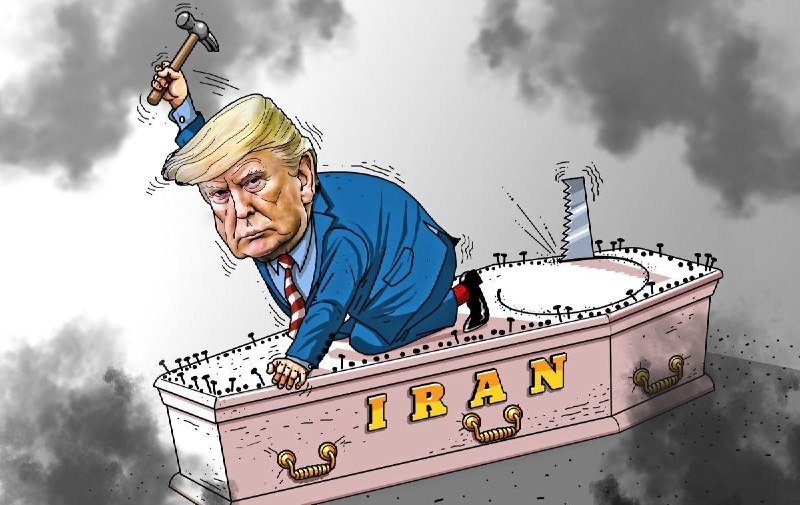
The headline out of the Gulf on the same morning is the most telling. The US said it had agreed to "stand down" after a weekend of strikes between American and Iranian forces, the two sides blaming one another for ceasefire violations. The verb choice matters. "Stand down" is what a commander tells troops who were never formally at war. It implies an operational pause, not a peace. No one is calling this a treaty because no one wants to admit that there was a war in the first place — and because calling it a war would create obligations under international humanitarian law that neither side wants to inherit.
This is the second-order story. The first-order story is that two states can exchange strikes, accuse each other of violations, and still climb down within a weekend — which on its face is the argument for deterrence working. The second-order story is that the deterrence in question does not run through the architectures built for it. There is no new UN framework. There is no standing ceasefire monitoring mission. What holds the line is two national-command councils talking past each other in real time, with nowhere to take the dispute except the next round. That is not crisis management. It is improvised management. It works until it does not, and the timetable for "does not" is governed by domestic politics on both sides rather than by the issues ostensibly on the table.
India: when the passport office becomes the censor
The Rajagopal story is the quietest of the three and the most structural. Indian journalists have condemned what they describe as the denial of voting and passport rights to the editor; Rajagopal says his name was struck from the electoral roll and that he cannot renew his passport as a result. The specifics, as reported, are precisely what makes the case worth watching. No arrest, no shutdown, no raid. Just the slow administrative squeeze: remove the name from one list, and a dozen downstream entitlements fall with it. The technique is older than India and is not confined to India — but its export-quality refinement in a functioning democracy is what gives the case its force.
The standard line is that this is an internal matter. So it is — and so is, in formal terms, the Iranian nuclear file or the Venezuelan electrification grid. The relevant question is whether the institutions other democracies rely on to keep a state honest can do their job when the state is the one deciding who is on the list. That is the same question being stress-tested in Caracas, where the state is hollow, and in the Gulf, where the state is doing the work normally delegated to treaty machinery. In three different time zones, the same gap is opening up: between the scale of what the political system is doing and the capacity of the inherited system to constrain it.
The stakes
If this year's pattern continues, the cost will not be paid in any one place. It will be paid in serial incremental losses — a child who does not survive the next collapse, a ceasefire that does not hold the next weekend, an editor who does not get his passport back in time to file. None of those losses will register as a crisis. All of them together will. The reasonable bet for the back half of 2026 is that the world will keep treating these as separate stories. They are not. The frame they belong to is the fraying of the post-Cold-War settlement — not by a single dramatic rupture, but by three quiet ones running in parallel before breakfast.
What the sources do not say
The three BBC items reported here are each self-contained. They do not specify casualty figures from the Venezuelan quake, the precise location of the Iran-US strikes, or the institutional locus responsible for Rajagopal's removal from the electoral roll. The honesty of the framing depends on marking those gaps as gaps, not on papering over them. Until the wire catches up, the strongest claim this publication is willing to make is the juxtaposition itself.
Desk note: Monexus ran the three items as one column rather than three because the structural argument is in the alignment. Wire readers will recognise each story; the editorial labour here is the connective tissue.
Wire provenance
This editorial synthesis draws on the following public wire/social posts:
- https://t.me/s/BBCWorldoffl
- https://t.me/s/BBCWorldoffl
- https://t.me/s/BBCWorldoffl