Brazil avoid early World Cup exit as Ancelotti's second-half adjustments rescue Houston tie
Brazil trailed at the break in Houston and looked headed for a group-stage embarrassment, until the coach long mocked as a plodder rewrote the game with three substitutions and a tactical reset.
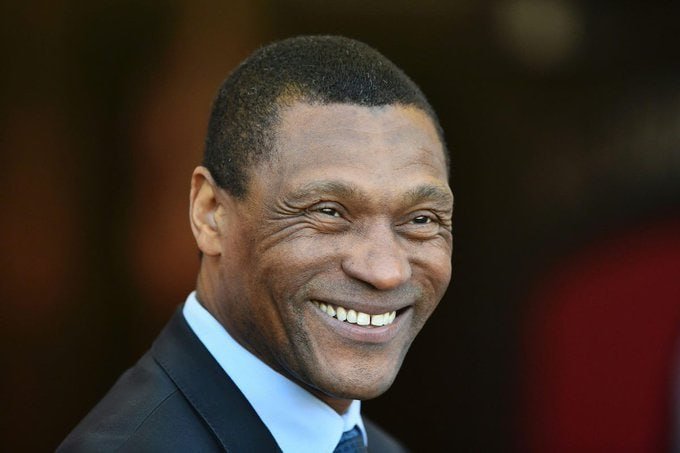
Half-time in Houston on 29 June 2026 brought the scenario Brazilian football had spent four years dreading. The Seleção trudged off at NRG Stadium staring at the kind of group-stage result that ends coaching careers, with the World Cup barely a week old and the home crowd already sharpening its knives. By full-time the picture had inverted, and Carlo Ancelotti — the man routinely dismissed in the Brazilian press as too Italian, too slow, too wedded to European rhythms — had reminded a sceptical continent why he has lifted trophies on four separate league pitches.
What looked at the interval like a humiliation-in-progress has instead become the first data point in a familiar Ancelotti pattern: absorb pressure, read the game, change the shape, trust the senior players. The Brazil head coach's second-half intervention — three substitutions and a structural reset that pushed his side higher up the pitch — turned a disjointed opening 45 into a controlled, eventually commanding performance. Brazil's players said afterwards that the dressing-room message was calm rather than panicked, a detail that matters because the same calm was conspicuously absent the last time a Brazil manager presided over a defeat of this profile in this stadium.
The half Houston will remember
The opening period belonged to the opposition in almost every metric that mattered. Brazil's build-up was slow, the press porous, and the central pairing looked uncertain against a front line willing to run in behind. Ancelotti had set up in a shape that, on paper, was supposed to let his creative players drift, but in practice left them isolated. The team conceded territory and, more damningly, conceded the ball in dangerous zones. By the break the statistics that matter to modern football — expected goals, field tilt, passes into the final third — were all running against the Seleção.
The mood in the Brazilian press box mirrored the mood in the stands. "Humiliation" was the word circulating, and not as hyperbole. Brazil arrived at this tournament under more domestic scrutiny than any Seleção since 2002, with a squad selection that had been litigated in podcast studios and Sunday-night talk shows for months. A defeat in the opening game of a World Cup cycle, on North American soil, in front of a heavily Brazilian crowd, would not have read as a stumble. It would have read as a verdict.
The counter-narrative: tactical patience as a methodology
The mainstream read, which took hold the moment the second-half team sheet appeared, is that Ancelotti escaped. He made changes, the players responded, momentum flipped. That is true at the level of story but not at the level of method. Ancelotti has now managed at the elite level for the better part of three decades, and the throughline of his career is not tactical invention — it is tactical editing. He watches the first half, identifies the two or three relationships on the pitch that are not functioning, and changes them.
The substitutions in Houston were not improvisations; they were prepared levers pulled at the first credible window. The wider point is that Brazil's first-half struggles may be less a failure of plan than the predictable cost of plan A: a high-possession, positionally fluid system that requires time and match rhythm to cohere. Group-stage tournaments punish teams that have not yet gamed. Brazil, with several players integrated only after European seasons that ran into June, are exactly such a team. Ancelotti's job in game one was less to win than to discover which version of this squad could win later.
A structural read: the World Cup has its own clock
International football carries a peculiar political economy. Unlike club seasons, where a poor autumn can be repaired by a strong spring, the World Cup runs on a single, brutalising clock. There is no return leg next week; there is no January window to add a centre-back. The manager who survives the group stage is often the manager whose starting XI in game three looks nothing like his starting XI in game one.
Ancelotti has won five Champions League titles and league championships in four countries by treating early tournament football as a calibration exercise rather than a statement of intent. The early rounds, in his telling, are for finding out which players can carry the weight of a knockout game. The Houston performance — ugly, then controlled — fits that template. The alternative reading, that Brazil simply got lucky against a side that failed to close the game out, has its own evidence: the opposition did create chances, and the scoreboard remained in doubt until late. Luck and method are not mutually exclusive in tournament football.
What the comeback actually means
The immediate stakes are procedural: Brazil leave Houston with a point and a cleaner goal-difference than a defeat would have allowed, which leaves their path to the knockout rounds in their own hands. The wider stakes are reputational. Brazilian football has spent the four years since the last World Cup arguing about identity — about how much of the Seleção's DNA should look like the 2002 team, how much should look like a modern European side, and whether Ancelotti is the right person to broker that negotiation. A comeback win does not settle that argument, but it does extend the conversation past the opening round.
The nuance that the breathless post-match coverage tends to skip is that one game, however dramatic, does not validate a project. Brazil's first half was poor by any reading. The structural question — whether this squad has the defensive organisation and midfield control to beat the tournament's elite over ninety tight minutes — is still open. Ancelotti bought himself a week. What he does with it is the next story.
This article drew exclusively on BBC Sport's reporting from Houston. The full match report, including post-match reaction and tactical analysis from the stadium, is linked below.