Wimbledon 2026 opens against a backdrop of French chaos and a French heatwave
Two weeks after a chaotic Roland Garros, the third major of 2026 begins at the All England Club — and the weather that baked Paris is now a health emergency on the other side of the Channel.
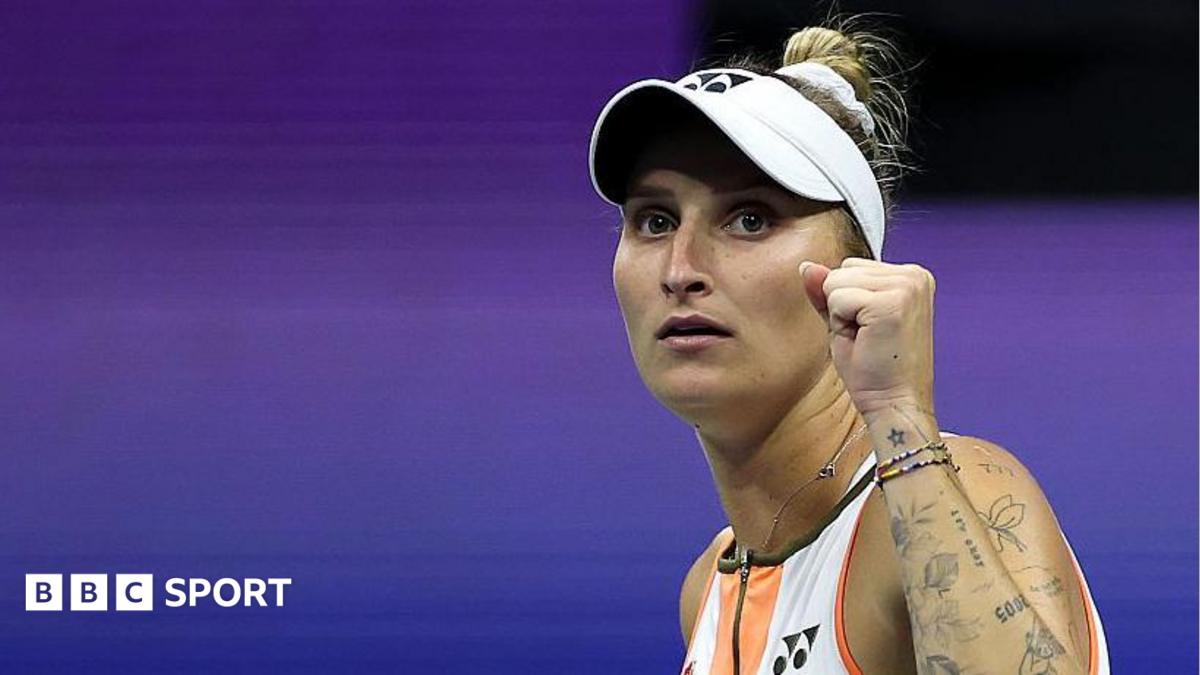
The third Grand Slam of the 2026 tennis season begins on Monday at the All England Club, and the field arrives in south-west London carrying the after-shocks of a Roland Garros that produced more upsets than almost any edition in recent memory. CBS Sports, previewing the tournament on 29 June 2026, framed the obvious question plainly: after the chaos in France, is more of the same coming on the grass? That uncertainty — not any single name on the draw sheet — is the working assumption of the men's and women's brackets heading into the championships.
The structural story of 2026 is parity. The early rounds at Roland Garros were tipped by tipsters and dismissed by results, and the bracket depth that produced the upsets is the same depth that travels to Wimbledon. The grass-court swing has historically rewarded players who can shorten points and serve well under low, skidding bounces; it has also historically punished anyone who arrives with form questions or a soft first-serve percentage. The convergence of those two facts is why the early-week market in London is unusually cautious, and why the smart money, to the extent the betting public has any, is on more first-week carnage before the second week settles.
What the French Open actually told us
Roland Garros 2026 will be remembered for what did not happen. The pre-tournament favourites did not survive. The pattern was not confined to one section of the draw; it spread across both singles events, across seeds, and across rounds. The result, as CBS Sports' preview noted, is that the field heading to SW19 is one in which the gap between seed and unseeded, between recent form and recent reputation, has narrowed in a way the betting boards have not fully priced. That is a structural change inside a single season, not a stylistic blip.
The corollary is that the usual Wimbledon heuristics — big-server-dominates-grass, established-names-hold-nerve-in-fifth-set — are working from a thinner base of evidence than usual. When the previous major has just demonstrated that seeding is a polite fiction, the second major after it inherits the doubt.
The heatwave the players do not want to talk about
While the tour was finishing clay and beginning to acclimatise to grass, France was preparing for another health emergency. On 29 June 2026, at 22:10 UTC, Reuters reported that France was keeping its health emergency plan at its highest level in case of another heatwave. The reuters.com dispatch did not directly address the sporting calendar, but the timing is hard to ignore: the men's and women's grass-court lead-ins in France, Germany and the United Kingdom are running into the same atmospheric pattern that the public-health authorities are now bracing for on the European mainland.
For athletes, the operational consequence is concrete. Hotter courts change ball bounce, shorten rallies, and punish the kind of long, attritional baseline tennis that defined much of the clay swing. They also raise the medical-threshold conversation that the tours have been reluctant to lead. Wimbledon has retractable covers on Centre and Court One and a long history of treating heat as a playing-condition issue rather than a playing-time issue; whether that posture survives a second consecutive European summer of broken temperature records is a question the All England Club has not yet had to answer in real time.
Why the book will misprice this tournament
Three forces are pulling the early-Wimbledon market in different directions. First, the recency effect: French Open chaos pushes the public toward naming new favourites and against the actual winners, who tend to be patient. Second, the surface effect: grass rewards specific skills that have been visible in the lead-in events but are not always captured in the headline names. Third, the weather effect described above, which compresses the value of pre-tournament preparation and inflates the value of in-tournament adjustment.
The honest analytical position is that the draw is unusually hard to read. Anyone telling a reader who wins the men's or women's title before the second Monday is selling certainty that the form chart does not support. The better question, and the one the next two weeks will answer, is which part of the field adjusts fastest to conditions that the pre-tournament odds did not have to price.
The stakes for the second half of 2026
The results at the All England Club will reshape the tour's rankings, its seedings for the US Open, and the financial picture for everyone who depends on a deep run. A first-week upset by a lower-ranked player is no longer a curiosity; at the rate Roland Garros produced them, it is the new operating assumption. The broadcast and sponsorship ecosystem, which has historically sold Wimbledon as a coronation, will have to decide how aggressively to market an event in which coronations are no longer the modal outcome.
For the players, the practical implication is that form in the lead-up events matters more than reputation and that the draw sheet matters more than the world ranking. For the governing bodies, the practical implication is that heat planning is no longer an Olympic or Australian Open problem; it is a Wimbledon problem too.
Desk note: Monexus framed Wimbledon 2026 as a probability question — what the French Open told us, plus what the European heatwave is doing to conditions — rather than as a coronation preview. The wire coverage emphasised both narratives in parallel; Monexus ran them as one story.