Scotland's World Cup exit exposes a federation that asked the right questions too late
Steve Clarke says standing down was the plan all along. The harder question is why a squad given everything off the pitch produced so little on it.
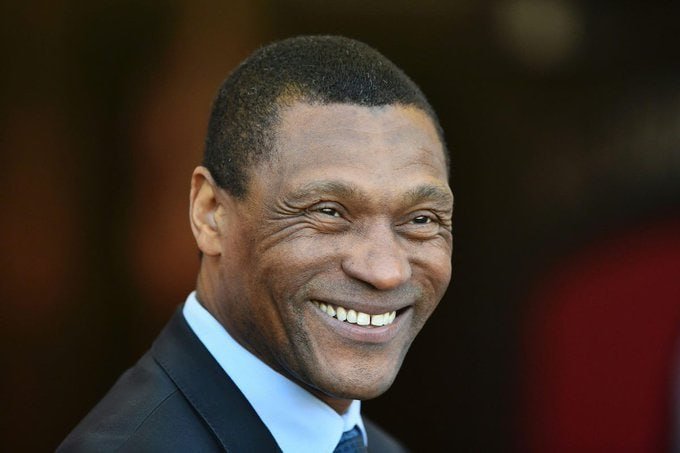
Steve Clarke walked away from the Scotland job on 29 June 2026 with the air of a man who had already made the decision months earlier and was simply waiting for the tournament to ratify it. Speaking after the elimination, the head coach said stepping down had been "an easy decision," because his plan from the outset had been to leave if the side failed to reach the knockout stage in the United States. The framing was tidy, almost contractual: the contract was to qualify, the contract was not met, the signature on the resignation was already in the drawer.
What Clarke's calm does not settle is the more uncomfortable question his own players have effectively put to the Scottish Football Association in the days since. A 29 June BBC Sport analysis of the campaign concluded that the squad received virtually everything it asked for in preparation — facilities, scheduling, access, voice in the build-up — and still did not perform. That is the diagnostic line that will outlast the manager's farewell.
A campaign that ran ahead of itself
The tournament itself had the contours of a side that arrived believing its own itinerary. Scotland qualified through the European pathway and travelled to North America with a squad drawn heavily from the English Premier League and the upper reaches of the European game. Individual talent, on paper, was not the constraint. BBC Sport's review of the squad's preparation noted that players had been consulted on every meaningful operational choice — camp location, friendlies, conditioning load, media exposure — and had been given what they wanted.
The early rounds confirmed the suspicion that comfort and form are not the same thing. Scotland exited at the group stage, the same juncture at which they have now fallen in three of their last four major-tournament appearances. The pattern has hardened enough to be a structural feature rather than a sequence of unfortunate draws.
The federation's self-portrait
Clarke framed his exit as a pre-committed choice, not a resignation under pressure. That distinction matters because it preserves the institutional dignity of the Scottish FA at the moment its governance is most exposed. By presenting the change as the fulfilment of a private agreement, Clarke has effectively declined the role of fall guy and handed it back to the federation that appointed him.
The BBC analysis pushed gently but unmistakably in that direction. If the players were protected, primed and listened to, and the team still did not perform, the variable left to interrogate is the institution around them: selection logic, development pathways, the conversion of domestic youth investment into senior minutes, the relationship between the national team and a club system that has spent two decades selling its best teenagers south. The SFA, in this telling, is the body that has to answer next.
The structural bind
The deeper pattern is one that small federations across Europe have learned to live with and have not learned to fix. Scotland produces footballers at a rate that would be the envy of most nations of comparable population; the Scottish Premiership cannot hold them. The Premier League, the English Football League and the Bundesliga absorb the talent, and the senior national team inherits the consequences — players who arrive at camp after club seasons of varying length, varying load, varying role, and have to be welded into a coherent side in a fortnight.
That is the structural frame. No coach, however disciplined, can fully compensate for a club system that monetises Scottish football's best asset — its people — and returns it in a form that is harder and harder to coach. Clarke's tenure delivered the team's most consistent run of competitive results in a generation, including a major tournament appearance in Germany in 2024. That context matters: this is not the exit of a man who failed at every task. It is the exit of a man who hit the ceiling that the system around him imposes, and who has chosen to name that ceiling by leaving.
What changes next
The SFA's next moves will tell the story. A caretaker appointment buys time; a serious recruitment process — naming a sporting director, a performance director, and a head coach with a coherent brief — would signal that the federation has read the same diagnosis BBC Sport has. Sponsorship and broadcast revenues at this level are not large enough to buy the answer; the answer has to come from better integration of an academy pipeline that has, for the first time in a long time, started to produce players good enough to start at top-five-league clubs.
Clarke leaves with his reputation intact, perhaps even enhanced by the manner of the exit. The harder task belongs to his successor, who will inherit a squad that, on the evidence of June 2026, knows what it wants and has not yet shown it knows what to do with what it gets.
The SFA has not, as of publication, named an interim coach or a timeline for a permanent appointment; the BBC's analysis of the squad's preparation did not single out individual players by name, and the sources do not specify which pre-tournament requests were granted.